If you’ve ever dropped a part off at a machine shop to be CNC milled, you might’ve wondered why some projects wrap up in a day and others take a week—especially when the only difference seems to be a small, seemingly mundane kit of tooling. As the owner of a small, family-run CNC milling service that’s been operating out of our 4,000 sq. ft. shop in Indianapolis for 12 years, I’ve heard that question a hundred times from new clients, hobbyists who built their first CNC router in their garage, and even larger engineering teams who’ve worked with shops that cut corners on tooling to keep quotes low. The short answer? Yes, CNC milling absolutely requires special tooling—but not the kind you might assume, and how you choose that tooling can make or break your part’s quality, cost, and lead time. CNC Milling Service
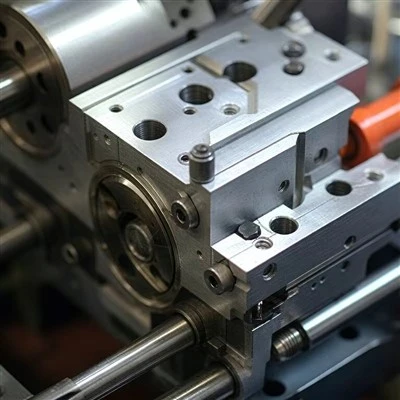
Let’s start with what most people picture when they hear “tooling for CNC milling”: end mills, drills, and insert cutters that sit in the tool changer on your mill. That’s the base, but “special tooling” here refers to custom or application-specific tooling that’s not off-the-shelf. Off-the-shelf tooling works for simple, low-volume projects—say, a custom aluminum bracket for a drone prototype that only needs three holes and a flat face. But when you’re working with hard materials like titanium or Inconel, or complex geometries like deep 3D pockets or thin-walled aerospace parts, off-the-shelf tooling simply can’t hold up. Last year, a local aerospace startup brought us a batch of 20 titanium brackets they’d had machined at another shop, and half of them had tiny cracks along the pocket walls. Turned out, the other shop used a generic 4-flute end mill meant for soft aluminum; titanium’s high melting point and abrasiveness chew through standard tool coatings, leading to excessive heat buildup and micro-cracking in the part. We swapped in a custom coated end mill with a variable helix design we worked with our tool supplier to develop, and not only did we eliminate the cracks, we cut machining time by 20% because we could run the spindle 15% faster without breaking tools. That’s the kind of impact special tooling makes.
It’s not just exotic materials where special tooling matters, either. For high-volume projects (think 10,000 plastic housings for consumer electronics), using custom tooling cuts down on changeover time and reduces part variation. A client in the medical device space reached out to us last year after struggling with inconsistent hole sizes on their disposable syringe plungers. The off-the-shelf drills they were using would dull after 500 parts, leading to holes that were slightly too small—and by the time they replaced the drill, the first 1,000 parts were out of spec. We worked with a tooling manufacturer to design a custom carbide drill with a point angle optimized for polypropylene, which only dulled after 2,500 parts. That meant fewer tool changes, less downtime, and every hole was within ±0.001 inches of spec for the entire run. For high-volume work, that’s not a luxury—it’s a necessity.
A lot of first-time clients ask us why we don’t just use the cheapest tooling available, but the truth is, subpar tooling ends up costing you more in the long run. When a tool breaks mid-machining, you don’t just have to replace the tool—you might have to rework the part, or even scrap it if the damage is too bad. We had a client last quarter who brought a 10-part prototype for a custom racing component; another shop had used a generic tool, and when it broke, it gouged the part’s intricate profile so badly they had to start over. Our team had specified a custom solid carbide end mill for the hardened steel part, which ran without a hitch and produced parts that were within ±0.0005 inches of tolerance—tight enough to meet the racing league’s strict dimensional requirements. The client told us later that the other shop’s quote was 10% lower, but by the time they paid to rework the parts and missed their production deadline, they ended up spending twice as much.
Of course, special tooling doesn’t have to mean custom every time. Sometimes it’s specialty tooling designed for specific use cases that’s not widely available as off-the-shelf. For example, deep hole drilling for parts like fuel injectors requires gun drills—standard twist drills won’t evacuate chips from a hole that’s 10 times its diameter, leading to chip packing and tool breakage. We keep a set of gun drills in our shop for these jobs, and they’re a specialized type of tooling that’s not in most small shop’s inventory. Similarly, for five-axis milling work, we use custom workholding fixtures—fixtures that are designed to hold irregularly shaped parts securely while the mill rotates on multiple axes. A standard vise can’t hold a complex turbine blade without distorting it, so our tooling team works with local fixture manufacturers to design custom clamps that distribute pressure evenly across the part’s delicate features. Without those special fixtures, we couldn’t mill parts like that turbine blade at all.
I want to be clear, though: not all CNC milling needs special tooling. If you’re machining a simple aluminum plate with a few slots, or a small plastic bracket for a hobby project, off-the-shelf tooling will work just fine. The difference comes when you’re pushing the limits of what your part needs: tight tolerances, hard materials, complex geometries, or high volume. That’s when skipping special tooling becomes a risk.
As a service provider, our job isn’t just to run a mill—it’s to help clients make their parts the right way. That means we don’t just quote a price based on time on the machine; we factor in the tooling needed to get the job done correctly, without sacrificing quality or lead time. If you’re bringing us a low-volume prototype, we’ll work with you to balance cost and tooling: maybe a custom tool isn’t necessary, but a high-quality coated end mill will save you from broken parts. If you’re bringing a high-volume production run, we’ll prioritize tooling that cuts downtime and ensures consistency, even if it adds a little to the upfront cost.
At the end of the day, special tooling in CNC milling is an investment, not an expense. It’s the difference between a part that works for its intended purpose and one that has to be reworked. It’s the difference between meeting a deadline and missing it. It’s the difference between a low quote and a fair quote that doesn’t have hidden costs.
If you have a project you’re working on, whether it’s a prototype, a production run, or something in between, we’d love to help you figure out the right tooling for the job. Don’t hesitate to reach out to our team to discuss your needs and get a personalized consultation.
Casting Part Machining References
- DeVries, W. R. (2018). Metal Cutting Theory and Practice (3rd ed.). CRC Press.
- Tlusty, J. (2000). Manufacturing Processes and Equipment. Prentice Hall.
- Byrne, G., Dornfeld, D., Denkena, B., & Wegener, K. (2016). Tooling in machining: Trends and challenges. CIRP Annals, 65(2), 731-751.
- Shaw, M. C. (2005). Metal Cutting Principles (2nd ed.). Oxford University Press.
- Childs, T. H. C., Maekawa, K., Obikawa, T., & Yamane, Y. (2000). Metal Machining: Theory and Applications. Butterworth-Heinemann.
Ningbo Yirui Machinery Manufacturing Co., Ltd.
As one of the most professional cnc milling products manufacturers and suppliers in China, we’re featured by quality products and good price. Please rest assured to wholesale durable cnc milling products made in China here from our factory. Customized orders are welcome.
Address: No.107, Wanzhong Village, Jishigang Town, Haishu District, Ningbo City
E-mail: James.he@yiruitek.com
WebSite: https://www.yiruime.com/
