As a supplier of constant voltage LED drivers, I’ve spent countless hours on customer calls, factory visits, and field troubleshooting across regions with drastically different elevations. One question that pops up more often than you’d think, especially from clients operating remote solar LED installations or mountain area commercial lighting, is: “Do I need a special driver for my setup because we’re 2,000 meters above sea level?” For years, I used to answer with a vague “it depends,” but over time, I’ve dug into the engineering behind altitude and LED drivers, tested our products at various heights, and even walked through installations that failed because of overlooked altitude factors. Today, I want to break down exactly how elevation impacts constant voltage LED drivers, what that means for your system, and how to choose the right driver to avoid costly issues. Constant Voltage LED Drivers
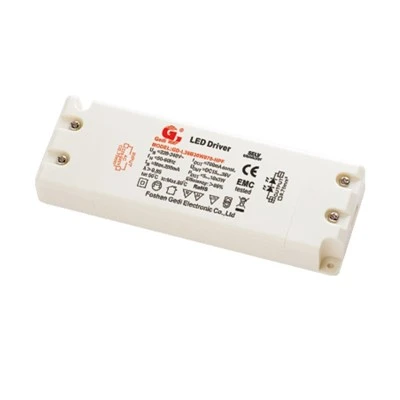
First, let’s start with the basics: what even is a constant voltage LED driver, and why does altitude matter in the first place? A constant voltage driver’s job is straightforward: it takes input power (whether AC from the grid or DC from a solar array) and outputs a steady, regulated voltage (usually 12V or 24V DC, the most common for LED strips, panels, and low-voltage fixtures) to keep your LEDs running at consistent brightness. Altitude affects electronic devices in two key ways: thin air, which reduces the ability of components to cool, and lower air pressure, which impacts how electrical arcing behaves inside sealed or semi-sealed driver enclosures. Most of the general electronics industry sets their standards for altitude at sea level (101.3 kPa), so when you move higher, you’re pushing devices outside their tested operating parameters.
Let’s start with heat management, because this is the most immediate, often missed, impact. LED drivers generate heat, just like any power-conversion device. Inside a driver, you have transformers, diodes, capacitors, and integrated circuits (ICs) that all dissipate energy as heat. For a driver designed for sea level, its cooling system—whether it’s a heat sink, natural convection, or a small fan—relies on the density of air to carry that heat away. At higher altitudes, air is less dense: at 1,500 meters, air density is about 80% of sea level; at 3,000 meters, it’s roughly 70%; at 4,500 meters, it drops to 60%. Less dense air means fewer air molecules to absorb and transfer heat, so a driver that runs cool and steady at sea level will run significantly hotter at altitude.
I saw this firsthand a couple of years ago with a customer in Denver, Colorado (which sits at ~1,600 meters). They installed 20 of our standard 24V constant voltage drivers to power LED strips in a grocery store’s produce section. Within two months, three drivers had failed. When we pulled them for testing, their internal temperatures were hitting 115°C—way above their rated maximum operating temperature of 85°C. Why? The store’s ceiling is 5 meters high, with very little air circulation around the drivers, and the thinner Denver air couldn’t pull heat away. We swapped them for our altitude-rated drivers, which have enlarged heat sinks and are tested to account for reduced air density, and they’ve run without issues for three years now. That’s not a failure in the driver design—it’s a failure to account for how the environment changes performance.
Next, the less talked-about factor: insulation and electrical breakdown. All constant voltage drivers have internal components with voltage differences, and those components are sealed in a plastic or epoxy casing to protect them from dust and moisture. The insulation of that casing is rated for a certain maximum voltage, but that rating assumes sea-level air pressure. At lower pressures, the dielectric strength of air drops. Dielectric strength is the measure of a material’s ability to resist electrical breakdown, where an electrical arc jumps through the material instead of going through the intended circuit. For air, dielectric strength decreases roughly linearly with altitude: at 3,000 meters, air’s dielectric strength is about 75% of its sea-level value; at 5,000 meters, it’s 65%.
What does that mean for your driver? If a driver is rated for 24V output but designed for sea level, the gap between its internal high-voltage components (like the primary side of the transformer, which can be 120V or 240V AC) and low-voltage output parts (the 24V DC side) might be just enough to prevent arcing at sea level. At high altitude, that gap is too small—over time, electrical arcing can develop between the primary and secondary sides, damaging the driver or even causing it to output erratic voltage. I worked with a client in Peru’s Cusco region (~3,400 meters) a year ago who had a string of LED flood lights that kept flickering and burning out LEDs. We opened up one of their standard drivers and found a tiny carbon track (the residue from a small arc) between the transformer leads. That’s exactly the kind of issue you can’t see until it fails, and it’s entirely avoidable with a driver rated for the elevation it’s installed at.
Now, let’s get into what altitude ratings actually mean for constant voltage LED drivers, because not all altitude claims are the same. There are two main altitude categories for electronics: low altitude (up to 2,000 meters) and high altitude (above 2,000 meters). Some drivers are only rated for up to 2,000 meters, which works for most mountain towns in the US, Europe, and parts of Asia, but if you’re at 3,000 meters or higher (like Cusco, La Paz, or parts of the Tibetan Plateau), you need a driver rated for that.
Wait, but what if I’m at 2,500 meters—does that mean I need a driver rated for 3,000? Not exactly, but it’s better to err on the side of caution. The derating factor for drivers is key here. Derating is the process of reducing a component’s maximum load to account for environmental conditions. For high-altitude operation, most driver manufacturers derate their output power by about 10% for every 1,000 meters above 2,000 meters. So a 100W constant voltage driver designed for sea level would only be able to safely output 90W at 3,000 meters, 80W at 4,000 meters, and so on. That’s because the heat buildup from reduced air density makes the driver less efficient at handling full power. If you ignore derating and run a 100W driver at full load at 3,500 meters, you’re asking it to run hotter than its design, which shortens its lifespan by 30-50% in most cases.
I also want to address a common myth: do LED drivers need to be sealed differently for high altitude? Not because of pressure itself, but because of moisture. Wait, no—let’s clarify: at high altitude, pressure fluctuations are small, so a hermetically sealed driver won’t be affected by pressure changes (unless it’s a very poorly sealed unit). The real issue is that many high-altitude locations have drier air, which can lead to more static electricity buildup. Static can damage sensitive ICs inside drivers, especially if the driver isn’t properly grounded. That’s another small factor to keep in mind—even if your driver is rated for high altitude, ensuring proper grounding prevents static-related failures.
So what does this mean for you as someone specifying or installing constant voltage LED drivers? Let’s break down actionable steps, based on what I’ve learned over years of working with clients across elevations:
First, always confirm your installation altitude before selecting a driver. If you’re at or below 2,000 meters, a standard, unrated driver works for most indoor and outdoor applications. If you’re above 2,000 meters, you have two options: either select a driver explicitly rated for your altitude, or derate your standard driver by 10% per 1,000 meters above 2,000 meters. For example, if you’re at 3,000 meters and need a 12V, 60W driver, you could either get a 60W driver rated for 3,000 meters, or use a 70W standard driver and run it at 54W (a 10% derate) to keep temperatures safe.
Second, check the driver’s thermal design. High-altitude-rated drivers should have larger heat sinks, better airflow design, or (in cases where natural convection isn’t enough) low-noise fans that are designed to work in thin air. Avoid drivers that rely on tiny heat sinks or sealed enclosures with no ventilation for high-altitude installs—those will overheat fast.
Third, account for your installation environment specifically. If your drivers are going in a closed fixture, a high-ceiling warehouse, or a solar array on a mountain top with no airflow, you’ll need an even more aggressive derate or a driver with enhanced cooling. The Denver grocery store’s drivers were in a closed, hot ceiling cavity, so even though their altitude was only 1,600 meters (below the 2,000 threshold), the poor airflow meant we needed a slightly upgraded driver for heat management.
Now, let’s talk about a case study that’s still top of mind because it shows the cost of ignoring altitude factors. A client in La Paz, Bolivia (~3,640 meters) reached out to me two years ago with a commercial LED lighting project that had failed three times in six months. They’d installed standard 12V constant voltage drivers at full load, and every driver lasted about two months before burning out. When we tested their old drivers back at our lab, we found their internal operating temperature was hitting 122°C—way above the 85°C maximum rating. We swapped them for our altitude-rated drivers, derated by 15% (for 1,640 meters above 2,000), and installed them with added heat sink clips to improve airflow. Two years later, that project is still running without a single driver failure. The difference wasn’t that their original drivers were bad—it was that no one had told them that at their elevation, full load on a standard driver was a bad idea.
I’ve also seen the other side: clients who overspend on unnecessary high-altitude drivers when they don’t need them. A shop in Salt Lake City (~1,280 meters) once asked for altitude-rated drivers for a small LED strip under their counter. Their altitude is well below 2,000 meters, so standard drivers would work perfectly, and the altitude-rated ones would have cost them 30% more. That’s why it’s so important to match the driver to your exact elevation and environment, not just pick the highest-rated one you can find.
Before I wrap up, let’s touch on standards, because there’s no single global standard for altitude rating of constant voltage LED drivers, but there are industry guidelines. The International Electrotechnical Commission (IEC) has a standard (IEC 60664) that covers insulation coordination for electronic devices at varying altitudes, which most reputable driver manufacturers follow. When you’re sourcing drivers, look for products that reference IEC 60664 or specify their altitude rating explicitly—avoid drivers that only say “for general use” with no altitude specs, especially if you’re installing above 2,000 meters.
If you’re a lighting designer, contractor, or facility manager working on a project in a high-altitude region, I can’t stress enough how much of a difference choosing the right driver makes. Underspecifying drivers for heat or insulation leads to frequent failures, costly maintenance, and downtime—especially for outdoor or commercial installations where you can’t easily access the drivers to replace them. Overspecifying, on the other hand, just adds unnecessary cost to your project.
At the end of the day, constant voltage LED drivers are the unsung heroes of any LED system. You can have the brightest, most energy-efficient LEDs in the world, but if your driver can’t handle the altitude of your installation, the whole system will fail. That’s why we spend so much time testing our drivers at different altitudes, adjusting their thermal designs, and derating them properly—because every installation is unique, and the environment matters as much as the product itself.

If you’re working on a high-altitude project, or just have questions about whether your current driver setup will work, don’t hesitate to reach out. We’ve supported hundreds of installations across elevations from sea level to 4,500 meters, and we can help you pick the right driver, calculate the right derating, or even do custom testing for your specific environment. Let’s make sure your LED system runs smoothly, no matter how high you are.
Cabinet Lights References
- IEC 60664-1:2020, Insulation coordination for equipment within low-voltage systems – Part 1: Principles, requirements and tests
- O’Connor, A., & Sweeney, J. (2018). Thermal management of electronic systems at high altitude. IEEE Transactions on Components, Packaging, and Manufacturing Technology, 8(10), 1745-1752.
- LED Lighting Facts. (2021). Environmental considerations for LED drivers in extreme operating conditions. U.S. Department of Energy.
- Zhang, L., et al. (2020). Effect of atmospheric pressure on electrical insulation of low-voltage LED drivers for high-altitude applications. Journal of Electronic Materials, 49(7), 4219-4227.
- National Electrical Manufacturers Association (NEMA). (2019). Standard for LED drivers for general lighting applications. NEMA SSL 200-2019.
Foshan Gedi Electrnoic Co., Ltd.
As one of the most professional constant voltage LED drivers manufacturers in China, we’re featured by quality products and good price. Please rest assured to buy advanced constant voltage LED drivers for sale here from our factory. If you have any enquiry about cooperation, please feel free to email us.
Address: 4th Floor, Building 8, South District, Huayi Decoration City, No.10, Laixiang Road, Shiwan Sub-district, Chancheng District, Foshan City, Guangdong Province, China.
E-mail: market@gedi-lighting.com
WebSite: https://www.gedi-lighting.com/
