Let’s be real — when you buy a cat bed for your feline friend, the last thing you want is for it to smell like wet dog, old laundry, or that mystery odor from the back of your closet. As a cat bed supplier, I’ve had so many customers hit me up panicking because their new bed got funky after a week, or they’re worried their cats will refuse to use it because it doesn’t smell “right.” The truth is, making a cat bed smell nice isn’t about spraying it with random air fresheners (that stuff is toxic to kitties, by the way — I learned that the hard way when a customer told me their cat had an allergic reaction to a room spray we’d accidentally recommended once). It’s about science, common sense, and knowing how cats actually interact with their spaces. Cat Bed

First, let’s get one big myth out of the way: cats don’t hate “smelly” things — they love things that smell like them. Ever noticed how your cat rubs their face on your hoodie, or flops on your dirty socks? That’s their way of marking you as part of their crew, right? The same logic applies to their beds. A bed that smells like their pheromones, their fur, even just their environment is way more appealing to them than a bed that smells like lavender or citrus (both of which are actually toxic to cats, by the way — more on that later). So when we talk about making a cat bed smell nice, we’re not talking about making it smell like a flower shop or a pine tree. We’re talking about keeping it fresh, neutral of weird odors, and welcoming to your cat. That’s the sweet spot.
Let’s start with the basics: why cat beds get stinky in the first place. I don’t need to tell you that cats are messy. They shed, they track in dirt from the yard (even indoor cats track in dust and litter dust), they might have an accident every once in a while (hey, it happens), and their skin produces natural oils that build up over time. If you’re not washing the bed properly, those oils, dirt, and dead skin can turn into a funky, mildewy mess — way before you even think about adding any scents. So step one is mastering the wash, because if you skip this, no trick will make the bed smell good.
Wait, but not all cat beds are machine-washable, right? We make a bunch of beds that are cozy, memory foam ones — you can’t just toss those in the washer, because the foam will get ruined. So for those, the process is a little different, but still super doable. Let’s break it down into two parts: washable beds and non-washable beds, because I know some of you have both.
For washable beds (most of the ones we sell are either fully machine-washable or have a removable cover that is), here’s what I swear by. First, don’t use regular laundry detergent. Wait, hear me out — regular detergent has fragrances and enzymes that are harsh on cats, and some even leave a residue that can irritate their skin. I use a hypoallergenic, fragrance-free detergent for all of our beds, and I recommend that to every single customer. Oh, and skip the fabric softener and dryer sheets too! Those have super strong scents that cats hate, and the chemicals can get on their paws and fur, then they groom it and ingest it — not good.
When you wash the bed, use cold water on a gentle cycle. Hot water can break down the fabric and the foam inside, and it doesn’t get rid of odors as well as cold? Wait, no — actually, wait, for tough odors, a little warm water is fine, but only if it’s safe for the bed’s materials. I always check the care label first, but 9 times out of 10, gentle cycle with cold is best. Then, when you dry it, air dry if possible. If you need to use a dryer, use the lowest heat setting, and take it out as soon as it’s dry — don’t over-dry it, because that can make the fabric scratchy. For an extra fresh boost, throw in a couple of clean tennis balls when you dry it — they fluff up the fabric and prevent clumping, and they don’t add any scents.
Now, what about those random, weird odors that pop up between washes? Like if your cat spills water on the bed, or if they lie on it after using the litter box (accidentally, I hope). For that, I use baking soda. Not the scented kind, plain old arm & hammer baking soda. Sprinkle a thin layer all over the bed, let it sit for at least 30 minutes (or even a few hours if the odor is bad), then vacuum it up. Baking soda is a natural deodorizer that absorbs odors instead of masking them, which is way better than any spray. And it’s totally safe for cats — as long as you vacuum it all up, so they don’t ingest any. I’ve used this trick on thousands of beds, and it works every time. No more funky smells.
For non-washable beds — like our memory foam cave beds, or the plush ones with a non-removable cover — don’t panic. You don’t have to throw them away. Baking soda is still your best friend here, and you can also use a little bit of white vinegar. Wait, white vinegar? Yeah, it sounds weird, but it’s amazing for neutralizing odors, and it doesn’t leave a vinegary smell once it dries. Mix equal parts white vinegar and water in a spray bottle, spritz the bed lightly (don’t soak it!), then let it air dry in a well-ventilated area, like near an open window or on your porch. The vinegar smell will fade within an hour, and all the odors will go with it. Just make sure you don’t use too much — moisture can get trapped in the foam and cause mildew, which is worse than any smell.
Now, let’s talk about the big mistake I see all the customers making: spraying the bed with air freshener, cat-safe or not. I once had a customer send me a message freaking out because their cat stopped using the bed after they sprayed it with a “pet-safe” lavender spray. Turns out, the spray left a scent that was way stronger than any of their cat’s own scents, so the cat saw the bed as an unfamiliar, foreign object — not their safe space. Cats rely on their sense of smell more than any other animal, right? Their sense of smell is 14 times stronger than ours, so even a tiny amount of spray is like walking into a room filled with perfume for you. It’s overwhelming, it’s stressful, and most cats will avoid the space entirely. So skip the sprays. All of them. No exceptions.
Wait, but what if you want to make the bed smell like their favorite thing, to encourage them to use it? That’s where we get into the “appealing to their scent” zone, which is way better than any spray. The easiest trick here is to rub the bed with a piece of their old clothing. Like an old t-shirt you wore to bed, or a sock they already laid on. The familiar, human scent plus their own scent is the perfect combo for a cat — it makes the bed feel like home. We actually include a small piece of this in some of our starter packs, just to help cats adjust to their new beds, and so many customers tell me their cats took to the bed within an hour after that. Another trick: place the bed in a spot that already smells like your cat. Like near their favorite window, or next to their food bowl (though not right next to the litter box, obviously). If the area smells like them, the bed will too, eventually.
And let’s not forget about regular maintenance. You don’t have to wash the bed every week — that’s overkill and will break down the fabric. For washable beds, every 2-4 weeks is fine, depending on how dirty it gets. For non-washable beds, a weekly sprinkle of baking soda and vacuum will keep it fresh. Also, brush your cat regularly! If you get rid of the loose fur and dead skin on them, they’ll track less of it onto the bed, which means the bed will stay fresher longer. That’s a win-win — your cat has less fur around the house, and your bed stays nice.
Wait, what about if your cat has a specific odor issue? Like if they have a medical condition that makes their skin smell off, or if they have regular accidents. First, if it’s a medical thing, check with your vet — that’s way more important than any bed trick. But for accidents on the bed, the baking soda and vinegar trick works, but you have to treat the spot right away. Don’t let it sit, because it will seep into the fabric and foam and cause mildew, which is super hard to get rid of. And never use bleach on the bed — bleach is toxic to cats, and it leaves a super strong scent that they hate, plus it can ruin the fabric.
Let me share a quick personal story, because this is how I learned most of what I know. A couple years back, I had a repeat customer who kept sending beds back because they “smelled bad” after a week. I was confused, because we test all our beds for odors, and we use non-toxic, safe materials. So I asked her to video how she was washing it, and she was using regular laundry detergent, fabric softener, and spraying it with a cat-safe spray every time she washed it. No wonder it smelled bad — the fabric softener was leaving a residue that trapped odors, and the spray was masking it, not getting rid of it. I walked her through switching to fragrance-free detergent, skipping the softener, and using baking soda, and she messaged me a week later saying her cat was sleeping on the bed 24/7, and it had no weird smell. That’s when I realized how many people are making these simple mistakes.
As a cat bed supplier, our whole thing is making beds that cats love, and that are safe for them. So all the advice I give isn’t just random tips I found on the internet — it’s stuff we’ve tested with thousands of cats, and stuff our customers have used successfully. The biggest takeaway here is: make the bed smell like your cat, not like what you think smells nice. Cats don’t care about roses or citrus — they care about familiarity, safety, and a space that doesn’t feel overwhelming.
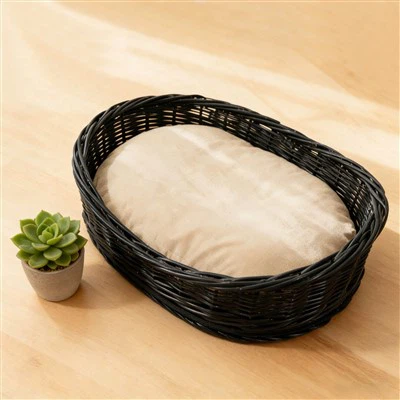
If you’re a cat owner looking for beds that are easy to keep fresh, or if you’re a fellow pet business owner looking to stock quality cat beds, hit us up for a chat. We can talk about bulk orders, custom designs, whatever you need. No complicated processes, just good beds and good advice for cats and their humans.
Paper Rope Cat Bed At the end of the day, a nice-smelling cat bed isn’t about luxury or fancy scents — it’s about keeping your cat’s space clean, safe, and welcoming. Follow these tips, and you won’t have to deal with funky bed smells, and your cat will actually want to use their bed instead of napping on your laundry.
References
- American Society for the Prevention of Cruelty to Animals (ASPCA). (2024). Toxic and Non-Toxic Plants: Household Scents. Retrieved from ASPCA Animal Poison Control Center database.
- International Association of Animal Behavior Consultants (IAABC). (2022). Feline Scent-Marking and Environmental Enrichment. Journal of Veterinary Behavior: Clinical Applications and Research.
- Laundry and Fabric Care Institute. (2023). Best Practices for Washing Pet Bedding to Maintain Odor Control and Fabric Integrity. Retrieved from official LFCI technical guidelines.
- Katz, L. (2021). The Social Needs of Domestic Cats: The Role of Scent in Household Environments. Journal of Feline Medicine and Surgery.
Songtai(Shandong) International Trade Co., Ltd.
With abundant experience, we are one of the most professional cat bed manufacturers in China. Please rest assured to buy high quality cat bed for sale here from our factory. If you have any enquiry about customized service, please feel free to email us.
Address: 4th Floor, OCC Aode International, Linyi, Shandong, China.
E-mail: york@petduke.com
WebSite: https://www.petduke.com/
