If you’ve ever stood in a retail space, a commercial office, or even a residential building and wondered why some wall panels look crisp and structurally sound 20 years after installation, while others chip, warp, or fade within a decade, you’re not alone. For years, many building owners and contractors fixate on drywall, plywood, or large-format stone when specifying wall coverings—but as a supplier of specialty Other Wall Panels, I’ve spent the past 12 years fielding the same question: “How durable is this stuff, really?” Other Wall Panels
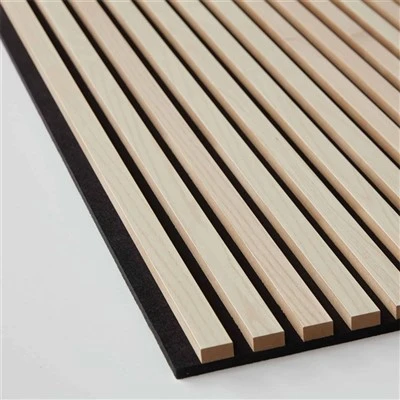
Durability isn’t a one-size-fits-all metric. It depends on the material composition, the environment it’s installed in, and the loads (both physical and environmental) it’s expected to endure. Over the years, I’ve walked job sites with general contractors, helped property managers troubleshoot panel issues in coastal warehouses, and tested our own products side-by-side with more common wall materials to answer that exact question. Today, I want to pull back the curtain on what durability actually means for the “other” wall panels that aren’t the standard drywall or plywood you see in every home store.
First, let’s define what we mean by Other Wall Panels here. I supply three core categories that fall under this umbrella: engineered wood composite panels with moisture-resistant cores, fiber-reinforced polymer (FRP) panels, and mineral-based wall panels. Each serves a different use case, and each has a very different durability profile—something I explain to every client before they make a purchase, because skimping on that step leads to avoidable replacements and headaches down the line.
Let’s start with the most common of these: moisture-resistant engineered wood composite panels. These aren’t the particleboard panels that swell at the first sign of a spill. They’re made with a solid wood core bound with waterproof resin, pressed under high heat, and finished with a scratch-resistant veneer or laminate. A few years back, I worked on a 15,000-square-foot retail build in Miami, where the original contractor specified standard drywall for the back-of-house break room. Six months after opening, the panels warped so badly near the sink that they had to be ripped out and replaced mid-pandemic, costing the client over $12,000 in downtime and materials. The next go-round, they opted for our moisture-resistant engineered wood composite panels, installed in 2021. Last year, when I did a follow-up site visit, those panels looked almost identical to the day they went in—no swelling, no discoloration, not even a single scratch from moving coolers through the space.
That’s the key for these panels: their durability is heavily tied to their resin core and edge treatment. Cheap engineered wood panels often use urea-formaldehyde resin, which breaks down when exposed to high humidity, causing swelling and off-gassing. Our panels use melamine-urea-formaldehyde (MUF) resin, which is water-resistant and bonds better to the wood fibers. We also offer an optional 2mm PVC edge wrap, which seals the cut edges that are the most vulnerable point for moisture intrusion. Under ASTM International’s standard test for moisture resistance (D1037), these panels can withstand 168 hours of continuous 100% relative humidity exposure without swelling more than 1%, which is well below the 5% threshold that counts as failure. That’s a big deal for spaces like restaurants, hospitals, and coastal properties where humidity is constant. For dry, indoor spaces like corporate offices, these panels can easily last 30 to 40 years if installed correctly, making them a cost-effective alternative to solid wood, which is more prone to warping from temperature changes.
Next up, fiber-reinforced polymer (FRP) panels, which are the tough guys of the group. I’ve seen these used in places that get way more abuse than a typical office: school hallways where kids run into them with backpacks, industrial kitchens where steam and grease coat every surface, and even animal shelters where claws and rough play are par for the course. FRP panels are made by embedding glass or carbon fibers in a thermoset polymer matrix, then curing it to create a rigid, non-porous surface. Unlike wood-based panels, they don’t absorb moisture at all—total water absorption is less than 0.1%, per ASTM D570 testing.
I remember a school district client in rural Ohio who was replacing their gymnasium walls in 2019. The old drywall had to be repainted every year because scuff marks and graffiti made it look run-down. They installed our white FRP panels with a UV-resistant topcoat, and three years later, when I helped them add a new auxiliary gym, they said they haven’t had to do any touch-ups. A custodian can wipe a scuff off with a sponge and mild soap, and graffiti just comes off with a degreaser. The durability of FRP goes beyond just moisture and stains, though. It’s impact-resistant too: our panels pass ASTM D256 impact testing, meaning they can withstand a 1kg steel ball dropped from 1 meter high without cracking or puncturing. That’s why they’re so popular for high-traffic areas that see heavy wear. For indoor use, they can last 50+ years with minimal maintenance. Outdoors, if they’re installed with the right UV-stabilized topcoat, they hold up to sun, rain, and temperature swings for 20 years or more—something that standard drywall or even vinyl siding can’t match.
The third category of Other Wall Panels I supply is mineral-based panels, which are made from compressed volcanic minerals and a small amount of cement, with no wood or polymer binders. These are the most durable in terms of fire resistance and rot resistance, which is why they’re used in hospitals, data centers, and high-rise buildings. A few months ago, I consulted on a 22-story apartment building in Seattle’s waterfront district, where building codes required wall panels that could withstand the region’s frequent heavy rains and seismic activity. The developer was initially skeptical of non-standard panels, but after we tested our mineral panels against their original specification of concrete masonry units (CMU), they switched. Our mineral panels are half the weight of CMU, so they reduced the building’s overall load by 12%, and they tested at Class A fire rating (the highest possible, meaning they don’t contribute to fire spread) under ASTM E84. We installed the panels in 2022, and during last winter’s atmospheric river events, the building’s exterior-facing panels took a direct beating from rain and wind—no water intrusion, no warping, no cracks.
What’s unique about mineral panels is their resistance to biological growth too. Since they’re inorganic, mold and mildew can’t grow on them, which is a huge benefit for spaces like basements or bathrooms where moisture is trapped. Their only downside is that they’re more brittle than FRP or engineered wood, so they’re not ideal for areas with heavy, sharp impacts. But for applications where fire resistance and long-term durability are top priorities, they’re unmatched. Under ASTM D3273 testing, which measures mold resistance, our mineral panels scored a perfect 10, meaning no mold growth after 28 days of exposure to a nutrient-rich, high-moisture environment. I have a customer who runs a assisted living facility in Portland, Oregon, and they’ve had our mineral panels in their wing since 2018—no mold, no rot, and only occasional light cleaning needed.
Now, a lot of clients ask me why they shouldn’t just stick to the standard wall panels they’ve always used. The short answer is durability tailored to your specific environment. A lot of people assume that standard drywall is the cheapest, but that’s only true for initial installation. When you factor in maintenance, replacements, and downtime, the other wall panels I supply often have a lower total cost of ownership. For example, that Miami retail client I mentioned earlier: they paid 30% more upfront for the engineered wood composite panels, but they didn’t have to replace them for 10 years, compared to the original drywall that failed in 6 months. That’s a return on investment that adds up over time.
I also get a lot of questions about installation, because durability is only as good as the install. Even the most durable panel will fail if it’s not mounted correctly. For engineered wood panels, you have to use corrosion-resistant screws, and leave a small 1/8-inch gap between panels to allow for expansion and contraction. For FRP panels, you need to use a compatible adhesive that’s formulated to bond with the polymer surface, or the panels can peel away from the wall over time. For mineral panels, you have to use a concrete-specific adhesive, because the rigid mineral core doesn’t bond well with wood-based adhesives. I don’t just sell panels— I provide installation guides for every product, and I’m always available to walk a contractor through the process if they’re working on a new type of space. That’s something a lot of big box suppliers don’t offer, and it’s a huge part of why my clients keep coming back.
Another common misconception is that other wall panels are only for commercial use. I’ve supplied all three types to residential clients too. A homeowner in Chicago had a basement that constantly flooded, so she installed our FRP panels on the walls—no more mold, and when the sump pump failed a couple years back, the water just ran right off the panels, no damage. A contractor in Austin used our engineered wood composite panels for a custom home’s master bathroom, where humidity from the shower used to cause standard drywall to peel. He told me last year that the panels still look brand new, 5 years after installation. Durability isn’t just for big commercial builds—it’s for any space where you want your walls to last without constant upkeep.
So, to circle back to the original question: What is the durability of other wall panels? It’s not a one-number answer, but it’s measurable, proven, and tailored to your needs. Whether you need a panel that can withstand coastal humidity, high school hallway scuffs, fire code requirements, or a basement’s constant moisture, there’s an other wall panel that will outlast standard materials, with a lower total cost over time.
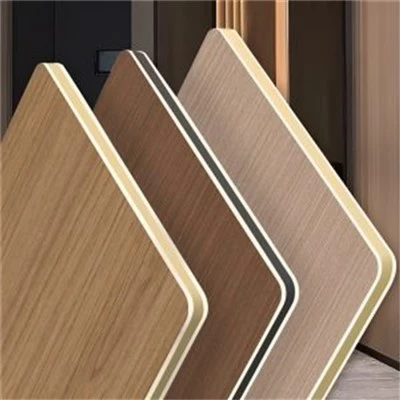
If you’re a building owner, contractor, or architect looking to spec wall panels that will hold up for decades, I’m here to help. I’ve worked with projects ranging from small residential remodels to 100,000-square-foot commercial builds, and I can walk you through the options that fit your space, budget, and durability requirements. Don’t waste money on panels that will fail in a few years—reach out to discuss your project and find the right solution for you.
Other Wall Panels References
ASTM International. Standard Test Methods for Evaluating Properties of Wood-Base Fiber and Particle Panel Materials. (ASTM D1037)
ASTM International. Standard Test Method for Water Absorption of Plastics. (ASTM D570)
ASTM International. Standard Test Method for Impact Resistance of Plastic Film and Sheeting. (ASTM D256)
ASTM International. Standard Test Method for Resistance to Growth of Mold on the Surface of Interior Coatings in an Environmental Chamber. (ASTM D3273)
ASTM International. Standard Test Method for Surface Burning Characteristics of Building Materials. (ASTM E84)
Shandong Dowell Decorative Material Co., Ltd.
With abundant experience, we are one of the most professional wall panels manufacturers and suppliers in China. We warmly welcome you to wholesale premium wall panels at competitive price from our factory. If you have any enquiry about cooperation, please feel free to email us.
Address: Room 913, 9th Floor, International Trade Service Center, No. 100 Lingong Road, Comprehensive Bonded Zone, Chaoyang Street, Yihe New District, Linyi City, Shandong PR, China
E-mail: info@dowellpanel.com
WebSite: https://www.dowellspcfloor.com/
