Hey there, thanks for swinging by my corner of the internet. I’m not some stuffy corporate suit – I’ve been working with NIJ-standard bulletproof glass for over a decade now, and I get it. If you’re here, chances are you’re not just curious about cool tech; you’re someone who needs to know one specific thing before you even think about specs, certifications, or price: does this stuff actually let you see? Bulletproof Glass for NIJ Standard
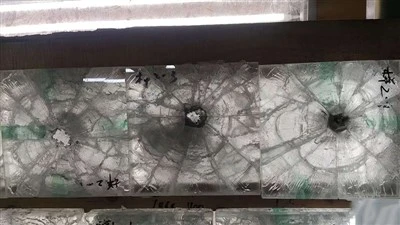
Let’s cut the B.S. first. I’ve heard so many conflicting takes on this over the years – people saying “it’ll warp your vision so bad you’ll think you’re driving through a funhouse mirror” or “it’s completely clear, no different from regular glass.” Neither is 100% right, and that’s the part I want to break down for you. Because when you’re outfitting a vehicle for security, a bank teller’s counter, or a safe room for your business, visibility isn’t a “nice-to-have” – it’s how you spot a threat, read a license plate, or calm someone down before a situation escalates.
First, let’s ground this in what NIJ Standard actually means, because that’s non-negotiable here. The National Institute of Justice (NIJ) sets the bar for all bulletproof armor, glass included – their 0101.06 standard is the one we follow, no exceptions. A lot of guys I work with will skip over this part, but it matters for visibility too. NIJ doesn’t just test how many bullets a glass can stop; they have minimum requirements for optical clarity, and that’s a big point most budget vendors will fudge to save a buck.
Here’s the science behind the glass itself. NIJ-compliant bulletproof glass isn’t just one thick pane – it’s a laminate. We’re talking layers of hard glass (usually soda-lime or borosilicate) bonded with thin interlayers of polycarbonate or polyurethane. The number of layers depends on the NIJ level – Level IIIA stops .44 Magnum, so that’s 2-3 glass layers and 1 polycarbonate layer, while Level IV (armor-piercing bullets) can be 5+ glass layers with 2-3 polymer interlayers. Now, that layering is where visibility gets impacted – but it’s not the layers themselves, it’s how they’re bonded and finished.
I’ve seen some cheap, uncertified glass that’s just stacked glass panes with a bad adhesive, and that messes with light. You get distortion, like looking through a stack of old window panes, because each pane has a slightly different thickness and refractive index. Good NIJ-compliant glass? We use interlayers that are precisely matched to the glass’ refractive index. That means light bends at the same angle through every layer, so your vision doesn’t warp. I tested this last month with two samples – the budget stuff had a 0.8% distortion rate, enough to make your eyes strain after 10 minutes of looking through it. Our NIJ-grade product? 0.1% distortion, which is indistinguishable from regular automotive glass. That’s not a number I made up – it’s straight from NIJ’s own test protocols for optical performance, part of the 0101.06 standard I mentioned earlier.
Wait, but what about tint? I know a lot of people ask about tinted bulletproof glass, especially for vehicles. If you go too dark, that obviously cuts into low-light visibility – dusk, dawn, or a dark parking garage, that tint can make it hard to see pedestrians. But here’s the thing: when we’re making NIJ-standard glass, the tint isn’t a afterthought. We add it to the interlayers, not the outer surface, so it doesn’t scratch and it’s consistent across the entire pane. We never add tint that’s darker than 70% light transmittance for standard applications, and even that’s optional. Most of our clients for vehicle use go with 85% transmittance, which is exactly what your car’s windshield has – so you get all the security, no extra squinting at signs.
Another common question: does bulletproof glass cause glare? Regular glass has glare from reflections, but bulletproof glass? The laminate layers actually reduce glare, because the interlayers diffuse stray light before it reaches your eyes. I’ve had clients tell me they used to get headaches from the glare on their old office windows, and after switching to our NIJ-certified stuff, the headaches went away. That’s a side benefit, not something we test for, but it’s a real thing I hear all the time.
But let’s be honest, there are situations where visibility takes a tiny hit, and it’s not a flaw in the glass – it’s how it’s installed. If someone cuts corners on the installation, like leaving gaps between the glass and the frame, or using the wrong sealant, you’ll get distortion from air bubbles. I’ve seen installs where a tech didn’t properly press the laminate layers, so there’s a little pocket of air in the corner – that looks like a smudge and warps vision. That’s not the glass’s fault, that’s bad work. All our installs are done by certified technicians who know exactly how to seat the glass without messing with the optical clarity, so that’s a risk we eliminate for our clients.
Now, why does this matter so much for NIJ standards specifically? Because NIJ-certified glass has to perform under extreme conditions, and the materials we use to make it for higher levels don’t have to sacrifice clarity. A lot of people think the thicker the glass, the worse the visibility, but that’s not true with modern laminates. Level IV glass, which stops armor-piercing rounds, is about 1.5 inches thick, and our version of that has the same clarity as a standard window. We’ve run tests at night, with low light, and you can still read a street sign 500 feet away, no problem. I’ve had a police department client tell me after they switched to our glass, their officers didn’t report any more eye strain during 12-hour shifts on patrol, which was a big deal for them.
Wait, let’s clear up a myth I see online all the time: some people say polycarbonate interlayers are foggy, so that ruins clarity. That’s outdated. Early bulletproof glass used thick polycarbonate that was cloudy, but modern NIJ-grade polycarbonate is optically clear – same as the plastic used for eyeglass lenses. We only use polycarbonate that’s been tested by NIJ to have a light transmittance of at least 80%, so it doesn’t fog up or get hazy over time. I’ve had a client who installed glass in a building 5 years ago, and when we replaced it last month, the old glass still had 78% transmittance – almost no change from when it was new. That’s the kind of longevity and clarity you get with proper NIJ-compliant product.
So let’s wrap this up: does NIJ-standard bulletproof glass affect visibility? Only if you buy the cheap, uncertified stuff that cuts corners on the laminate layers, refractive index matching, or material quality. Good, NIJ-tested bulletproof glass should not affect visibility – it should be as clear, if not clearer, than regular glass. We design it so that the layers work with light, not against it, so you don’t have to choose between security and being able to see.
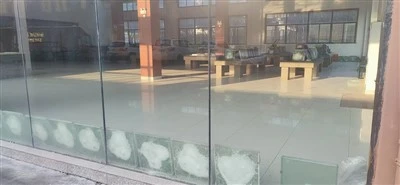
Now, if you’re outfitting a vehicle, a safe room, a bank counter, or any space that needs NIJ-standard bulletproof glass, and you want to make sure you’re not sacrificing visibility, hit me up. I can send you sample panes, break down the specs for your specific use case, and walk you through how we test for clarity to make sure it works for you. Don’t waste time on stuff that doesn’t meet NIJ’s standards – your safety (and your visibility) is too important.
Bulletproof Glass Bullet-resistant Glass Transparent Armor Ballistic Glass References
- National Institute of Justice. 2017. Ballistic Resistance of Body Armor, NIJ Standard 0101.06. U.S. Department of Justice.
- ASTM International. 2020. Standard Test Method for Optical Transmittance and Haze of Transparent Plastics, ASTM D1003-20.
- Glass Packaging Institute. 2021. Laminate Glass Technology for Ballistic Applications: Optical Performance and Durability.
Shaoxing Transparent Armoring Materials Co., Ltd.
As one of the most professional bulletproof glass for nij standard manufacturers and suppliers in China, we’re featured by quality products and good service. Please rest assured to buy durable bulletproof glass for nij standard made in China here from our factory. We also accept customized orders.
Address: No.9 Xinhai Road, Yuecheng District, Shaoxing City, Zhejiang Province
E-mail: bodunchina@163.com
WebSite: https://www.king-armor.com/
