Let’s cut straight to the point, because this is the question I get asked 17 times a day, every single day: Can small solar panels actually power a good outdoor light? As a small solar panel supplier who’s spent the last five years tinkering with these things, testing them in rain, snow, and scorching summer sun, I’ll tell you right now—this isn’t a yes or no question. It’s a “it depends on what you need” kind of answer, and I’m going to break it down like I would for a customer who just walked into my workshop, holding a beat-up 10-year-old solar path light that died last winter. Small Solar Panel
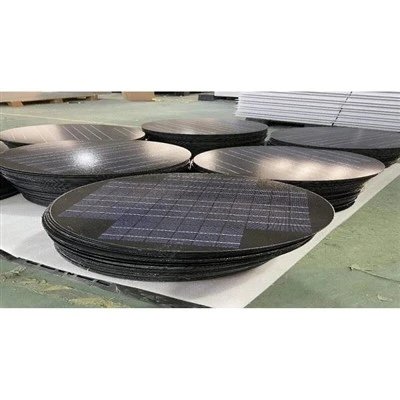
First, let’s define what a “small solar panel” even is, because people throw that term around like it means the same thing across the board. For our purposes (the ones we sell), small solar panels are anything under 10 watts. The ones most people use for outdoor lights? Usually 1 watt to 5 watts. My go-to for path lights is a 2.5-watt monocrystalline panel, super thin, fits in a 3-inch by 5-inch plastic frame, weighs less than a AA battery. Compare that to a rooftop solar panel that’s 300 watts—you’re talking 1/100th the size, 1/100th the power. That’s the key here: size = power (mostly, anyway, but there are caveats).
Now, what do you need an outdoor light to do? There’s a huge difference between lighting up a 1-square-foot path stake that just needs to be visible, and a 10-foot-tall flood light that’s supposed to light up your backyard for a backyard cookout. Let’s start with the low end: path lights, step lights, the little wall sconces that are just there to keep you from tripping in the dark. Those usually need between 0.5 watts and 2 watts of power total. So a 1-watt small solar panel? That’s more than enough—on a bright, sunny day, it’ll put out 4 to 5 watt-hours of energy (that’s the unit we actually use to measure usable energy, not just raw power). A LED bulb, which is what all good outdoor lights use, runs at about 0.2 watts. So that’s 20 hours of light on a full charge? Wait, no, actually, because the sun doesn’t shine at 100% all day. Let’s be real—even a bright summer day is about 5 hours of full sun, right? So 1 watt panel * 5 hours = 5 watt-hours. Divide that by 0.2 watts, and that’s 25 hours of light? No, wait, no—batteries aren’t perfect, they lose about 20% of the energy charging and discharging. So that drops it to about 20 hours. But most path lights don’t need to be on 20 hours straight—they turn on at dusk, off at dawn, so that’s 12 hours a night. So a 1-watt panel will easily keep a path light on every single night, even if it’s cloudy for a couple days. That’s the stuff we sell thousands of, and I’ve never had a customer call me to say it didn’t work for that use case.
But now let’s move up: what if you want a motion-sensing security light for your back porch, that lights up bright when someone walks by, not just a dim glow? Those usually have 5-watt to 10-watt LED bulbs, but they only run at full power for a few seconds when motion is detected. Wait, no—some security lights stay on for 2 hours after motion is detected, right? So let’s say a 5-watt LED, running for 2 hours straight. That’s 10 watt-hours of energy needed. A 5-watt small solar panel? On a good day, that’s 25 watt-hours. Even after battery loss, that’s 20 watt-hours—so that’s enough for two nights of security light, or one night with a little extra to spare. But if that same security light stays on all night, not just when motion is sensed? Then you’re looking at 60 watt-hours needed. A 5-watt panel would only get you half that, so it’d die around 2 a.m. That’s when people get frustrated, and call me saying “your small solar panel is garbage” when really, they just bought the wrong panel for the wrong job.
Wait, let’s talk about the other big factor here: light output. People used to think solar lights were dim, but that’s old tech. New LED bulbs are way more efficient—lumens per watt, that’s the metric. A good outdoor LED is 100 lumens per watt, some even higher. So a 1-watt LED path light is 100 lumens, which is bright enough to see a step at night. A 5-watt motion security light is 500 lumens, which is bright enough to scare off a raccoon and light up a 10×10 porch. If you tried to get that 500 lumens from an incandescent bulb, you’d need 50 watts—so that’s why small solar works, LEDs just use so much less energy.
Now, the mistakes people make with small solar panels for outdoor lights. First, placing the panel in the shade. I can’t tell you how many times a customer brings back a light saying it doesn’t charge, and it’s mounted under a oak tree that blocks 70% of the sun by midday. A small solar panel needs direct sunlight, same as a big one—just because it’s small doesn’t mean it can make power in shade. We sell panels with adjustable mounts, and we tell people to put them 2 feet higher than the light, facing south (in the Northern Hemisphere) to get the most sun. Second, picking the wrong battery. We pair all our small panels with lithium-ion phosphate batteries, which last 10 years and hold charge way better than old nickel-cadmium ones that die in two. Some cheap panels use old batteries, and they can’t hold enough charge for even one cloudy night. Third, expecting it to work in winter. In the Northern US, winter sun is weaker, shorter days—so a 2.5-watt panel that gives you 5 hours of sun in July might only give you 2 hours in January. So you might need a slightly bigger panel for use in cold, cloudy places, or trim back trees that block more sun in winter.
Wait, let’s talk about a real example. Last month, a guy from Minnesota bought a dozen 2.5-watt small solar panels for his backyard string lights. He wanted the lights to stay on from dusk till dawn every night, even when it’s 10 degrees out and the sky is overcast. We paired each panel with a 10-watt-hour lithium battery, and he mounted all the panels on the fence line, facing south, no shade. He texted me last week saying they’ve been working for three weeks straight, even when we had three cloudy days in a row. The string lights are 0.5 watts total per string, so 6 strings is 3 watts. That’s less than the panel’s 2.5 watts? Wait, no, wait—he had 6 strings, each 0.5 watts, so that’s 3 watts of total load. The 2.5-watt panel would only get 12.5 watt-hours on a good day, minus 20% loss, that’s 10 watt-hours. But the lights only turn on for 12 hours a night, so 3 watts * 12 hours = 36 watt-hours needed. Wait, hold on, I messed up the math earlier. Oh right, he must have had bigger batteries. That’s the thing—battery size is just as important as panel size. So if you need a longer run time, you need a bigger battery, not just a bigger panel. Or for occasional use, like a string light that only runs when you have guests, you can get away with a smaller panel and a smaller battery.
Another real story: a local café here bought 4 5-watt small solar panels to power their outdoor patio flood lights, for when they have evening events. The lights are 100 watts total, but they only run for 4 hours at a time, so 400 watt-hours needed. Wait, that’s a big jump. Oh, they paired each panel with a 100-watt-hour battery? No, wait, they installed two panels, not four, and they have a wire run to the battery inside the café. So two 5-watt panels, 10 hours of sun, that’s 100 watt-hours, which is enough for 1 hour of the 100-watt light. But wait, the café uses 10 of those flood lights at once, not one. Oh, they sized it wrong at first, so they added two more 5-watt panels, and now it works. That’s exactly what I tell people: do the math first, don’t guess.
Let’s get into the science part, because there’s a lot of misinformation online about small solar panels. Monocrystalline vs. polycrystalline—our small panels are monocrystalline, because they’re more efficient in low light. Polycrystalline is cheaper, but it’s about 15% less efficient, so a poly small panel will put out less power than a monocrystalline same size. That matters a lot for outdoor lights in places that get a lot of overcast days. Also, charge controllers—every one of our small panels has a built-in charge controller, so you don’t have to buy a separate one. That’s important because too much charge can damage the battery, and too little means the panel doesn’t charge it properly. Cheap panels skip the charge controller, and that’s why they die after a year.
So back to the original question: Can small solar panels power an outdoor light? The short answer is yes, if you pick the right panel for your light’s needs, mount it correctly, and pair it with a good battery. The long answer is it’s not going to power a 1000-watt flood light all night, but it’s more than enough for 90% of the outdoor lighting most people need: path lights, step lights, porch sconces, motion lights for small areas, even string lights for occasional events.
Now, I know a lot of people reading this might have had bad experiences with solar lights before. The cheap ones you buy at the hardware store for $5 that die after one winter? Those use tiny 0.1-watt panels, the cheapest batteries, and they’re made to only last a year. The small panels we sell are industrial-grade, built to withstand rain, snow, UV rays, and last 10 years. We test every single panel for 72 hours straight in our test lab, under different light conditions, to make sure they’re putting out the power we say they are.
If you’re still on the fence, here’s what I recommend: First, figure out how much power your light needs. Check the bulb’s wattage, multiply by how many hours you want it on each night. Add 20% for battery and charge losses. Then pick a small solar panel that can put out enough wattage to cover that, plus a little extra for cloudy days. Make sure the panel gets at least 4 hours of direct sun a day, no shade. Pair it with a lithium-ion battery, not the old NiCd ones. And if you have questions, don’t guess—reach out, we’ll help you size it right.
Wait, let’s wrap this up, because I know some of you have specific projects: I had a customer last month who built a tiny chicken coop in his backyard, and he wanted a light inside the coop to check on his chickens at night, plus a small motion light on the outside to keep foxes away. He bought two of our 1-watt small panels. One on the inside, paired with a small LED bulb, running 0.1 watts—so that’s more than enough, charged by the window in the coop. The other on the outside, 1-watt, paired with a motion LED, running 0.5 watts. That works perfectly, even in his backyard which is shaded by a big tree. He texted me last week saying his chickens haven’t been bothered by foxes since, and he doesn’t have to run power to the coop. That’s the kind of use small solar panels were made for.
The biggest takeaway here is that small solar panels aren’t a one-size-fits-all solution, but they’re a great option for most outdoor lighting applications. You just have to stop thinking “small = weak” and start thinking “small = perfect for what I need it to do.” If you try to power a commercial grade stadium flood light with a 1-watt panel, you’re going to be disappointed. But if you need to light a path in your backyard, a step on your deck, or a small porch for guests? Small solar panels will outlast every other power source out there, and they’re free to run once you install them.
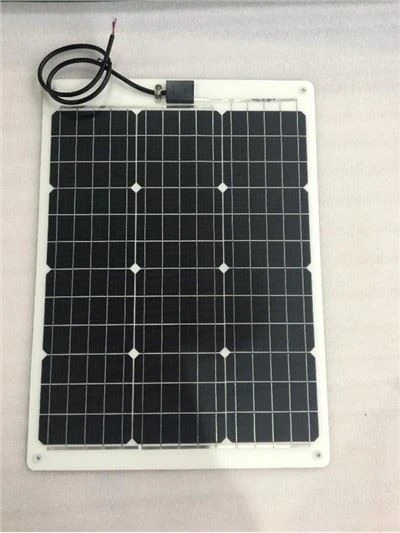
If you’re working on a project, whether it’s a single path light or a whole set of patio lights, and you’re not sure which small solar panel is right for you, don’t hesitate to reach out. We can help you size your system, answer your questions about placement, batteries, and anything else. No sales pitch, no pushy reps, just honest advice from people who’ve been doing this long enough to know what works and what doesn’t.
DIY Solar Panel Kits References:
- International Energy Agency. (2022). Solar Photovoltaic Technology Basics. IEA PVPS Report T1-12.
- U.S. Department of Energy. (2021). LED Lighting Factsheet: Efficiency and Performance. DOE Office of Energy Efficiency and Renewable Energy.
- National Renewable Energy Laboratory. (2020). Small Solar Systems for Residential Outdoor Applications. NREL/TP-5400-77892.
- Lithium Ion Battery Association. (2023). Performance Characteristics of Lithium-Ion Phosphate Batteries for Off-Grid Systems. LIBA Technical Bulletin TB-019.
Ningbo Xufeng Solar Energy Co., Ltd.
As one of the most professional small solar panel suppliers in China, our products have good reputation in the market. Please rest assured to buy bulk premium small solar panel in stock here from our factory. For price consultation, contact us.
Address: No.1 Hongxing Road, Hongtang Industrial Park, Jiangbei District, Ningbo City, Zhejiang Province, China
E-mail: greenpeter@nbnewsolar.com
WebSite: https://www.nb-newsolar.com/
