If you’ve ever watched a reach forklift at work—shuttling between narrow warehouse aisles, lifting pallets 30 feet high to access top-level racking, and twisting to position loads without extra space—you might have wondered how its mast holds up through hundreds of heavy lifts a day. As a reach forklift supplier that’s been working with warehouses and distribution centers for over a decade, I field this question all the time. It’s not just a random piece of metal; every part of the mast is engineered for precision, durability, and safety, tailored to the unique demands of tight-aisle operations. Let’s break down what goes into making a reach forklift mast, from the core structural steel to the tiny components that keep it running. Reach Forklift
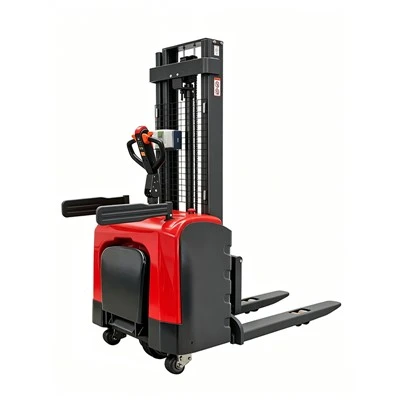
First, let’s start with the foundation: the mast’s primary structure, the vertical beams that make up its uprights. Unlike standard forklift masts, which are bulkier and designed for wide-open spaces, a reach forklift’s mast has to telescope—meaning it extends and retracts smoothly to reach high shelves without tipping, even when carrying a full load. That requires a material that’s strong enough to support 3,000 to 5,500 pounds (the typical capacity for our models) at 20 to 40 feet in the air, but also light enough to maneuver quickly without straining the forklift’s carriage and reach mechanism.
For that, we use high-strength low-alloy (HSLA) steel, specifically a grade called S355 JR, a staple in material handling equipment manufacturing. Here’s why: S355 JR has a minimum yield strength of 355 megapascals (MPa), which means it can bend under pressure without cracking or deforming over time. Regular mild steel, by contrast, has a yield strength of around 250 MPa, which would start to warp after just a few months of heavy use lifting pallets stacked with electronics, pharmaceuticals, or retail goods. We choose HSLA not just for strength, but for its ability to be rolled and formed into the thin-walled, hollow sections that define a reach mast. A solid steel beam would add unnecessary weight, making the forklift less fuel-efficient and harder to steer in narrow aisles (often just 6 to 8 feet wide, compared to 12 feet for standard forklifts). The hollow, U-shaped cross-sections of the mast’s inner and outer uprights are rolled to precise tolerances—within a tenth of a millimeter, to be exact—to ensure they slide against each other without friction, even after thousands of cycles.
Next, the wear surfaces: the parts that make direct contact as the mast extends and retract. If the vertical beams were just smooth steel, they’d rub against each other with every telescoping motion, leading to wear, noise, and eventually play in the mast that compromises load stability. To prevent that, we apply a hard chrome plating to the inner walls of the outer mast and the outer walls of the inner mast. Hard chrome is different from decorative chrome; it’s a 0.02 to 0.05 millimeter thick layer of chromium deposited through electroplating, which creates a surface that’s 10 times harder than mild steel and highly corrosion-resistant. That’s critical for warehouses that use washing systems to clean pallets, or operate in humid coastal environments where rust can eat away at metal components. For even smoother operation, we also machine a series of guide pads onto the wear surfaces—usually made of polyurethane or sintered bronze. Polyurethane guide pads are flexible and quiet, absorbing vibration when the mast is lifting a full load, while sintered bronze is embedded with oil pockets that act as a built-in lubricant, reducing the need for frequent maintenance. We switch between the two based on customer needs: sintered bronze is ideal for 24/7 operations where downtime for lubrication is a concern, while polyurethane works well for smaller warehouses that prioritize quiet indoor operation.
Then there’s the lifting mechanism—the heart of the mast’s functionality. Reach forklift masts rely on a combination of hydraulic cylinders and chains to extend and lift loads, and every part of this system is engineered to avoid failure. The main lifting cylinder, which powers the mast’s extension, is made of ductile cast iron, a material that’s both strong and flexible enough to handle the high pressure of hydraulic fluid (up to 200 bar, or 2,900 psi, during a lift). Ductile cast iron is preferred over steel here because it’s less prone to cracking under repeated pressure changes, a common issue with steel cylinders over time. We machine the cylinder’s inner bore to a mirror finish to prevent fluid leakage; even a tiny scratch can cause the cylinder to lose pressure, leading to slow, uneven mast movement.
The chains that connect the mast to the forklift’s carriage are another key component. Unlike standard forklift chains, which are designed for straight lifts, reach forklift chains have to handle the twisting motion of the mast as it reaches into racks. These chains are made of carbon steel, with a heat-treated surface to resist stretching and breaking. Each chain is rated to hold 1.5 times the mast’s maximum load capacity, a safety factor required by global material handling standards, so even if one link wears slightly, the rest of the chain can still support the load. We also use a chain tensioning system, with adjustable bolts at the top of the mast, to keep the chains tight and prevent slack, which would cause jerky movements that can damage loads or the mast itself.
You might not think about the mast’s connection to the forklift’s carriage, but that’s another area where material choice matters. The carriage, which holds the forks, is made of a medium-carbon steel (AISI 1045) that’s heat-treated to increase its hardness. This part has to bear the load’s weight as it moves with the mast, so it needs to be strong enough to resist bending, but also machinable enough to fit the forks and side-shift mechanism. Side-shift, a feature that lets operators move forks left or right without repositioning the forklift, is often integrated into the carriage, so the steel has to be drilled and milled to precise dimensions to ensure smooth side-to-side movement.
Beyond the structural components, there are smaller parts that make the mast reliable day in and day out. The bushings that connect the hydraulic cylinder to the mast’s uprights are made of brass-lined steel, which absorbs shock and prevents metal-on-metal contact. The seals around the hydraulic cylinder are a blend of nitrile rubber and polyurethane, chosen for their resistance to hydraulic fluid and extreme temperatures—whether a warehouse is in a sub-zero freezer for cold-storage goods or a 100°F distribution center in the summer. Even the paint on the mast is specially formulated: we use a powder coat paint with a zinc-rich primer, which provides corrosion protection for up to 10 years, even in harsh industrial environments. Unlike liquid paint, powder coat is applied electrostatically and baked, creating a thicker, more durable layer that doesn’t chip easily from pallet impacts.
As a reach forklift supplier, we’ve learned over the years that the mast is the single most important part of the forklift, because it’s the part that’s under the most stress. A forklift might have a reliable engine or a comfortable operator seat, but if the mast fails, the entire machine is out of service—and for warehouses, downtime can cost thousands of dollars an hour. That’s why we test every mast we manufacture to meet or exceed industry standards, including ISO 23314, the international standard for forklift mast safety and performance. Our masts undergo load testing at 150% of their rated capacity, where we lift a test load to maximum height and hold it for 15 minutes, checking for any deformation or movement. We also test telescoping cycles: each mast goes through 10,000 full extend-retract cycles to ensure it doesn’t wear out prematurely.
What sets reach forklift masts apart from other types, like pantograph or telescopic handler masts, is their ability to operate in ultra-narrow aisles. While a telescopic handler mast is designed to lift loads over obstacles, a reach forklift mast has to be compact, so it can fit between rows of racking that are only a few inches wider than the forklift itself. That’s why our engineering team spends so much time optimizing the mast’s geometry: calculating the angle of the uprights, the length of the chains, and the placement of the rollers to ensure the mast stays stable even when it’s extended to 40 feet. We also use computer-aided design (CAD) software to run simulations of mast movement under different loads, adjusting the material thickness and cross-section shape to reduce weight without sacrificing strength.
Over the past decade, we’ve also made updates to mast design to make our reach forklifts more sustainable. For example, we’ve switched to thinner-wall HSLA steel, which reduces the overall weight of the mast by 15%, improving the forklift’s energy efficiency and extending battery life for electric models. We’ve also eliminated the use of lead in any mast components, replacing lead-based bearings and seals with eco-friendly alternatives that meet RoHS environmental standards. These changes not only benefit our customers’ sustainability goals, but also reduce maintenance costs—lighter masts mean less strain on the forklift’s wheels, brakes, and hydraulic system, leading to fewer repairs and longer machine life.
If you’re in the market for a reach forklift, it’s worth asking questions about the mast’s construction, not just its lift capacity or price. A cheaply made mast with mild steel and thin plating might seem like a good deal upfront, but it will wear out in two to three years, compared to the eight to 10 years you can expect from a mast built with S355 HSLA steel and hard chrome plating. That’s why at our company, we stand behind our masts with a 5-year structural warranty, because we know how much engineering goes into every part.
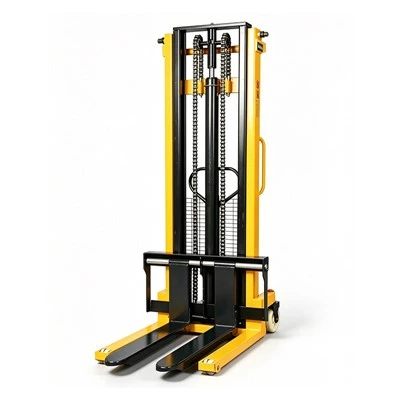
Whether you’re managing a small e-commerce warehouse with 10 forklifts or a large distribution center with a fleet of 50, the mast is the backbone of your material handling operation. It’s not just a piece of metal; it’s a precision-engineered system that works around the clock to keep your inventory moving. If you’re looking for a reach forklift that’s built for reliability, with a mast designed to stand up to the demands of your operation, we’re here to help. Reach out to our team to discuss your specific needs, from narrow aisle dimensions to load capacity, and we’ll help you find the right solution for your business.
Aluminum Alloy Lift REFERENCES
ISO 23314:2015, Industrial trucks — Safety standards for forklift mast systems
Material Handling Industry Association (MHIA) Technical Report on Mast Design and Durability
American Society of Mechanical Engineers (ASME) B56.1, Safety Standard for Industrial Lift Trucks
Huazheng Heavy Industry Machinery Equipment Co., Ltd.
With abundant experience, we are one of the most professional reach forklift manufacturers and suppliers in China. Please feel free to buy high quality reach forklift for sale here from our factory. We also accept customized orders.
Address: Room 423-101, Building C-4, Electronics Valley Technology Center, No.3088 Lekai North Street, Gaokai District, Baoding City, Hebei Province, China
E-mail: sales02@hzheavy.com
WebSite: https://www.hzheavy.com/
