Alright, let’s cut through the tech jargon you’ve probably seen a hundred times and talk about what a digital servo drive actually is—no stuffy textbooks, no fancy terms that make your eyes glaze over. I’ve been selling servo drives for over 12 years now, so I’ve fielded every single question from “what is this thing even for?” to “why does it cost more than a basic motor controller?” Let’s start with the basics, no gatekeeping. Servo Drive
First, let’s set the scene: if you’ve ever used a machine that moves with pinpoint accuracy—think a robotic arm putting a tiny part in a smartphone, a CNC mill carving a custom guitar body, or a conveyor belt that stops exactly at a package’s spot to pick it up—you’re looking at a digital servo drive doing the heavy lifting. Wait, heavy might not be the right word here—precision is the real workhorse. A lot of people mix up servo drives with regular motor controllers, so let’s bust that myth right off the bat. A basic motor controller just sends power to a motor, right? It’s like stepping on a gas pedal and guessing how hard you’re pressing to get to a certain speed or position. A digital servo drive? That’s more like a cruise control that actually measures every single movement and adjusts in real time.
Let’s break down the parts, keep it simple. Every digital servo drive has three main jobs, and they do ’em digitally now—no old analog dials that drift or get finicky. First, it takes a control signal from whatever’s telling the machine what to do. That could be a PLC, a motion controller, even a custom piece of software. That signal might say “move 5 millimeters to the left at 100 RPM” or “hold this position steady no matter what load is put on it.” Second, the drive processes that signal and sends power to the servo motor. But here’s the secret sauce: third, it has feedback. Not like, a vague sense of where the motor is—its encoder, usually either incremental or absolute, spits out thousands of data points every single second. Like, 10,000 times a second, it’s checking “am I where I’m supposed to be? How fast am I moving? Is the load heavier than usual right now?” And if it’s off by even a fraction of a millimeter or a fraction of an RPM, it adjusts the power to the motor in microseconds. No lag, no guesswork. That’s why things like surgical robots don’t wobble when they cut, or a printing press doesn’t misalign a page mid-run.
Wait, let’s make that real with a story. A customer of mine a couple years back made custom wind turbine blades. Before they switched to our digital servo drives, their milling process was off by like 2 millimeters on average. That might not sound like much, but wind blades need to be aerodynamically perfect to cut through wind efficiently—even a 1mm error adds up to 5% less energy production over the blade’s lifespan, which adds up to millions over a farm’s life. They tried analog drives first, but temperature changes in their factory made the drives drift—hot days made them move too fast, cold days too slow. The digital drives? They self-calibrate. The encoder never lies, so even if the factory heats up, the drive adjusts the power output to keep the motor moving exactly where it’s supposed to. After switching, their error rate dropped to 0.1mm. That’s the difference between a product that works and one that’s a waste of materials.
Now, let’s talk about why “digital” matters so much here. Old analog servo drives were big, finicky, and hard to tune. You’d have to twist dials until the drive didn’t shake or stall, which took a tech hours, and if you changed the load even a little, you had to retune it. Digital drives? They have built-in tuning algorithms now—most of the good ones can auto-tune in 10 seconds flat. You just tell it what your load is, and it figures out the right balance of power and feedback to keep the movement smooth and accurate. Also, digital drives play nice with all the modern systems people use now—EtherCAT, PROFINET, Modbus, whatever your factory uses. If you’re wiring up a new line, you don’t have to mess with 10 different protocol converters; a good digital servo drive speaks the same language as your rest of your automation gear.
I get it, though—if you’re not a controls engineer, this stuff can sound like overkill. Why would you need a digital servo drive for, say, a packaging line that just moves boxes from point A to B? Let’s use that same packaging line example. If you use a regular motor, a box might slide off the conveyor because it’s moving too fast, or stop an inch too short and get crushed by the next box. A digital servo drive? It syncs every movement with the line ahead and behind. When the box hits the sensor, the drive knows exactly how fast to slow the conveyor, how much pressure to apply to hold the box steady while it’s being wrapped, and how quickly to speed back up without making the box tumble. That cuts down on product damage, which saves you money in the long run. And if you want to change the line to handle different sized boxes? You just type in a new number on the drive’s HMI—no re-wiring, no retuning, no calling a technician at 2 a.m. when your line goes down.
Another big thing: energy efficiency. A lot of clients don’t realize this, but digital servo drives waste way less power than old motors or analog drives. Because they’re constantly adjusting, they only send as much power as the motor needs. If the motor is holding a position, it doesn’t pump full power through it 24/7—it just sends enough to counteract gravity or the load. I had a food processing client that switched from DC motors and analog drives to our digital servo drives, and their power bill dropped by 18% in the first quarter. That’s not chump change for a factory running 24/5.
Now, let’s clear up a common misconception: digital servo drives aren’t just for heavy industry, either. We sell a ton of them to small businesses too—like a guy who builds custom 3D printers that print metal parts, or a dental lab that mills crowns and bridges. Those jobs require accuracy down to a tenth of a millimeter, and you can’t get that with a $50 motor controller off Amazon. Our digital servo drives are compact enough to fit in a small desk machine, and they’re cheap enough for a small shop to afford, not just a billion-dollar automotive plant.
Wait, let’s talk about how they work under the hood a little, but keep it simple. The drive’s main chip is a microcontroller that runs all the calculations. Every millisecond, it takes the feedback from the encoder, compares it to the command signal, and adjusts the output voltage and current to the motor. That’s called closed-loop control, and it’s the opposite of open-loop control, which is what basic step motors use. Open-loop just sends steps, but if the motor misses a step (like if it’s overloaded), you have no clue. Closed-loop with a digital servo drive? It notices the missed step immediately and fixes it—no downtime, no defective parts.
Let me give you a real example of that. A client that makes circuit boards uses pick-and-place machines that grab tiny components (some smaller than a grain of rice) and put them on a PCB. If the drive missed a step, the component would be off by a millimeter, and the board would be defective. Before switching to digital servo drives, they were throwing away 3% of their boards because of placement errors. Now that number is 0.01%. That’s millions saved a year, just because of the drive.
Now, I know what some of you are thinking: “That sounds great, but what’s the catch?” There’s a catch, I guess—you can’t just slap any old digital servo drive into your machine and expect it to work. You have to match it to your motor, your load, and your application. A drive built for a 1000-pound robotic arm isn’t going to work for a tiny CNC router, and vice versa. That’s where our team comes in—we don’t just sell you a drive, we help you pick the right one for your job. A lot of other suppliers just push the most expensive drive, but we’ve been in this long enough to know that a smaller, more affordable drive works better for a lot of small to medium businesses.
Also, maintenance is way easier now with digital drives. You can hook them up to software that tracks performance—like if a drive is getting too hot, or the encoder readings are starting to drift slightly, you get an alert before it fails. No more midnight breakdowns where you have to replace a drive blind; you can schedule maintenance during a planned shutdown. That’s a huge deal for factories that run 24/7, because unplanned downtime costs way more than the drive itself.
Let’s circle back to the original question: what is a digital servo drive? At the end of the day, it’s a component that turns a regular motor into a precision tool. It’s the brain that makes the muscle (the servo motor) do exactly what you want, when you want it, no mistakes. It’s not just a part—It’s what separates a machine that gets the job done and one that does it right, over and over again, with minimal waste and downtime.
If you’re running a machine shop, a packaging line, a robotics lab, or any kind of automation that needs accuracy, energy efficiency, and reliability, a digital servo drive isn’t a luxury—it’s an investment that pays for itself pretty quickly. I’ve seen clients get their money back in 6 months on energy and waste savings, and that’s with not even counting the time saved from less downtime.

Now, if you’re thinking about upgrading your current system, or if you’re building a new machine and need the right drive to get it working perfectly, reach out to our team to talk through your needs. We don’t do pushy sales pitches—we’ll ask you about your application, your load, your desired accuracy, and help you pick exactly what you need, no extra fluff. No overpriced features you’ll never use, no generic parts that don’t fit. Just solid, dependable digital servo drives backed by years of experience.
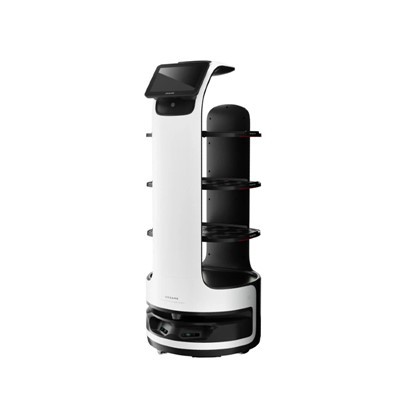
Food Delivery Robot REFERENCES
- Bolton, W. (2015). Automobile and Electrical Systems for Engineers. Newnes.
- Espinoza, F., & Pérez, L. (2020). Digital Servo Drives: Design, Tuning, and Industrial Applications. IEEE Transactions on Industrial Electronics.
- O’Young, S., & Chen, I. (2018). Motion Control with Servo Drives: From Theory to Practice. CRC Press.
- Robotics Industries Association. (2021). Industrial Automation Components: Servo Motors and Drives. RIA Standards Publication.
- Zhang, Y., & Liu, H. (2019). Energy Efficiency Analysis of Digital Servo Drives in Manufacturing Systems. Journal of Cleaner Production.
Hangzhou Janz Intelligent Technology Co., Ltd.
Address: Room 240, 2nd Floor, 289-16, Creative Road, Yinhu Street, Fuyang District, Hangzhou City, Zhejiang Province
E-mail: amy@hzjanz.com
WebSite: https://www.simplexrobots.com/
