If you’ve ever worked in labs, water treatment, or even skincare formulations, you’ve definitely run into EDTA salts—they’re the unsung heroes that keep things stable, prevent metal contamination, and make sure products do what they’re supposed to. As someone who’s been supplying EDTA salts for over a decade, I get that a lot of folks (especially new lab techs or procurement folks) ask the same basic question: “Wait, what’s the actual molecular weight of the common ones, anyway?” It’s not just a random number—get this wrong when you’re mixing stock solutions, and you can end up with wonky results, wasted materials, or even messed-up product batches. Let’s break this down like we chat over a quick break, no stuffy textbook jargon here. EDTA Salts
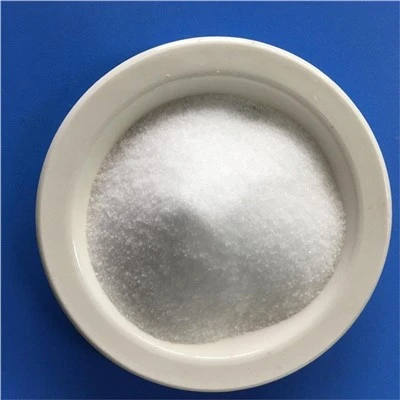
First, let’s start with the basics: EDTA stands for Ethylenediaminetetraacetic acid, the parent acid, but almost no one uses that in its pure acid form day-to-day. Why? It’s barely soluble in water at neutral pH. That’s why the salts exist—they’re the water-soluble versions, which is what every lab, industrial facility, and formulator actually needs. The three common ones we supply on our site? Disodium EDTA, Calcium Disodium EDTA, and Tetrasodium EDTA. Those are the big three, and each has a different molecular weight. I see so many new customers mix these up, especially when they’re calculating molar solutions for the first time, so let’s make this super clear.
Disodium EDTA is probably the most widely used of the bunch—you can find it in almost every molecular biology lab, shampoo, and food preservative. Its full chemical name is Ethylenediaminetetraacetic acid disodium salt dihydrate. Wait, why dihydrate? Because it’s naturally hydrated, meaning two water molecules are stuck to the molecule when it’s crystallized. That’s a huge point a lot of people skip—if you ignore the water, you’ll get a wrong molecular weight, which throws off your molar calculations. Let’s crunch the numbers here. The molecular formula for disodium EDTA dihydrate is C10H14N2Na2O8·2H2O. Let’s add up the atomic weights (I use rounded ones that are standard in the lab, not super precise, since that’s what everyone actually uses): Carbon is ~12, Hydrogen ~1, Nitrogen ~14, Sodium ~23, Oxygen ~16. So C10 is 120, H14 is 14, N2 is 28, Na2 is 46, O8 is 128. Then we add the two waters: 2*(2+16) = 36. Add all that together: 120 +14 =134, +28=162, +46=208, +128=336, +36=372. Wait, so that’s 372.24 g/mol, right? Yeah, that’s the number everyone uses for stock solutions. I still get emails from a first-year lab tech who almost used the anhydrous (no water) weight a couple years back and messed up a PCR reaction—lesson learned, check for the hydrate.
Next up: Calcium Disodium EDTA. This one’s the odd one out, and it’s used mostly for heavy metal detox, analytical chemistry, and some industrial applications where you don’t want free sodium ions floating around (free sodium can interfere with some reactions, or cause issues in water treatment). Its chemical name is Ethylenediaminetetraacetic acid calcium disodium salt hydrate, usually it’s a monohydrate, so formula C10H12CaN2Na2O8·H2O. Let’s run the math here to compare. C10 is 120, H12 is 12, Ca is 40, N2 is 28, Na2 is 46, O8 is 128, plus the single water is 18. Add that all: 120+12=132, +40=172, +28=200, +46=246, +128=374, +18=392. Oh, so that’s 392.27 g/mol. Wait, so it’s heavier than disodium EDTA, which makes sense because we swapped the two extra sodium ions’ charge with a calcium ion that’s heavier. The big thing with calcium disodium? It doesn’t bind free calcium in solution, which is why it’s used for things like treating lead poisoning—instead of grabbing calcium from your blood, it grabs the lead. That’s a key difference, and it’s why we stock this for pharma and clinical lab clients.
Third common one: Tetrasodium EDTA. This is the industrial workhorse—you’ll find it in laundry detergents, soaps, water softeners, and large-scale food processing, because it’s super cheap, super soluble, and great for sequestering hard water minerals (calcium, magnesium) that make suds go away. Its full name is Ethylenediaminetetraacetic acid tetrasodium salt dihydrate, formula C10H12N2Na4O8·2H2O. Let’s calculate that weight. C10 is 120, H12 is 12, N2 is 28, Na4 is 92, O8 is 128, plus two waters is 36. Add up: 120+12=132, +28=160, +92=252, +128=380, +36=416. That’s 416.17 g/mol. Makes sense—we’ve got four sodium ions here instead of two, so it’s the heaviest of the three. I always tell our industrial clients that tetrasodium is great for high-volume applications because it’s more concentrated (wait, no—molar concentration depends on weight, so if you’re dissolving the same weight, tetrasodium has fewer moles, but it’s cheaper per kg, so it’s a cost-saver for big batches).
Now, let’s talk about why this isn’t just a “fun number” for us as a supplier. I’ve had so many customers come to me saying, “I found a molecular weight online that’s different—why is that?” A lot of the time, it’s because people confuse hydrates vs anhydrous, or different forms (some disodium EDTA comes as a tetrahydrate, not dihydrate, which is 372 vs 398, huge difference). That’s why we always post the exact molecular weight for each product on our listings, along with the purity, so you don’t have to guess. We test every batch to make sure the hydrate content is consistent—no one wants to have to factor in variable water content when they’re making a 1M EDTA stock that needs to be exact.
Another common mix-up: people confuse EDTA salts with other chelating agents, but that’s a whole other post. For our clients, especially labs, molarity calculations are non-negotiable. Let’s do a quick example: if you need to make 1 liter of 0.5M disodium EDTA, you can’t just weigh 0.5 mol of the parent acid (which is 292 g/mol) because it’s barely soluble. You need the disodium salt, so 0.5 mol * 372 g/mol = 186 grams. If you used anhydrous disodium (336 g/mol), you’d only weigh 168 grams, which would make your solution 0.45M instead of 0.5M—enough to throw off Western blots, cell culture, or whatever you’re doing. That’s the kind of mistake that costs labs time and money, which is why we make sure all our EDTA salts are properly certified with the correct molecular weight for the exact batch form.
We also supply smaller quantities for labs and larger bulk for industrial customers, so whether you’re a grad student needing a 100g bottle or a detergent manufacturer needing 5000kg, we’ve got the right stuff at the right molecular weight for your application. I’ve been in this game long enough to know that when a client tells me they messed up a batch because of a wrong molecular weight, it’s almost always a mix-up between hydrates. That’s why we include a little note on every product page about checking the hydrate form—no hidden gotchas here.

If you’re still not sure which EDTA salt you need, or you need help with a calculation, hit us up to chat through it. We don’t just ship chemicals—we’ve got chemists on staff who can walk you through choosing the right salt, confirming the molecular weight for your specific use case, and even helping with solution prep if you need it. Whether you’re a small lab or a big industrial facility, we’re here to make sure you’ve got the right EDTA salts, no guesswork, no wrong numbers.
Potassium Diacetate References
- Lide, D. R. (Ed.). (2004). CRC Handbook of Chemistry and Physics (85th ed.). CRC Press.
- Sigma-Aldrich. (2024). Material Safety Data Sheet: Ethylenediaminetetraacetic acid disodium salt dihydrate.
- USP/NF Monograph. (2023). Edetate Calcium Disodium. United States Pharmacopeia Convention.
- Water Science School. (2022). Chelating Agents in Water Treatment. U.S. Geological Survey.
Jiangsu Kolod Food Ingredients Co., Ltd.
As one of the most professional edta salts manufacturers and suppliers in China, we’re featured by quality products and good price. Please rest assured to wholesale bulk edta salts made in China here and get free sample from our factory. Customized orders are welcome.
Address: South Side of Weier Road, Guanyun Development Zone, Lianyungang City, Jiangsu Province, China
E-mail: sales1399@jskolod.com
WebSite: https://www.kolod-group.com/
