Hey there! I’m a supplier of reverse osmosis (RO) membranes, and today I wanna talk about a hot topic: Can reverse osmosis membranes remove nitrates? Reverse Osmosis Membrane
First off, let’s get a bit of background on nitrates. Nitrates are a type of chemical compound that contain nitrogen and oxygen. They’re commonly found in fertilizers, sewage, and even some natural groundwater sources. While nitrates are an essential part of the nitrogen cycle and are used by plants for growth, high levels of nitrates in drinking water can be a real concern for human health. For infants, high nitrate levels can cause a condition called methemoglobinemia, also known as "blue baby syndrome," which reduces the blood’s ability to carry oxygen. In adults, long – term exposure to high nitrate levels has been linked to an increased risk of certain cancers.
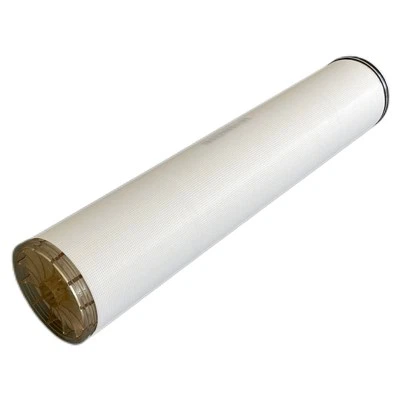
So, how does a reverse osmosis membrane fit into all this? Well, reverse osmosis is a water purification process that uses a semi – permeable membrane to remove ions, molecules, and larger particles from water. The way it works is pretty cool. You apply pressure to the water on one side of the membrane, and the water molecules are forced through the tiny pores in the membrane, while the larger contaminants, like salts, heavy metals, and yes, nitrates, are left behind.
Now, the big question: Can RO membranes actually remove nitrates? The short answer is yes, they can. RO membranes are designed to be highly effective at removing a wide range of contaminants, and nitrates are no exception. Most high – quality RO membranes can remove anywhere from 90% to 99% of nitrates from water.
But it’s not that simple. The actual removal rate of nitrates by an RO membrane can depend on a few factors. One of the main factors is the quality and type of the RO membrane. There are different grades of RO membranes out there, and some are better at removing nitrates than others. For example, a membrane with a tighter pore size is generally more effective at rejecting nitrates.
Another factor is the water chemistry. The pH level of the water can have an impact on nitrate removal. Nitrates exist in an ionic form in water, and the pH can affect how these ions interact with the membrane. In general, a slightly acidic to neutral pH is optimal for nitrate removal. Also, the presence of other ions in the water can compete with nitrates for space on the membrane surface, which might reduce the overall nitrate removal efficiency.
The pressure applied during the reverse osmosis process also matters. Higher pressure can force more water through the membrane, but it also needs to be within the recommended range for the specific membrane. If the pressure is too high, it can damage the membrane, and if it’s too low, the water might not pass through the membrane effectively, leading to lower nitrate removal.
Let me share a real – world example. I had a customer who was dealing with high nitrate levels in their well water. They installed an RO system with one of our membranes. Before the installation, the nitrate levels in their water were around 50 mg/L, which is way above the safe drinking water limit of 10 mg/L set by the EPA. After running the water through the RO system, the nitrate levels dropped to less than 5 mg/L. This showed that our membrane was doing a great job at removing nitrates.
But like any technology, RO membranes have their limitations. Over time, the membrane can get fouled with contaminants. This can happen when particles, bacteria, or other substances build up on the membrane surface. When the membrane is fouled, its performance can decline, and the nitrate removal rate might go down. Regular maintenance, like cleaning and replacing the membrane when necessary, is crucial to keep the system working at its best.
Also, RO systems produce a certain amount of wastewater. For every gallon of purified water produced, there can be a gallon or more of wastewater that contains the concentrated contaminants, including nitrates. This wastewater needs to be disposed of properly to avoid environmental issues.
So, if you’re dealing with high nitrate levels in your water, a reverse osmosis system with a good quality membrane can be a great solution. But it’s important to understand the factors that can affect its performance and to take proper care of the system.
As a supplier of reverse osmosis membranes, I can offer you a wide range of options to suit your specific needs. Whether you’re looking for a membrane for a small home RO system or a large – scale industrial application, we’ve got you covered. Our membranes are made with high – quality materials and are designed to provide reliable and efficient nitrate removal.

If you’re interested in learning more about our reverse osmosis membranes or if you have any questions about nitrate removal, don’t hesitate to reach out. We’re here to help you find the best solution for your water purification needs. Just drop us a line, and we can start a conversation about how our membranes can work for you.
Hollow Fiber Ultrafiltration Membrane References:
- World Health Organization. Guidelines for Drinking – Water Quality.
- U.S. Environmental Protection Agency. Nitrate and Nitrite in Drinking Water.
Hangzhou Nanoimp Environmental Technology Co., Ltd.
With abundant experience, we are one of the most professional reverse osmosis membrane manufacturers and suppliers in China. Welcome to wholesale high quality reverse osmosis membrane in stock here and get pricelist from our factory. We also accept customized orders.
Address: Road 25, Baiyang Street, Qiantang District, Hangzhou City, Zhejiang Province
E-mail: keith.wang@nano-sepmer.com
WebSite: https://www.nanoimp-membrane.com/
