Hey everyone, it’s Jake from the lyophilized peptide team – been in this game for over a decade, and if there’s one question I get asked more than “why does my peptide stick to the vial?” it’s “how does the freeze-drying cycle actually mess with my peptide quality?” Let’s cut the jargon for a sec, because I know a lot of you aren’t just lab nerds like us (no shade, I’ve got a shelf of lab notebooks in my garage) – you’re guys running peptide-based assays, formulating biologic drugs, or even making peptide supplements for your line, and you need to know this stuff actually matters for your work. Lyophilized Peptide
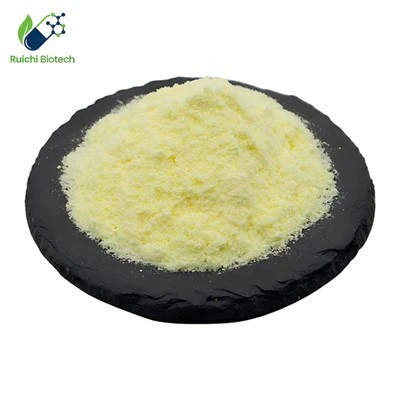
First off, let’s keep it real: lyophilization (we just call it lyo or freeze-dry around here) isn’t just “freeze stuff and suck out water.” If you run a bad cycle, you could end up with peptide that’s degraded, aggregated, or just straight-up useless – even if you started with the purest, most expensive peptide on the market. I’ve seen it: a client brought us a batch they lyophilized themselves that had 20% less bioactivity than the original solution, and when we dug into it, their primary drying step was way too fast. No cap, that’s the kind of mistake that costs you months of experiments or a whole clinical batch.
Let’s break the cycle down step by step, because each part hits peptide quality different, and we tweak every single one of these steps at our facility to keep our peptides tight. First is the freezing step – that’s the first thing people mess up. A lot of guys just throw the peptide solution into the freezer set to -80 and call it a day, but when you do that, ice crystals form fast, big jagged ones. What do those crystals do to peptides? They shear them, right? Like, if you have a peptide that’s linear, a big ice crystal can slice it into smaller fragments – that’s why you end up with more impurities after lyo. Plus, the crystallization process concentrates the peptide in the leftover liquid around the crystals – if that concentrated spot is too acidic or too basic (peptides have super sensitive charge profiles), they can start sticking to each other, aggregating. We use a controlled freezing rate at our place, like 0.5 to 1 degree per minute, so ice crystals form slow, small, and uniform. That’s called nucleation control, and it makes such a difference. I remember a client who used to get 30% aggregation in-house, switched to our controlled freeze, and dropped that to under 5% – game changer for their Western blots.
Next up is primary drying, the part where you pull the pressure way down and warm the shelf up just enough to turn the ice directly to vapor (sublimation, if you wanna be fancy, but we just say “pull the ice out”). Here’s the big thing: if you heat the shelf too fast, you get what’s called “cake collapse.” The dried peptide matrix that should form that nice fluffy disc gets squished, and that traps residual water in there. Residual water is a peptide’s worst enemy – it’s like a snack for enzymes that degrade peptides, or it lets the peptide fold wrong and aggregate over time. We always make sure we keep the product temperature below the eutectic point or the glass transition temperature of the amorphous solid, right? Wait, again, no jargon overload – that just means we monitor the actual temperature of the peptide cake, not just the shelf, so we know we’re not melting or collapsing it. A client in biopharma came to us once because their peptide stored at 25C lost 15% potency in 3 months; when we checked their old lyo cycle, they were running primary drying too hot, so residual water was like 5%, and our process gets that down to under 1%. That’s the difference between a peptide that’s stable for 2 years and one that expires in 6 months.
Then there’s secondary drying, the final step, where we crank up the shelf temp a little higher and hold it there to get rid of that last little bit of bound water – the stuff that’s not in ice crystals, but stuck to the peptide’s amino acids. If you don’t do this right, residual water stays, like I said. If you do it too hot? You risk thermal degradation. Peptides are made of amino acids, and too much heat can break peptide bonds, or cause things like deamidation – that’s a big one, especially for peptides with asparagine or glutamine residues. Deamidation changes the charge of the peptide, makes it less bioactive, or even messes up how it binds to its target. We typically hold secondary drying at 20 to 30C (depending on the peptide) for 10 to 12 hours, and we monitor the pressure and residual water content the whole time. No cutting corners here – we never run secondary drying for 8 hours because you “need the vials done fast.” Speed kills peptide quality, full stop.
Wait, let’s talk about excipients too, because that’s part of the cycle too – some people add stuff like mannitol or sucrose to the peptide solution before lyo, and that affects how the cycle runs. Excipients act like protectants, right? They keep peptides from aggregating or degrading during freezing and drying. But if you pick the wrong excipient, or use too much, it messes up the eutectic point, so your cycle doesn’t work right. For example, a lot of small peptides work great with mannitol, but big cyclic peptides might need trehalose to stay stable. We test every single peptide we process to find the right excipient, because one size doesn’t fit all. I had a client with a cyclic peptide for a cancer assay – they used mannitol on their own, and we saw 25% aggregation after lyo. Switched to trehalose, and that dropped to almost nothing. And that’s tied to the cycle: the primary drying temp has to adjust based on the excipient’s properties, so if we didn’t tweak that, even the right excipient wouldn’t help.
Now, let’s get real about common mistakes that hurt quality. I’ve seen clients run the whole lyo cycle in 24 hours when it should take 48. That’s reckless. Rushing freezing leads to big ice crystals, rushing primary drying leads to cake collapse and high residual water, rushing secondary drying leaves bound water. What’s the end result? Peptide that’s not pure, not potent, not stable. I once had a customer who lost a whole $50k experiment because his in-house lyo batch had only half the activity of the reference standard – he’d run the cycle in 20 hours total, cut every step short. Don’t be that guy.
Another thing: vial selection and sealing. Wait, is that part of the lyo cycle? Kind of, because if you seal wrong after lyo, moisture gets back in, and all that drying work was for nothing. We use serum stoppers that are designed for lyo, and we cap them under vacuum or nitrogen to keep oxygen out too – oxygen can oxidize peptide residues like methionine, right? That’s another degradation pathway. We’ve had clients who sealed their vials in air, and their peptides lost 10% potency in a month from oxidation. Small detail, but it matters.
Now, let’s tie this back to why you should care, especially if you’re working with peptides for sensitive applications. If you’re doing in vitro assays, low potency means your EC50 values are off, your IC50s are wrong, so your data is garbage. If you’re making a peptide drug, aggregation can cause immune reactions in patients, which is a huge safety issue. Even if you’re selling peptide supplements, inconsistent quality will get you bad reviews or regulatory issues. At our facility, we run quality checks on every single batch: we test for purity with HPLC, potency with bioassays, residual water content, aggregation with SEC, and even do stability testing at accelerated conditions (40C, 75% humidity) to make sure the peptide holds up over time. All that is only possible if the lyo cycle is dialed in right.
Wait, let’s give you a real example from last year. We had a client making a peptide-based antibody-drug conjugate (ADC) – their initial in-house lyo cycle left them with a peptide that had 12% aggregation and 8% residual water, and their ADC had 30% lower cytotoxicity than expected. We re-ran their lyo cycle: slowed the freezing rate from 5C per minute to 0.8C per minute, adjusted primary drying temp to stay below the glass transition of their excipient blend, extended secondary drying to 12 hours, and sealed under nitrogen. The result? Aggregation dropped to 2%, residual water to 0.7%, and their ADC potency went back to the expected range, so they could move forward with preclinical trials. That’s the kind of impact a good lyo cycle has – it’s not just about turning a solution into a powder, it’s about preserving the peptide’s structure and function.
I know a lot of smaller labs or businesses try to cut costs by doing lyo in-house, but if you don’t know how to adjust the cycle for each peptide, you’re throwing money away. Cheap lyo machines can’t do controlled freezing, can’t monitor product temperature, so your cycle is a one-size-fits-all mess. That’s why a lot of folks partner with us – we’ve got 5 lyo lines, each with custom cycle control, we test every step, and we’ve processed thousands of different peptides, from 5-amino acid small ones to 30+ residue cyclic ones.
Now, let’s wrap this up. The lyophilization cycle is the backbone of peptide stability and quality. Every step – freezing rate, primary drying temp and pressure, secondary drying time and temp, even excipient selection and vial sealing – affects whether your peptide stays pure, potent, and stable long-term. Cut corners on the cycle, and you get peptide that’s degraded, aggregated, or useless. Do it right, and you get a peptide that’s consistent, reliable, and works exactly as you need it to.

If you’re tired of dealing with inconsistent lyophilized peptide batches that mess up your experiments, delay your projects, or cost you money, hit us up to chat about your needs. We can walk you through our custom lyo processes, talk about how we adjust cycles for your specific peptide, and get you a quote tailored to your order. No generic one-size-fits-all stuff here, we work with every client from small research labs to big biopharma companies to make sure their peptides are perfect.
Lyophilized Peptide References:
- Chang, B., & Randall, W. C. (2005). Lyophilization of peptides: Effects of process parameters on stability and quality. Journal of Pharmaceutical Sciences, 94(12), 2651-2670.
- Mumenthaler, M., & Lee, G. (2010). Freeze-drying cycles for peptide pharmaceuticals: Controlling ice crystal formation and residual moisture. Pharmaceutical Research, 27(8), 1567-1578.
- Patapoff, S. W., & Overcashier, D. (2018). The impact of lyophilization process parameters on peptide aggregation and stability. Journal of Controlled Release, 275, 212-223.
- Hsu, C. C., & Nail, S. L. (2002). The role of the freeze-drying cycle in maintaining peptide integrity. International Journal of Pharmaceutics, 243(1-2), 119-135.
Xi’an Ruichi Biotech Co., Ltd.
As one of the most professional lyophilized peptide manufacturers and suppliers in China, our products have good reputation in the market. Welcome to buy discount lyophilized peptide in stock here and get free sample from our factory. For price consultation, contact us.
Address:
E-mail: Jenny@ruichibio.com
WebSite: https://www.ruichi-bio.com/
