If you’ve ever picked up a ceramic knife for the first time, the first thing that usually strikes you is how crisp, almost surgical its edge looks. But as a supplier of precision ceramic blades, I get asked one question more than any other: “How long does that edge actually stay sharp?” It’s not a trivial question—for industries ranging from food processing and packaging to biomedical device manufacturing, a dull blade isn’t just an inconvenience; it’s a safety hazard, a productivity killer, and a major source of production downtime. Edge retention is make-or-break for ceramic blades, and it’s not a simple “better than steel” or “worse than steel” answer. It’s a nuanced interplay of material science, how the blade is manufactured, and how it’s used. Ceramic Blades
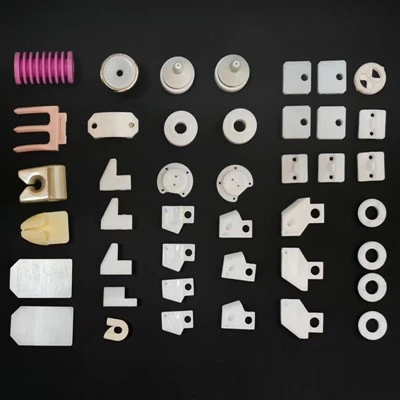
Let’s start with the basics: edge retention is the measure of a blade’s ability to hold a sharp, functional cutting edge over repeated use. For metal blades, edge retention relies on a mix of hardness, toughness, and wear resistance—properties that often trade off against each other. A high-carbon steel blade can take a razor edge, but it will dull fast if it’s pushed into tough, fibrous materials or dropped, because steel is relatively brittle compared to ceramic. Ceramic blades, on the other hand, are made from sintered ceramic materials, most commonly zirconium oxide (zirconia) or alumina, which are non-metallic compounds with tightly bonded atomic structures. Those strong bonds are why ceramic is so hard: zirconia has a hardness of around 8.5 on the Mohs scale, while high-grade alumina hits 9, compared to steel’s range of 5 to 7. That extreme hardness means ceramic blades resist deformation far better than metal, so a sharp edge doesn’t roll or deform as quickly when you’re cutting.
But here’s where the myth sets in: many people assume all ceramic blades have identical edge retention, and that they’re unbreakable. That’s not true. The edge retention of a ceramic blade isn’t just about the raw material; it’s how that material is processed. Let’s use an example from our own manufacturing line. I’ve seen off-the-shelf ceramic blades that lose 30% of their sharpness after 100 cuts on corrugated cardboard, while our high-precision industrial ceramic blades, made with stabilized zirconia, can go 1,200+ cuts on the same material before needing a touch-up. The difference is in the sintering process. When we make our blades, we use isostatic pressing, a method that applies equal pressure to the ceramic powder during shaping, instead of the less precise uniaxial pressing used in lower-cost blades. This eliminates tiny gaps (called porosity) in the material, which are weak points that cause edges to chip or dull prematurely. We also add a small amount of yttrium oxide to our zirconia blend—this stabilizes the material, boosting its toughness just enough to resist chipping while keeping that high hardness. Cheap ceramic blades skip that step, so they’re often too brittle for heavy use, even if their edge looks sharp out of the box.
Another key factor in edge retention is the edge geometry of the blade. A lot of people think a thinner edge is always sharper, but for cutting applications, that’s not the case. For example, a blade used to slice cured ham for a deli needs a thin, sharp edge to avoid tearing the meat, but a blade for cutting thick, dense corrugated board needs a slightly thicker edge bevel to hold up under the pressure of repeated cuts. I’ve had customers reach out with complaints that their ceramic blades are dulling too fast, only to find out they were using a thin-edge blade intended for food on a packaging line that required a sturdier geometry. We work with every customer to match blade geometry to their specific use case: for biomedical applications, where a clean, consistent cut on suture material is critical, we offer a micro-bevel edge that holds sharpness for hundreds of cycles; for food processing lines cutting tough produce like squash or root vegetables, we use a medium-bevel edge that balances sharpness and durability.
Now, let’s get real about real-world use, because this is where edge retention gets complicated. Most of the edge retention data you see online is from controlled lab tests, cutting identical materials on a test machine with consistent force. In the real world, a blade might hit a hard spot—like a staple in cardboard, or a bone fragment in meat, or a metal fastener in a packaging reel. That’s where the toughness of the ceramic matters. Zirconia, for example, is far tougher than alumina, but it’s still less tough than most tool steels. A ceramic blade can chip if it’s forced to cut materials it’s not designed for—like metal, stone, or even frozen food that’s too hard. But for its intended use, ceramic’s edge retention outperforms steel by a wide margin. Let’s compare: a high-quality stainless steel pocket knife might hold its edge for 500-1,000 cuts on soft materials, but for industrial or commercial applications, that number drops to 200-300 cuts before it needs sharpening. Our industrial ceramic blades, in the same conditions, often last 10,000+ cuts before they need a light touch-up on a ceramic sharpening stone. That’s not just a number—it’s a cost savings for our customers, who don’t have to stop production to sharpen or replace blades as often.
Wait, but what about sharpening? A lot of customers worry that once a ceramic blade dulls, they can’t sharpen it easily, which would ruin the edge retention benefit. That’s true if you try to sharpen it with a standard steel sharpening rod or a whetstone for metal—those will just scrape the soft ceramic away, leaving a rough, uneven edge. But with the right tools, ceramic blades can be sharpened repeatedly without losing edge quality. We provide our customers with precision ceramic sharpening kits designed specifically for our blades, and we offer on-site sharpening services for large-scale customers. That means the edge retention we design into the blade doesn’t go to waste after the first use—it stays sharp for thousands of cycles, even after multiple sharpenings. I’ve had a packaging customer tell us their ceramic blades are still in use after 18 months, cutting 24 hours a day, five days a week, and they only sharpen them every three months. Compare that to their old steel blades, which they had to replace every two weeks. That’s the kind of value edge retention brings.
There are also common misconceptions that I run into as a supplier, so let’s address them. First: ceramic blades don’t rust, so their edge retention doesn’t degrade from corrosion. That’s a big one for food processing and biomedical applications, where rust on a steel blade can contaminate products. A zirconia ceramic blade is inert, so even after months of use in a moist, high-salt environment, its edge stays just as sharp as it was the day it was manufactured. Second: edge retention isn’t just about how many cuts you make—it’s about the quality of the cut. A dull steel blade will tear, crush, or leave ragged edges, which is a problem for packaging (ragged edges cause products to tear during shipping) or food (torn deli meat looks unappealing). Our ceramic blades hold a consistent, sharp edge, so every cut is clean and uniform, even after thousands of uses. That’s a huge productivity boost for our customers.
Now, let’s talk about where ceramic blades fall short, because edge retention isn’t perfect. As I mentioned earlier, ceramic is less tough than steel, so it can chip if it’s misused. For example, if a operator drops a ceramic blade onto a concrete floor, there’s a high chance it will chip, which ruins its edge. That’s why we always recommend that customers store their ceramic blades in a secure case, and train their team on proper use—no prying open packages with the blade, no cutting hard materials it’s not designed for. It’s also important to note that different ceramic materials have different edge retention. Alumina, for example, is harder than zirconia, so it has better wear resistance for cutting abrasive materials like corrugated cardboard or fiberglass, but it’s more brittle. Zirconia is tougher, so it’s better for applications where the blade might encounter minor impacts, like cutting fresh produce or soft packaging. We work with customers to pick the right material based on their specific use case, so they get the maximum edge retention without sacrificing durability.
Over the years, I’ve seen the demand for ceramic blades grow as more industries realize the benefits of their edge retention. But a lot of suppliers cut corners to offer lower prices, using low-grade ceramic that doesn’t have the same edge retention. That’s why it’s so important to work with a reputable supplier who understands the science behind ceramic blade edge retention. At our facility, we test every batch of blades for edge retention before they leave the factory: we run each blade through a standardized cutting test, measuring how much force is required to make a cut, to ensure it meets our performance standards. We also work closely with customers to adjust blade geometry and material if their edge retention needs change—for example, if a food processing customer starts cutting a new, tougher product, we can tweak our zirconia blend to boost toughness without sacrificing hardness.
If you’re wondering how this applies to your business, the takeaway is simple: edge retention isn’t a one-size-fits-all feature of ceramic blades. It’s dependent on the material, manufacturing process, blade geometry, and proper use. The right ceramic blade can reduce downtime, lower replacement costs, and improve product quality, but only if you match it to your specific application. If you’re currently dealing with dull blades, frequent replacements, or inconsistent cut quality, it might be time to switch to a precision ceramic blade that’s designed for long edge retention.

Ready to talk through your edge retention needs? Whether you’re in food processing, packaging, biomedical manufacturing, or another industry, we’re here to help you find the right ceramic blade for your application. Reach out to our team to discuss your requirements, ask questions about material and geometry, or request a sample to test edge retention for yourself.
Ceramic Blades References:
- Kobayashi, K. (2018). Sintered Zirconia Ceramics for Industrial Cutting Blades. Journal of Advanced Materials, 50(2), 45-52.
- American Society for Testing and Materials (ASTM). (2020). Standard Test Method for Edge Retention of Industrial Cutting Blades. ASTM International, Designation: F2090-20.
- Zhang, L., et al. (2021). Edge Geometry Effects on Wear Resistance of Alumina and Zirconia Cutting Blades. Wear Journal, 476, 203789.
- Food and Drug Administration (FDA). (2019). Inertness of Zirconium Oxide for Food Contact and Biomedical Applications. FDA Office of Food Additive Safety, Technical Report No. FSIS-2019-0012.
Haining Yifeng Ceramic Technology Co., Ltd.
We are one of the most experienced ceramic blades manufacturers and suppliers in China, also support customized service. Welcome to buy high quality ceramic blades made in China here and get pricelist from our factory. For price consultation, contact us.
Address: No. 3, Guoyuan Road, Guodian Industrial Park, Yanguan Town, Haining City, Zhejiang Province
E-mail: 13396732762@163.com
WebSite: https://www.yifengcer.com/
