Hey there, if you’re new to CNC milling or just need to know what materials we actually work with day in and day out at our shop, you’ve come to the right place. I’m one of the CNC milling operators here, not some suit in an office—so I’m gonna keep this real, no fancy jargon that doesn’t mean jack. We mill stuff for all kinds of clients: aerospace parts, custom bike frames, medical implants, even random prototype gear for startup guys who have an idea but no clue how to make it tangible. The material you pick isn’t just a “what’s available” thing—it’s make-or-break for your part’s strength, cost, and how it holds up once it’s in use. Let’s break down the ones we use most, no fluff. CNC Milling
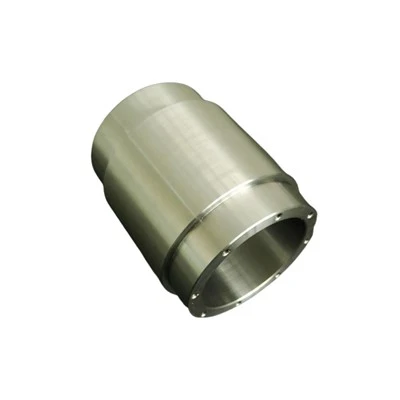
First up, metals—these are the bread and butter of our shop, no lie. Let’s start with aluminum, ‘cause it’s the workhorse. 6061 is the one we grab for 90% of daily runs; it’s lightweight, cuts like butter in the mill, and doesn’t cost an arm and a leg. We use it for everything from phone cases to aircraft interior brackets—works like a charm where strength isn’t life-or-death, just solid everyday use. Then there’s 7075 aluminum, the tough cousin. It’s way stronger than 6061, so we reach for it when clients need parts that don’t bend under pressure—like bike crank arms or aerospace structural bits. Yeah, it’s a bit harder to mill, but the payoff is way better durability. We try not to go overboard with it ‘cause it’s pricier, but for the right part, it’s non-negotiable.
Next, steel—way more rigid than aluminum, obviously. We’ve got mild steel (1018) for prototypes or parts that don’t need extreme strength; it’s cheap, easy to machine, and perfect for test fits before someone commits to a more expensive metal. Then there’s stainless steel—303 is our go-to for general stuff, it’s corrosion-resistant so we use it for food parts, medical tools, even kitchen fixtures. 304 is another common one, a bit softer than 303 but way more resistant to rust, so that’s for outdoor parts like fence hardware. We also mess with tool steel sometimes, like D2 or H13. These are the hard cores—we mill them when a client needs a mold insert or a cutting die that won’t wear out. The downside? They’re brutal on our milling tools, so we gotta slow the feed rate way down, but the parts last forever.
Wait, can’t skip brass and copper. Brass is shiny, machines super clean, and we use it for electrical components, decorative parts, even valves. It’s soft enough that we don’t need super sharp tools, but it holds its shape well. Copper? We mostly use it for heat sinks, electrical connectors, and sometimes artistic custom parts. It’s conductive as hell, so it’s the only choice for stuff that needs to move electricity or dissipate heat fast. The only catch with copper is it can gum up the mill if we don’t set the coolant right—learned that the hard way when a client ordered 50 heat sinks and I had to re-clean the tooling three times. Lesson learned.
Now, plastics—way lighter, sometimes cheaper, and way easier to mill if you don’t need metal. Acrylic (PMMA) is the go-to for prototypes, signs, and clear parts. It cuts super smooth, but you gotta be careful with the feed rate ‘cause it can chip if you go too fast—we’ve turned out some perfect acrylic displays for retail clients, but once I messed up and chipped a corner, the whole part was useless. Polycarbonate (PC) is the tough plastic, like the stuff you make goggles or protective guards out of. We mill that when clients need a shatter-resistant part—way more durable than acrylic, just a bit softer so it’s easier to gouge if we’re not careful. Then there’s nylon, super tough, flexible, and chemical-resistant. We use it for gears, bushings, parts that move back and forth ‘cause it doesn’t squeal like metal. Oh, and PEEK—if you’re in medical or aerospace, you know this one. It’s high-temp, inert, can handle extreme conditions, so we mill it for implants and rocket components. It’s pricey as hell, but worth it for the right application.
Wait, what about specialty stuff? We get random requests all the time—like wood, for custom furniture parts or guitar necks. We use solid hardwoods (maple, walnut) and sometimes MDF, but you gotta adjust the mill’s speed ‘cause wood can splinter if you don’t run the right tool. We also work with foam for packaging prototypes or model parts; it’s super light, cuts fast, but doesn’t have much strength so only for temporary use. And yeah, we’ve milled composite materials too—carbon fiber reinforced polymer (CFRP) is big for aerospace and high-end sports gear. The trick with CFRP is to use a diamond tool ‘cause regular steel tools wear out in two seconds, and you gotta make sure the dust doesn’t get in our machines—carbon fiber dust is conductive, so we’ve got special vacuums just for that.
Now, let’s talk about what matters when you pick a material—‘cause it’s not just about what’s available. If you’re making a medical implant, PEEK or titanium is non-negotiable, not aluminum. If you’re making a cheap prototype, 6061 aluminum or ABS plastic is way better than 7075. Cost is a huge one—we’ve had clients come in with a $500 budget and want a titanium part, that’s just not gonna work. We’ll tell ‘em straight up, no upselling, what’s gonna fit their needs and their wallet. Also, tolerance: some materials, like brass, hold tight tolerances way easier than something soft like nylon. If your part needs to fit another component within a thousandth of an inch, you can’t use a flimsy material that moves around when milled.
Wait, a common mistake we see? Clients coming in with a part design made for 3D printing, trying to get it milled in a metal that’s not compatible. 3D printing parts are often thinner or have different wall thicknesses than milled parts—milling removes material from a solid block, so you can’t make a super thin wall in a hard steel, it’ll snap. We’ll flag that, tell ‘em to adjust the design, or pick a different material. That’s why we’re here, right? Not just a machine that runs parts, but people who can help you make the right call.

If you’re reading this and you’ve got a part in the works—whether it’s a prototype, a production run, a custom one-off—we can handle it. We work with all these materials, adjust our processes to make sure your part turns out exactly how you want. No hidden fees, no “we can’t do that” runaround, just straight talk about what’s possible and what’s not. If you’re tired of milling shops that overcomplicate things or nickel and dime you for every extra step, hit us up. We’re here to help you get the right part, with the right material, for your project. Don’t let a bad material choice ruin your design—we’ve got the expertise to guide you every step of the way.
5 Axis CNC Machining References:
- Kalpakjian, S., & Schmid, S. R. (2020). Manufacturing Processes for Engineering Materials. Pearson.
- Groover, M. P. (2019). Fundamentals of Modern Manufacturing: Materials, Processes, and Systems. Wiley.
- Tounsi, N., El-Mansori, M., & Lebaal, N. (2018). Machining of Advanced Materials: Techniques and Applications. Springer.
- DeGarmo, E. P., Black, J. T., & Kohser, R. A. (2021). Materials and Processes in Manufacturing. Pearson.
- ASTM International. (2022). Standard Terminology for Machining. ASTM International.
Shenzhen Shunhaoda Technology Co., Ltd.
With abundant experience, we are one of the most professional CNC milling manufacturers and suppliers in China. If you’re going to buy bulk high quality CNC milling made in China, welcome to get free sample from our factory. Also, custom service is available.
Address: 902, Building A3, Tianrui Industrial Park, No. 35 Fuyuan 1st Road, Zhancheng Community, Fuhai Street, Bao’an District, Shenzhen
E-mail: sales@shdindustry.com
WebSite: https://www.shd-industry.com/
