When I first started working with load cells for our clients, I used to mix these two up all the time. Now that I’ve been a flat load cell supplier for a few years, I get questions every week: “What’s the real difference between a flat load cell and a bending beam load cell? Which one do I need for my setup?” It’s not just about part numbers or shapes—this stuff actually matters if you’re trying to keep measurements accurate, avoid breakdowns, and not waste money on the wrong gear. Let’s break this down like we’re chatting over coffee, no jargon that makes your eyes glaze over. Flat Load Cells
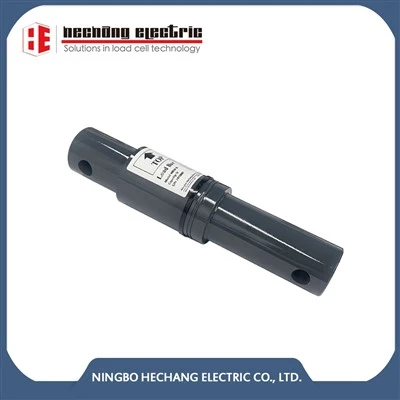
First, let’s start with the basics: both are load cells, right? They convert force (like weight, compression, tension) into an electrical signal that your scale or monitoring system can read. But their core design is where everything changes.
A flat load cell—yeah, that’s right in the name. It’s thin, flat, usually a rectangular or square plate with mounting holes right on the surface. I’m talking less than a half-inch thick most of the time, way slimmer than a bending beam. Think of it like a thick cookie vs. a popsicle stick. The insides? It has strain gauges glued to the underside (or sometimes built into the plate) that bend very slightly when weight presses down. Since it’s flat, the force spreads evenly across the whole surface, not just at one end like other designs. That makes it perfect for places where space is tight, or you don’t want a big, bulky part sticking out. We use these for all sorts of applications: bench scales, industrial conveyor line checkweighers, even in medical devices like patient lift scales where low profile is non-negotiable.
Now the bending beam load cell—let’s call it a “beam cell” for short. It’s shaped like a rigid metal beam, usually with a central cutout or a hole halfway along its length. The strain gauges go on either side of that cutout. When you put weight on it, it bends like a diving board: if you stand on the end of a diving board, it curves down, right? That’s exactly how this works. The cutout is key here—it creates a “weak point” where the bending happens consistently, so the strain gauges can measure that bend accurately. These are thicker than flat cells, usually an inch or more, and designed to mount by bolting one end down, with the weight sitting on the other end. Bending beam cells are super common in tank weighing, silo monitoring, forklift scales, and even some truck scales. They’re built to handle really heavy loads, sometimes up to hundreds of thousands of pounds, which flat cells just aren’t made for.
Wait, let’s get into how they handle force differently because that’s where accuracy lives. A flat load cell measures force distributed over its entire surface. So if you put a 100-pound weight dead center, it’s even across the plate. But if you put it off to the side, it won’t throw off the reading as much—wait, no, actually, it can a little, but not nearly as bad as a bending beam. A beam cell, though, is a cantilever design, meaning the force is concentrated at one end. That means if your load isn’t perfectly centered on the beam, you get what’s called “eccentric load error.” Like, if your 500-pound weight is 2 inches too far left on a 12-inch beam, that reading might be off by 10 or 15 pounds, depending on the cell’s rating. Flat cells are way more forgiving here because the load is spread, so minor off-center placement barely affects accuracy. That’s a huge win for small-scale setups where you can’t always perfectly align a load every single time.
Then there’s load range. Flat load cells are mostly for lighter to medium loads. We sell our standard flat cells from 50 lbs up to 10,000 lbs max. You won’t see a flat cell holding a 100,000-pound tank—that’s just not what they’re built for. They’re thin, so too much weight would bend them permanently, cause “permanent set,” which ruins their accuracy forever. Bending beam cells, though, are made for heavy-duty stuff. The smallest beam cell I carry is 500 lbs, and the big ones go up to 250,000 lbs. That’s a night and day difference. If you’re weighing a 10,000-gallon water tank, a beam cell is the way to go; if you’re weighing small parts on a lab scale, a flat cell is the only practical choice.
Installation and mounting is another big one that trips people up. Flat load cells are surface-mounted, so you just drill a couple of holes, bolt it down, and you’re good. No need for extra brackets or fixtures—they lay flat between two surfaces, like between a conveyor belt frame and the platform it carries parts on. That saves time on installation, which is a huge plus for factories that are running around the clock and can’t waste hours on setup. Bending beam cells, though, need a more specific setup. You have to mount them in a pair or a set (usually two or four) because each beam only supports one end of the load. You also need to make sure the load is applied right on the end of the beam, not on the middle or the bolted end. If you mess that up, the readings are garbage. I’ve had clients call us panicking because their beam cell scale is off, and 9 times out of 10 it’s because they put the weight in the wrong spot. Flat cells don’t have that issue as much because their mounting is simpler.
Durability and environment? Let’s talk about that too, since a lot of our clients work in harsh factories. Flat cells, because they’re enclosed in a flat, sealed housing, are more resistant to dust, moisture, and minor impacts. They don’t have the long, exposed beam that can get hit by falling parts or get corroded if you’re working in a food processing plant where they wash down equipment every day. Bending beam cells have that protruding beam, so they’re more vulnerable to damage. If a metal part falls off a conveyor and hits the end of a beam cell, it can bend it out of alignment, or break the strain gauges entirely. That said, beam cells are often made of thicker, higher-grade metal for heavy loads, so if you’re in a super high-impact environment, a beam cell might last longer than a cheap flat cell. But for most medium-duty indoor or semi-outdoor setups, flat cells hold up really well.
Wait, what about cost? I get asked about that all the time. Flat load cells are usually cheaper upfront. They’re simpler to manufacture—flat plates, strain gauges mounted on the underside, no cutouts or complex beam shaping. A 1,000-lb flat cell might cost $150 to $200, while a 1,000-lb bending beam cell is closer to $250 to $350. That’s a big difference if you’re buying multiple units for a conveyor line or a palletizer. But don’t just go for the cheapest one—if you need to weigh a 5,000-lb pallet, a flat cell can’t handle that, so you have to go beam, even if it’s more expensive. Cost is a factor, but it’s secondary to matching the cell to your use case.
Let me throw in a couple of real-world examples to make this concrete. Last month, a client who makes small battery packs came to me. They needed to weigh each battery as it came off the assembly line, and the conveyor line only had ¼ inch of space between the platform and the frame. A bending beam cell was too thick, so flat cells were the only option. We installed four 500-lb flat cells under each platform, and they’ve been running for 3 months with zero accuracy issues. No time wasted on mounting, no alignment problems, and the cost was right in their budget.
Another client runs a farm, and they needed to weigh grain storage tanks. They had four tanks, each holding 20,000 lbs of grain. A flat cell would’ve been way too small—we’d have to use 10 of them just to handle the load, which would cost more and take up way too much space. So we went with four 10,000-lb bending beam cells under each tank. They mounted them in a few hours, and the readings are spot on. They can track how much grain they have in each tank down to the pound, which saves them thousands of dollars a year in inventory management.
Common mistakes I see clients make: first, trying to use a flat cell for a heavy load. A guy last year tried to use a 500-lb flat cell to weigh a 3,000-lb forklift scale. The flat cell bent permanently after a week, and he had to replace it. Second, using a beam cell for a small, tight space setup. He ended up having to modify his entire conveyor frame, which cost him way more than if he’d just ordered the right cell in the first place. Third, not considering off-center load. For a beam cell, if you can’t get perfect alignment, you might need a flat cell instead, or add some alignment guides to keep the load centered.
So to wrap this up, let’s make a quick cheat sheet to keep it clear. If you’re choosing between a flat load cell and a bending beam load cell: go flat if you need a low profile, light to medium load (up to ~10,000 lbs), want easy installation, and need to handle minor off-center loads. Go beam if you need heavy load capacity (500 lbs and up), can handle a thicker part, and are fine with more careful alignment during mounting.
Wait, I should also mention that there are other types, but these two are the most common for small to medium industrial and commercial setups. We don’t deal with the super fancy ones like tension load cells here, just the ones that most folks need for weighing stuff.

If you’re not sure which one you need, don’t guess—reach out. I’ve helped hundreds of clients pick the right load cell for their specific setup, and I’d be happy to walk you through it. Whether you need a single flat cell for a lab scale or a dozen beam cells for a silo project, we’ve got options tailored to different budgets and use cases. Just get in touch to talk through your needs.
Mobile Weigh Bar References:
- Load Cell Central. (n.d.). Load Cell Types and Applications. Retrieved from industry technical manuals on load cell design and performance.
- Mettler Toledo. (2021). Weighing Technology Basics: Load Cell Design Considerations for Industrial Applications. White paper on strain gauge load cell performance.
- OIML R60. (2019). International Recommendation for Load Cells Used in Weighing Instruments. International Organization of Legal Metrology.
Ningbo Hechang Electric Co., Ltd.
As one of the most professional flat load cells manufacturers and suppliers in China, we also support customized service. We warmly welcome you to buy advanced flat load cells for sale here from our factory. If you have any enquiry about cooperation, please feel free to email us.
Address: No.66 Yongmao West Road, Ningbo, China
E-mail: info@hcesensor.com
WebSite: https://www.hechangsensor.com/
