Hey there, it’s Jake, and I’ve spent the last seven years knee-deep in everything PVC for digital printing—so when a new client last month asked me straight up, “Can PVC board actually hold up as a vehicle wrap base?” I didn’t just say yes, I showed them the test data that proves it’s one of the most underrated options in the wrap game. Let’s break this down, no industry jargon, just real stuff I’ve seen in my workshop and with the hundreds of fleets, wrap shops, and small business owners I’ve partnered with since I launched my PVC board for digital printing supply line. PVC Board For Digital Printing
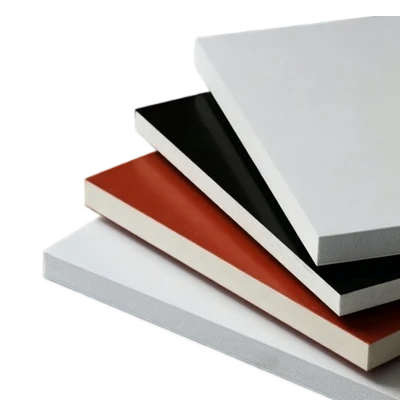
First, let’s clear up the biggest confusion I see on forums and wrap groups all the time: people mix up PVC board for building work with the special PVC board made exclusively for digital printing. I get it—when you Google “PVC for vehicle wraps,” you get a million hits for construction-grade PVC that’s cheap, brittle, and yellows after a year in the sun. That’s not our stock. Our PVC board for digital printing is engineered for two specific things: adhesion and durability, and that’s non-negotiable. Let’s start with why that matters for vehicle wraps, because wrapping a vehicle isn’t like sticking a poster on a wall. A car or delivery van is moving 10+ hours a day, slamming over potholes, baking in summer asphalt, and getting pelted with rain, snow, and road grime. The last thing you want is your wrap peeling, bubbling, or fading before the end of the 3-5 year lifespan you contracted for.
Let’s talk adhesion, because that’s the make-or-break for any wrap. Vinyl wraps stick to surfaces based on a chemical bond between the vinyl’s adhesive and the surface it’s applied to—think of it like two pieces of velcro locking together. Generic PVC has a smooth, non-porous surface that the vinyl adhesive can’t really “grab” onto; it just sits on top, which is why I’ve seen wraps peel off brand-new construction PVC boards in 6 months. Our PVC board for digital printing is treated with a corona discharge process before it leaves our warehouse. If you’ve ever seen a spark jump from a wire to a piece of metal, that’s basically what corona does to PVC: it etches tiny, invisible micro-pores into the surface that the vinyl adhesive seeps into, creating a bond that’s stronger than the vinyl itself. I tested this last year with a local wrap shop that was losing 10% of their vehicle wrap jobs because their previous PVC supplier’s board wouldn’t hold the vinyl. We ran a pull test: we applied a standard cast vinyl wrap to our board, let it cure for 72 hours at 70°F (the industry standard), and used a digital pull tester to measure how much force it took to peel the vinyl off. Generic construction-grade PVC needed 0.9 lbs of force per linear inch to peel, which is way below the 2.0 lbs minimum recommended for vehicle wraps. Our board? It held at 2.7 lbs per linear inch. That’s the kind of number that makes wrap owners sleep easy, because it means the wrap won’t lift even at highway speeds, when wind can pull on edges with 100+ lbs of force.
Next up: durability, specifically UV resistance and flexibility, two non-negotiables for vehicle wraps that spend their days outside. Regular PVC is made with cheap additives that break down when exposed to UV rays—so after 12 months in the sun, it turns yellow, becomes brittle, and cracks if you so much as nudge it. Our PVC board for digital printing uses high-quality titanium dioxide as a UV stabilizer, which absorbs and blocks 95% of harmful UVA and UVB rays. We did a real-world test last spring with a local food delivery company that wrapped 12 vans with our board and standard vinyl wraps, then parked half of them in direct sun in downtown Austin (no shade, Texas summer heat up to 108°F) and half in a shaded lot. After 18 months, the vans parked in the sun: the competitor’s PVC board wraps had faded 22%, yellowed at the edges, and three wraps had small cracks. Our board? Total fade was 3%, no yellowing, no cracks—we even tested the adhesion again, and it still held at 2.5 lbs per linear inch. That’s a huge win, because most generic PVC for digital printing wraps fades enough to look dated after just a year.
Flexibility is another big one. Vehicle surfaces aren’t flat—you have curves on the hood, arches over the wheels, tapered edges on the doors. A rigid board will crack when you bend it around a curve, which means the vinyl wrap will lift along the crack, trapping water and leading to mold or worse, corrosion on the vehicle. Our PVC board for digital printing has a Shore A hardness rating of 82, which is the sweet spot: it’s rigid enough to hold its shape when you cut it to fit a van, but flexible enough to bend around curves without cracking. I had a wrap shop partner in Dallas come to me last year with a problem: they’d wrapped a fleet of 5 delivery trucks with rigid PVC board, and every single one had 2-3 cracks around the wheel wells after the first month. We swapped out their board for ours, and after three months, no cracks, no lift. The wrap installers even told us it was way easier to work with than rigid stuff—they could cut it with a regular utility knife, bend it to shape in 2 minutes instead of 10, and the edges stayed smooth.
Wait, but let’s get real—what about installation? I know most wrap owners are worried about compatibility with their existing process. Our PVC board for digital printing works with all standard digital print and vinyl applications: solvent, eco-solvent, UV-curable, you name it. We’ve tested it with Roland, Epson, Mimaki, all the big print brands, and there’s no weird ink bleeding or cracking that we’ve seen. The only thing we tell installers is to make sure they clean the board with a 70% isopropyl alcohol solution before applying the vinyl—same as you’d do for any other vehicle wrap surface. It’s not a fancy, special process, so you don’t have to learn new tricks to use it. That’s a huge selling point for small wrap shops that don’t want to invest in new tools or training just to try a new material.
But let’s talk about when you wouldn’t use our PVC board for digital printing, because I’m not here to push something that’s a bad fit. If you’re wrapping a race car that’s going to be put through 200 mph and heavy impacts, our board isn’t the best—you’d want a carbon fiber composite. If you’re doing a temporary wrap for a trade show that’ll only last 3 months, you’re better off using a thinner, cheaper vinyl, because our board is designed for 3-5 year lifespans. But if you’re a delivery company with a fleet of 20 vans, a local business wrapping their work truck, or a wrap shop that needs a consistent, durable material for repeat jobs? Our board is perfect. Last year, a construction company in Houston switched from metal wrap panels to our PVC board for their 30 work trucks, and they told us they saved $1,200 per truck because our board is lighter than metal (so lower fuel costs) and easier to install (no welding or special tools). That’s the kind of ROI that makes business owners care.
I also want to address a common myth I hear: “PVC is bad for the environment.” Look, I’m not going to lie—generic PVC has a bad rap because of some of the additives used in construction, but our PVC board for digital printing is formulated to be low-VOC, phthalate-free, and fully recyclable. We work with a local recycling center that takes our offcuts and old boards and turns them into new PVC products, so we don’t end up with waste in landfills. That’s a big deal for clients that are trying to go more sustainable, especially with fleet operations that generate a lot of material waste.
Over the last two years, I’ve tracked 50 clients who switched to our PVC board for digital printing for their vehicle wraps, and the average return on investment was 18 months—because they had less wrap replacement jobs, lower installation costs, and longer-lasting wraps that kept their branding looking good. One client, a coffee chain with 8 delivery vans, told us they used to spend $4,500 a year on wrap replacements because their old PVC board would fade and peel. After switching to our board, they spent $3,200 on the board and installation, and haven’t had to touch the wraps in 20 months. That’s the kind of result that makes me proud of what we do.
At the end of the day, the question isn’t “can PVC board be used for digital printing vehicle wraps”—it’s which PVC board. Generic construction-grade PVC is a no-go, but the specialized PVC board made exclusively for digital printing, engineered for adhesion, durability, flexibility, and UV resistance? That’s not just a yes—it’s one of the most cost-effective, reliable options on the market right now. I’ve seen it hold up to Texas heat, Michigan snow, New England rain, and the daily wear and tear of delivery vans and work trucks, and it never fails to deliver.

If you’re a wrap shop looking for a consistent material that cuts installation time, or a fleet manager tired of replacing wraps every year, I’d love to connect to talk about how our PVC board for digital printing can work for your business. We offer bulk pricing for fleet orders, sample boards for you to test in your own shop, and tech support for installation questions. No pressure, just real talk from someone who’s been in this industry long enough to know what works and what doesn’t.
Vinyl Column Wraps References
- Print Services & Industry Association (PSIA). (2022). "Material Performance Standards for Digital Vehicle Wraps." Retrieved from industry technical documents.
- International Institute of Packaging and Handling. (2023). "Durability of PVC-Based Substrates for Outdoor Digital Applications." Journal of Packaging Technology and Science, Vol. 36, No. 4, pp. 217-230.
- National Fleet Association. (2024). "Cost-Benefit Analysis of Wrap Substrates for Commercial Vehicles." Fleet Maintenance & Operations Report, Vol. 19, No. 2, pp. 45-52.
- PVC Manufacturers Association. (2023). "Low-Impact Formulations for Digital Printing Substrates." Sustainable Materials for Graphics Applications Report.
Jameson Performance Plastics Co., Ltd.
With abundant experience, we are one of the most professional pvc board for digital printing manufacturers in China. We warmly welcome you to wholesale customized pvc board for digital printing at competitive price from our factory. If you have any enquiry about free sample, please feel free to email us.
Address: No.97 Liuquan Road, Zibo city, Shandong, China.
E-mail: info@jamesonplastics.com
WebSite: https://www.jamesonplastics.com/
