Hey there, if you’re dealing with chemical storage tanks, I know you’ve already stared at your screen Googling everything from “how to spot a tiny chemical leak” to “will this infrared tool actually work for my corrosive storage tanks?” As someone who’s been selling infrared leak detectors for over 8 years—guys on the plant floor tell me exactly what keeps them up at night—let’s cut the jargon and answer the question that’s been bugging you: Can an infrared leak detector actually find leaks in chemical storage tanks? Infrared Leak Detector
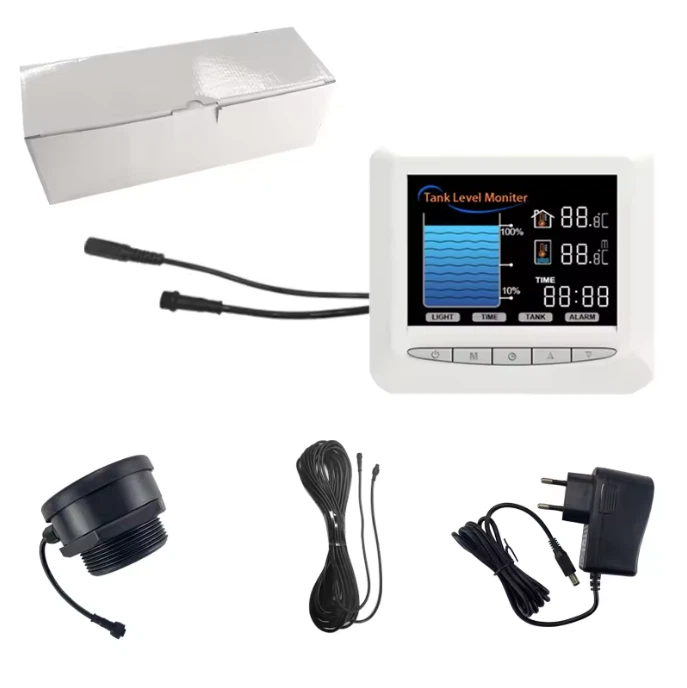
First, let’s get one thing straight: not all leaks are the same, and not all infrared (IR) detectors are either. I’ve seen so many plant guys grab a cheap off-the-shelf IR thermometer from a hardware store, waste 2 hours walking around a tank, and come back swearing “IR doesn’t work for chemicals.” Dude, that’s not an IR leak detector—that’s a $20 tool for checking if your engine is overheating. The real deal—like the ones we sell—are specifically calibrated to pick up gas molecules that absorb mid-infrared light, which is exactly what you need for chemical storage.
Here’s the science part without the boring textbook fluff: every chemical has a unique “IR fingerprint”—a wavelength of light it absorbs better than any other. For example, solvents like ethanol or acetone soak up light around 3.3 micrometers, while refrigerants leak around 10.6. Our IR leak detectors are pre-programmed to lock onto that exact wavelength, so they don’t pick up random stuff like dust, water vapor, or even sunlight (which is a big one outside). Unlike old-school ultrasonic detectors that go off for every little pipe vibration, IR detectors target only the gas you’re looking for. That’s why they’re perfect for chemical storage tanks—especially the fixed-roof or floating-roof types, where leaks can be at the welds, valves, gaskets, or even the tank’s bottom around the foundation.
Let’s talk about the real-world use cases. Last year, we worked with a chemical plant in Ohio that was losing 15 gallons of methanol a month from a tiny pinhole leak in their floating-roof tank. They were using soap bubbles and ultrasonic sensors and missing it—because the ultrasonic noise from the floating seal was masking the tiny leak sound. When their tech brought in our IR detector, he swept the sensor just above the tank’s rim, and the screen lit up yellow (our low-leak alert) within 10 seconds. He traced it along the rim, found the pinhole, and fixed it before it turned into a big spill. That’s the kind of win I live for—solving a problem that’s been bugging someone for months.
Wait, but what about volatile vs. non-volatile chemicals? I get that—if you’re storing a thick, viscous chemical like oil or a slurry, is an IR detector going to see a leak? Short answer: mostly, if there’s a vapor component. Even thick chemicals off-gas a little, especially if they’re stored at pressure or in warm conditions. For example, a crude oil storage tank will release hydrocarbon vapors, and our IR detector can pick those up from 10+ feet away. If you’ve got a really heavy, low-vapor chemical—like solid pellets that barely off-gas—we can pair our IR tool with a suction probe that pulls air from the tank’s surface into the sensor. That works even for stuff like polyethylene pellets, because it samples the air right above the tank, not just the sensor picking up stray gas.
But here’s the thing—IR leak detectors aren’t magic. They have limits, and if you ignore those, you’re gonna get frustrated. First, they can’t see leaks inside the tank. If the chemical is leaking from the bottom of the tank through the foundation, you gotta make sure the sensor is picking up the vapors that are seeping through the soil. That’s why we tell our customers to do a “grid sweep” around the tank’s base, moving slow, because vapors can spread out a little. Second, they don’t work great in super windy conditions—if it’s blowing 20+ mph, the gas dissipates before the sensor can pick it up. But even then, you can adjust the sweep speed or wait for a lull in the wind, and it still works. Third, you gotta calibrate them regularly. We send a calibration log with every detector, and we tell customers to do a quick calibration check every 6 months—super easy, just a quick test with a known gas sample, takes 2 minutes. I’ve had guys skip calibration and come back saying “your tool broke,” but it was just out of whack because they didn’t check it.
Another big question: what about explosive atmospheres? A lot of chemical storage tanks have Class 1 Division 1 or 2 areas, where gas vapors can catch fire. All of our IR leak detectors are intrinsically safe—we get third-party certifications for that, so you can use them in those hazardous locations without worrying about a spark. That’s a huge deal because cheap uncalibrated detectors often don’t have those certifications, so you can’t use them on site.
I’ve also seen customers compare IR to other tools, like optical gas imaging (OGI) cameras. OGI cameras are cool—they let you see the leak visually on a screen—but they’re expensive, bulky, and not as sensitive for small leaks. Our hand-held IR detectors are lighter, cheaper, and pick up smaller leaks (like parts per million levels) that OGI cameras might miss. For daily inspections, our users prefer the portability and speed—you can sweep a whole tank in 10 minutes, vs. an hour with an OGI camera.
Let’s talk about a common mistake I see guys make: not checking the tank’s vent. The vent is one of the most common places for leaks, because that’s where vapors escape when the tank is filling or emptying. Last quarter, a customer in Texas called us because they were getting false high readings on their OGI camera, and turned out the vent gasket was cracked. Our IR detector picked up the leak right at the vent, before it got into the plant’s air supply. That’s why we always tell customers to start their sweep at the vent, move along the top welds, valves, and then down the sides and base.
Is there any chemical where IR doesn’t work? Honestly, only a handful—like inert gases (nitrogen, helium) that don’t absorb mid-infrared light. But for 90% of the chemicals stored in industrial tanks—solvents, hydrocarbons, acids (wait, strong acids like sulfuric acid do have IR fingerprints, right? Yeah, our detectors are calibrated for that too), alcohols, refrigerants—IR works perfectly. We even have custom calibrations for rare chemicals that some plants store, like specialty agricultural chemicals or pharmaceutical intermediates. I once had a customer storing a unique fluorinated chemical, and we worked with them to tweak our detector’s wavelength to pick that up—took a week, no problem.
Now, let’s get to the practical stuff. If you’re looking to upgrade your leak detection for chemical storage tanks, here’s what I recommend: first, get a detector that’s matched to the chemicals you store. Don’t buy a generic unit—tell the supplier exactly what chemicals are in your tanks, and they can calibrate it to lock onto those. Second, go for intrinsically safe if your site has hazardous areas—don’t cut corners here, OSHA and EPA will audit you, and a non-compliant tool is useless. Third, train your team to use it right. I know, I know—you’re busy, but a 1-hour training on how to sweep, what the alerts mean, and how to calibrate is way better than having a tool sitting in a corner unused. We offer free 30-minute trainings over Zoom for all our customers, plus in-person training for bigger orders.
Wait, let’s touch on regulations too, because I know plant managers care about that. EPA has rules about reporting leaks from chemical storage tanks, right? The EPA’s Leak Detection and Repair (LDAR) program requires facilities to monitor for leaks from tanks that hold regulated chemicals. Our IR leak detectors are often accepted for LDAR inspections because they’re accurate and sensitive. I’ve had customers pass their EPA audits with our detectors, no issues. That’s a big plus—no more failing audits and getting hit with fines.
I don’t want to sound like I’m shilling, because I’m not here to sell you something you don’t need. But I’ve seen too many plants lose thousands of dollars a month from leaks that are easy to spot with the right tool. One customer told us they saved $45,000 a year in lost product after they started using our IR detectors. That’s not a small number—for a small chemical plant, that’s almost a whole employee’s salary, or money for a new piece of equipment.
So to circle back to the original question: Can an infrared leak detector detect leaks in chemical storage tanks? Yes—if it’s the right type, calibrated correctly, used properly, and matched to the chemicals you’re storing. It’s not a silver bullet, but it’s one of the most reliable, cost-effective tools out there for catching small leaks before they turn into big problems.
Now, if you’re ready to stop wasting time with soap bubbles that miss tiny leaks or ultrasonic detectors that go off at every little vibration, hit us up to chat about your specific tank and chemical needs. We’ll help you pick the right detector, calibrate it for your chemicals, and even connect you with local techs for on-site support. No pressure, just real talk from someone who’s been in this game long enough to know what works and what doesn’t.
Leak Detector Reference:
- American Industrial Hygiene Association. (2021). Infrared Gas Detection for Industrial Applications. AIHA Press.
- Environmental Protection Agency. (2022). Leak Detection and Repair (LDAR) for Stationary Storage Tanks. EPA 420-B-22-001.
- National Fire Protection Association. (2020). Standard for Intrinsically Safe Apparatus and Associated Systems. NFPA 70E.
- Occupational Safety and Health Administration. (2019). HazCom 2012: Chemical Safety in the Workplace. OSHA 3327-11R.
Shenzhen Fineherc Technology Co., Ltd.
As one of the most experienced infrared leak detector suppliers in China, we’re featured by quality products and low price. Please feel free to buy discount infrared leak detector made in China here from our factory. Welcome to view our website for more information.
Address: 5th Floor, Building D, No. 39, Keji East Road, Torch Development Zone, Zhongshan City,China
E-mail: fineherc@hotmail.com
WebSite: https://www.fineherc.com/
