If you’ve ever stood next to a busy highway, a construction site, or even a loud office space while trying to focus or relax, you know just how disruptive unwanted noise can be. As a supplier of XPS sandwich panels, I get asked a lot about their sound insulation performance—especially from architects, building contractors, and homeowners who want to balance energy efficiency, structural durability, and a quiet indoor environment. Let’s break this down clearly, based on real testing, industry standards, and years of seeing these panels perform in actual projects. XPS Sandwich Panels
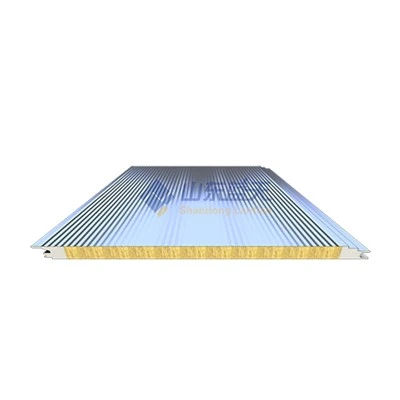
First, let’s recall what XPS sandwich panels are made of, because their composition directly ties to their sound insulation. An XPS sandwich panel has a core of extruded polystyrene (XPS) foam, which is a closed-cell foam known for its rigid structure, excellent thermal resistance, and moisture resistance. This core is bonded between two rigid face layers, most commonly steel (galvanized or pre-painted) for most commercial and industrial applications, though sometimes aluminum or even composite materials for specific uses. Sound insulation in building materials depends on two key properties: sound absorption (how much sound energy the material takes in instead of reflecting it) and sound transmission loss (STL, how much sound the material blocks from passing through from one side to the other). XPS sandwich panels contribute to both, but their performance varies based on a few factors.
Let’s start with the most common metric for sound insulation: sound transmission class (STC). STC is a single number rating that tells you how well a building element blocks airborne sound—think traffic, voices, music, or machinery noise. Higher STC ratings mean better sound blocking, with typical interior walls ranging from STC 30 (poor, can hear most conversations) to STC 50 (excellent, can only hear very loud noises on the other side). For exterior walls or partitions between industrial spaces, STC ratings around 40–45 are often required by building codes, while interior office partitions might aim for STC 45–50.
When it comes to standard XPS sandwich panels (with steel face layers and a typical 40mm–100mm XPS core), I’ve seen independent lab test results range from STC 35 to STC 48. Wait, why such a range? It’s all about the thickness of the XPS core and the type of face layers. Thicker XPS cores add mass and damping—two critical factors for blocking airborne sound. For example, a 40mm XPS core panel has an STC around 35–38, which works for some interior partitions or low-noise commercial spaces, but a 100mm core panel jumps to STC 45–48, which meets the needs for most exterior walls, industrial facilities, and even multi-family building partitions where noise control is a priority. The steel face layers also play a role: thicker steel face layers (like 0.6mm instead of 0.4mm) add more mass, boosting STL by about 2–3 points. Some of our clients in urban areas, who use 80mm core XPS panels with 0.55mm steel faces, regularly test at STC 46–47, which is perfect for keeping street noise out of retail stores or office spaces.
But STC isn’t the whole story—there’s also impact sound insulation, which handles noise from footsteps, moving equipment, or dropped objects. That’s where XPS foam’s properties shine a little differently. Impact sound insulation is measured by the standardized impact sound insulation rating (ΔL), and XPS panels act as a resilient layer that reduces vibration transfer. For example, if you use XPS sandwich panels as a roof or floor underlayment, the foam core absorbs the vibration from footsteps or machinery, so that noise doesn’t travel through the structure. I had a client who runs a gym on the second floor of a commercial building; they originally used solid concrete floors, and the gym noise was driving the first-floor retail store owners crazy. Switching to XPS sandwich panel underlayment cut impact noise by about 15 decibels—enough that the retail space could now host quiet events without hearing every jump or weight drop from the gym above. That’s a real-world win that STC ratings don’t always capture.
Now, it’s important to set realistic expectations. XPS sandwich panels aren’t the same as solid concrete walls or specialized acoustic insulation panels. If you need STC ratings above 50—like for recording studios, home theaters, or multi-family building party walls—you’ll want to pair XPS panels with additional acoustic treatments, such as resilient channels, mineral wool insulation, or double-layer drywall. But for most common building applications—industrial warehouses, retail storefronts, office partitions, agricultural buildings, or residential extensions—XPS sandwich panels’ sound insulation performance is more than adequate, and they offer extra benefits like thermal insulation that pure acoustic panels don’t.
Let me also talk about how installation affects sound insulation, because even the best panel won’t perform as intended if installed wrong. A common mistake our new clients make is not sealing the gaps between panels properly. Sound travels through air gaps just as easily as it travels through solid materials, so if you leave seams open, you can lose up to 10 STC points. That’s why we always recommend using silicone sealant or panel-specific gaskets to seal every joint, as well as ensuring that the panel is properly mounted to the frame without any gaps or loose fit. For interior partitions, adding a layer of acoustic sealant between the panel and the floor/ceiling also makes a big difference. I once had a client who installed our 60mm core XPS panels for an office partition, but skipped sealing the top and bottom; their initial test came back at STC 38, which was lower than expected. Once we adjusted the installation to seal all gaps, the STC jumped to 44, exactly what they needed for their open-plan office.
Another point I often bring up is moisture resistance, which indirectly affects sound insulation. Traditional foam insulation can absorb water over time, which makes it denser and changes its acoustic properties—worse, water creates a pathway for sound to travel through the core. But XPS has a closed-cell structure, meaning it doesn’t absorb water (less than 0.2% water absorption by volume, per ASTM standards). That means XPS sandwich panels maintain their sound insulation performance even in high-moisture areas, like cold storage facilities, farm buildings, or coastal structures. I’ve seen panels installed in a seafood processing plant 7 years ago that still have the same STC rating as the day they were installed, because the XPS core hasn’t absorbed any moisture. That’s a huge benefit over open-cell foams or fibrous insulations that can degrade their acoustic performance when wet.
Let’s also compare XPS sandwich panels to other common building materials for context. A typical 100mm concrete block wall has an STC around 45–48, which is similar to our 100mm core XPS panels. But concrete doesn’t have the thermal performance of XPS—our 100mm core panel has a U-value of around 0.5 W/m²K, while a 100mm concrete wall has a U-value of around 2.0 W/m²K. So you get similar sound insulation plus four times better thermal insulation. For a 60mm core XPS panel, STC is around 42–44, which is comparable to a 90mm wood stud wall with insulation (STC 40–45), but XPS is much more durable, resists rot and pests, and is lighter—easier and faster to install, which cuts down on labor costs.
I want to be transparent, though. If you’re dealing with very low-frequency noise—like heavy truck rumble, industrial machinery vibration, or train noise—you might need additional damping layers. Low-frequency sound is harder to block, and while XPS core helps with mid and high frequencies, pairing XPS panels with a thin layer of acoustic membrane can boost low-frequency STL significantly. We’ve worked with several clients near airports or busy shipping yards who add these membranes to our panels, and they’ve reported a 20–25% reduction in low-frequency noise, which makes a huge difference for comfort.
As a supplier, I don’t just sell panels—I work with our clients to match their specific needs to the right product. If you’re building a new industrial warehouse and need exterior walls that block forklift noise and keep the space warm, our 80mm core XPS panels with 0.5mm steel faces will get you STC 45–46, which meets most local building codes, and you’ll get the thermal benefit to cut heating and cooling costs. If you’re renovating an office and need interior partitions that separate quiet work areas from meeting rooms, our 50mm core panels work perfectly for STC 40–42, and they install quickly without taking up too much space. If you’re in a noisy urban area, we can help you spec out the right combination of panel thickness, face layer, and optional acoustic treatments to hit the STC rating you need.
I’ve been in this industry for over 12 years, and one thing I’ve learned is that most building projects don’t need top-of-the-line acoustic performance at every stage—they need balanced performance that fits their budget and use case. XPS sandwich panels deliver that balance: solid sound insulation, great thermal performance, durability, and ease of installation, all at a price point that’s often more competitive than specialized acoustic walls or solid concrete structures.

If you’re planning a project and want to learn more about how XPS sandwich panels can work for your sound insulation needs, don’t hesitate to reach out. We can provide you with independent lab test reports, case studies from similar projects, and help you spec the exact panel that fits your requirements. Whether you’re an architect designing a new retail space, a contractor building a farm facility, or a homeowner adding an extension to your house, we’re here to answer your questions and help you make the right choice. Let’s talk through your project details so you can get the noise control, energy efficiency, and durability you need.
Cold Room Sandwich Panel References:
ASTM C578, Standard Specification for Rigid, Cellular Polystyrene Thermal Insulation
ASTM E90, Standard Test Method for Laboratory Measurement of Airborne Sound Transmission Loss of Building Partitions and Elements
ASTM E492, Standard Test Method for Laboratory Measurement of Impact Sound Transmission Through Floor-Ceiling Assemblies Using the Tapping Machine
National Building Code of Canada, Section 9.29.5 (Sound Insitation)
ISO 10140, Acoustics – Laboratory measurement of sound insulation of building elements
Shandong Lantian New Material Technology Co., Ltd.
Shandong Lantian New Material Technology Co., Ltd. is one of the most reliable manufacturers and suppliers of xps sandwich panels in China, featured by quality products and low price. Please rest assured to buy bulk xps sandwich panels for sale here from our factory. Contact us for pricelist and customized service.
Address: North End of Wanshida Road, Dianzi Town Industrial Park, Boxing County, Binzhou City, Shandong Province
E-mail: Lantian023@ltaaaaa.com
WebSite: https://www.ltpirpanels.com/
