Hey there, fellow traffic nerds and city planners! Let me cut to the chase – when I tell you I’ve spent the last 12 years selling traffic lights, I’m not just talking about boxes that change color on a pole. Public transport is the backbone of moving people, and the tiny, often-underestimated traffic light rigs my team sells? They’re the secret sauce that keeps buses, trains, and streetcars from turning a 20-minute commute into a 90-minute slog. Today, we’re diving into how traffic lights shape public transport flow, from my exact perspective as a supplier who’s seen the mess (and the magic) firsthand. Traffic Lights
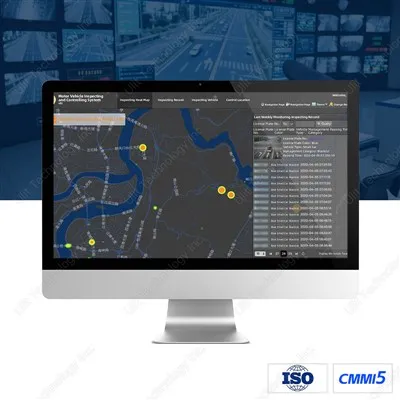
First, let’s get one thing straight: not all traffic lights are created equal. Back in 2015, we got a call from a mid-sized city in the Midwest – they were tired of their local bus route being stuck at every single light. Their old lights ran on a fixed timer, so even if a bus was rushing to make its schedule, it’d hit a red light every time, adding 15 minutes per trip and making ridership drop like a rock. We didn’t just sell them new LEDs (though our bright, long-lasting ones are way better than their old incandescent junk) – we hooked them up with adaptive signal controls. That’s the stuff that detects buses via GPS and loop sensors in the road, so it holds green lights a few extra seconds for approaching public transport, or gives a quick green if a bus is stuck waiting. Within six months, that city’s bus on-time rate jumped from 62% to 88%, and ridership went up 21%. That’s not just a number – that’s people ditching their cars, less traffic overall, and a system that works for everyone.
Wait, but adaptive lights aren’t a magic fix. I’ve had city planners come to me saying, “Just put adaptive lights on all our bus routes!” and I have to be the bearer of bad news: it’s not that simple. You need to map the bus routes first, time the signals with the bus schedule (we call that “transit signal priority,” or TSP, around the shop), and make sure the sensors are calibrated right. A few years ago, a client in the Southwest tried cutting corners – they installed adaptive lights but didn’t adjust the timing for their bus line’s peak hour (morning and evening rush). Result? Buses were getting priority during off-peak, but during rush hour, car traffic backed up so bad that buses were still stuck. We had to go back, tweak the TSP settings to sync with peak schedules, and now that route’s flow is way smoother. The takeaway here? Public transport and traffic lights can’t operate in silos – they have to be a team.
Another big one: phase design. You know those lights that let left-turn traffic go at the same time as straight traffic? Yeah, that’s a phase, and it’s a huge pain point for buses. If a city’s light phases are messed up, a bus might have to sit through an entire left-turn cycle just to get straight through an intersection. We once worked with a city that had a four-phase light system (north-south straight, north-south left, east-west straight, east-west left) on their main bus corridor. The bus route was east-west, so every time they hit that intersection, they had to wait through two full phases (north-south straight and left) before even getting their own. We suggested a simpler, coordinated phase system that only ran a left-turn phase if there was actual turn traffic, plus adjusted the timing to green for the bus corridor during peak. Overnight, that bus’s wait times at lights dropped by 40%. It’s little changes like that that add up to huge flow improvements.
But let’s talk about the other side of the coin: when traffic lights mess up public transport. I’ve been to cities where traffic lights are so outdated that a bus will pass a light that turns red 50 feet ahead – too late to stop, too early to speed, so it’s stuck waiting. Or worse, lights that are synchronized for cars, not buses. I remember a bus driver in Chicago telling me a story a few years back: his route had 17 traffic lights between the loop and a suburb, and 15 of them were timed for car traffic going 45 mph, but the bus only goes 30 mph. So by the time he got to each light, it was red. He’d start sprinting between stops to make up time, but that just made passengers mad. That’s where our sync’d transit signal systems come in – we program the lights to align with the average speed of the bus, so the driver doesn’t have to rush. Suddenly, the trip is predictable, and people actually want to take the bus.
Now, let’s get into some science, because I know a lot of you want the real stuff, not just my war stories. Studies from the American Public Transportation Association (APTA) say that traffic signal delays account for 20-30% of total bus travel time in urban areas. That’s a massive chunk! When TSP is implemented correctly, that delay drops by 10-15%, which translates to faster trips, more reliable schedules, and less bunching (you know, when two buses end up together because one got stuck at a light and the other caught up). Bunching is public transport’s worst enemy – if passengers see a bus coming every 10 minutes but two are here at once, they’ll wait for the next one, which makes service look worse. Our adaptive lights fix that by keeping buses on schedule, so spacing stays consistent.
But here’s the thing I’ve learned over the years: it’s not just about the lights themselves. It’s about integration with other tech. We sell a lot of lights that sync with real-time transit apps, like where the next bus is, so the lights can adjust even before the bus hits the intersection. For example, if a bus is running 2 minutes early, the light can hold green a second longer to make up time, or if it’s running late, it can extend the green a bit to help it catch up. That’s next-level stuff, and it’s become super popular with cities that want to modernize their transit systems.
Wait, but what about small towns? A lot of people think traffic signal stuff is just for big cities, but no – small towns have the same problems. A small town with a 12-stop bus route might have only 3 traffic lights, but if those lights are timed wrong, the whole route is slow. We’ve sold compact, affordable LED adaptive lights to small towns in places like Iowa and Ohio, and the feedback is insane. One town in Iowa said their bus route used to take 45 minutes, now it takes 32, and ridership is up 30%. You don’t need a huge budget to make a big difference – sometimes it’s just upgrading a few lights and tweaking the programming.
Now, let’s be real about the challenges. Not every intersection is good for TSP. If a bus route is on a road with too many turns, or mixed with a ton of pedestrian traffic, adaptive lights can’t prioritize the bus too much without making pedestrians wait forever, or causing car backups. That’s where balance comes in – we work with cities to do traffic studies, count pedestrian crossings, check car volumes, and design a system that works for everyone, not just buses. I’ve had to turn down a sale once because a city wanted TSP on a route that had a hospital and a school, and prioritizing buses would have made emergency and pedestrian wait times unacceptable. Sometimes the best solution is just timing the fixed lights better for bus routes, no adaptive tech needed.
Another big trend I’m seeing is connected traffic lights – lights that talk to each other and to the buses. We’ve been testing some 5G-enabled lights that can receive data from buses in real time, even before the bus’s GPS picks up that it’s approaching. That makes the adjustments even more precise. Early tests in a city in Texas showed that connected TSP cut bus wait times at lights by 25% more than standard adaptive systems. It’s still new, but it’s the future, and we’re already offering it as an upgrade for our clients who want to stay ahead.
Let’s circle back to why this matters. When public transport flows better, cities work better. Less congestion, lower emissions, more people getting around reliably. As a traffic light supplier, I don’t just sell hardware – I sell solutions that make cities better. I’ve seen a grandma who can make it to her doctor’s appointment on time, a student who doesn’t have to skip class because the bus is late, a small business owner who uses public transport to pick up supplies without wasting time. All of that starts with a well-timed, well-designed traffic light that works with public transport, not against it.
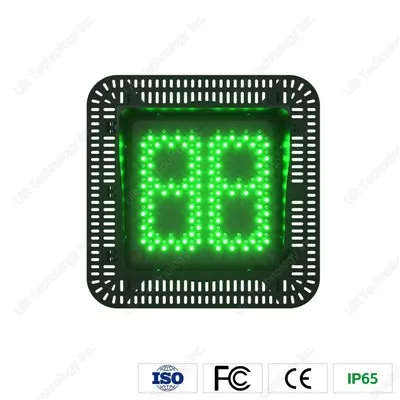
If you’re a city planner, a transit agency director, or someone who’s tired of their bus route being a mess, I want to hear from you. We don’t do one-size-fits-all – we’ll come in, look at your routes, count traffic, figure out what you need, and give you a solution that fits your budget and your goals. No jargon, no pushy sales tactics, just real talk and products that actually work. Whether you need a few basic LED lights for a small town or a full adaptive system for a big city, we’ve got you covered. Let’s make your public transport flow like it should – smooth, reliable, and for everyone.
Traffic Lamps References
American Public Transportation Association. (2022). Transit Signal Priority: Benefits, Implementation, and Best Practices.
Federal Highway Administration. (2021). Urban Traffic Signal Coordination and Transit Integration Study.
National Cooperative Highway Research Program. (2020). Traffic Impacts on Public Transit Performance in Mid-Sized Urban Areas.
Ulit Technology Inc.
As one of the most experienced traffic lights manufacturers and suppliers in China, we offer a wide range of products with superior quality. We warmly welcome you to wholesale bulk durable traffic lights from our factory. If you have any enquiry about cooperation, please feel free to email us.
Address: NO.2 Mudan Road, Nan’an District, Chongqing, China
E-mail: cqulit@sina.com
WebSite: https://www.ulitcn.com/
