If you’ve ever stared at that blank wall in your laundry room wondering “What the hell even is the right laundry cabinet for me?” you’re not alone. I’ve been selling laundry cabinets for years, and one of the first questions every customer asks is “I’ve got X dollars to spend—what do I get?” No two budgets are the same, and the mistake people make is either blowing way too much on something they don’t need, or skimping so hard that their cabinet falls apart after 6 months. Today, I’m breaking this down like we’re chatting over coffee, no confusing jargon, no sales fluff. Just straight-up stuff I wish every first-time buyer knew. Laundry Cabinets
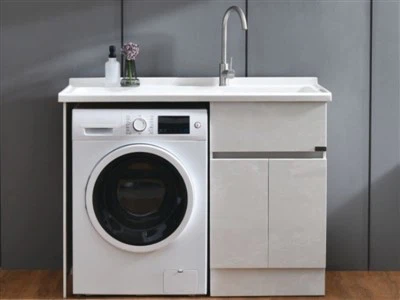
First off, let’s get one thing out of the way: your budget doesn’t have to be “low” or “high”—it just has to match what you actually need from a laundry cabinet. A lot of people think cheap = bad, or expensive = perfect, but that’s not true. It all comes down to three things: how much storage you actually need, the material that’ll hold up in a laundry room (hot, damp, detergent splatters? Yeah, that’s a thing), and whether you’re installing this yourself or hiring someone. I’ve seen folks drop $2,000 on a fancy custom cabinet for a tiny apartment where they only fold 3 loads a week, and I’ve seen someone grab a $150 budget unit that lasted 8 years because they picked the right material. So let’s split this into the most common budget tiers, and what works for each.
Starting with the “budget-friendly” tier—think under $500 total, usually around $200 to $450. This is for renters, small laundry nooks, or anyone who doesn’t want to drop a ton of cash on something they might move out of in a couple years. I get it, not everyone’s ready to invest big in a space they don’t own. Now, here’s where you have to be smart, because not all $300 laundry cabinets are created equal. A lot of the cheap ones you’ll find online are made from particleboard with a “wood veneer” glued on. That stuff is fine if you’re careful, but laundry rooms = moisture. If you spill a cup of water or laundry detergent on it, that particleboard swells up faster than a sponge left in a sink, and the veneer peels off. So skip the plain particleboard ones. Instead, look for ones labeled “medium-density fiberboard (MDF) with a moisture-resistant finish” or even solid pine. Pine is cheap, it’s sturdy, and if you keep it wiped down (no standing puddles, promise), it’ll last 3-5 years easy. Another pro tip here: skip the fancy add-ons at this price point. No built-in hampers, no pull-out ironing boards, no soft-close drawers. Those add $100+ to the cost, and at this budget, you can just grab a separate plastic hamper for $20 and call it a day. Wait, I’ve got a story: last month a girl bought a $320 pine cabinet for her studio apartment, and she added a $15 over-the-door hamper. Total cost for storage: $335, and it looks way less cluttered than the ones that tried to cram everything into a tiny cabinet. She told me it worked better than the $500 custom one her friend got for a bigger place. Don’t feel like you need all the bells and whistles at this level. Also, make sure it’s freestanding, not built-in. Built-in cabinets at this budget almost always require modifications (cutting walls, patching holes) that will add $200+ in labor, which kills your budget. Freestanding is your move here.
Next up is the mid-range tier—usually $500 to $1,500. This is sweet spot, honestly. Most homeowners go for this, because it’s enough to get nice material, some extra features, and it’ll last 7-15 years if you take care of it. Now, in this range, you’ve got two main options: pre-assembled semi-custom, or ready-to-assemble (RTA) that’s a step up from the cheap stuff. Let’s break materials here: solid wood (oak, maple, or even bamboo) is a great pick, because it’s way more moisture-resistant than MDF if you seal it right. Bamboo is actually super popular right now—harder than oak, cheaper than solid maple, and it’s eco-friendly. I’ve sold a ton of bamboo cabinets in this range, and customers love how they don’t scratch easy, even with laundry baskets sliding around. If you’ve got a little extra, look for ones with soft-close drawers and doors. At the low end, soft-close might seem like a gimmick, but after you’ve slammed a drawer shut at 2 a.m. with a screaming toddler? You’ll thank me. Those add-ons—built-in hampers, pull-out ironing boards, even a countertop for folding—are worth it here. Wait, another tip: measure your space before you shop. I can’t tell you how many people come in saying “I need a 60-inch cabinet” and their laundry nook is only 52 inches. At mid-range, you’ve got way more sizes and configurations, so don’t guess—measure the width from wall to wall, subtract an inch (for gaps, baseboards, whatever) and shop for cabinets that fit that. Also, in this range, you can go for wall-mounted or freestanding. Wall-mounted is great if you want to clear up floor space for a washer or dryer, but make sure the wall has studs. If you have drywall only, you’ll need heavy-duty anchors, which are an extra $10 or so, not a big deal, but don’t skip that. One of my go-to picks in this budget is a 54-inch solid oak wall-mounted cabinet with two pull-out hampers. It’s around $850, installs in an hour if you’re handy, and has more than enough space for detergent, dryer sheets, and even a spot to fold clothes. I sold that to a guy last year who runs a small home-based clothing business, and he said it holds all his inventory boxes without looking cluttered. For mid-range, you’re getting good quality without the custom markup, so don’t overthink it—just pick a material you like (neutral if you plan to sell your house in 10 years, fun if it’s your forever home) and go for it.
Now, the high-end tier—$1,500 and up, usually $1,500 to $5,000+. This is for forever homes, full laundry room remodels, or people who want a custom look. Let’s be real, at this price point, you’re not just buying storage—you’re designing the whole laundry room. First, materials here are way different: solid hardwood (cherry, walnut, hickory), even stainless steel for industrial-style rooms. Stainless steel is a great call if you use your laundry room a lot—holds up against scratches, detergent spills, even steam from a front-loader washer. It’s easy to wipe down, which is perfect if you have kids or pets tracking mud in. Then there’s custom built-ins. Custom isn’t just “bigger” — it’s tailored exactly to your space. If your laundry nook has a wonky corner around the water heater, a custom cabinet will fit that instead of leaving a weird gap. You can add all the features you want: a countertop that doubles as an ironing station, pull-out shelves for cleaning supplies, even a built-in drying rack that tucks away when you’re done. Wait, I worked with a couple last year who had a $3,000 budget for a high-end cabinet, and they went with a custom walnut cabinet that wraps around their front-loaders. They added a built-in hamper with three sections (light, dark, colors) and a pull-out shelf for their dog’s laundry stuff. It was messy before, and now their laundry room looks like it’s out of a magazine. But here’s the thing with high-end: don’t pay for stuff you don’t need. If you never iron, skip the ironing board add-on. If you have a small family, three hampers are overkill—two will work. I see people blow $5,000 on a custom cabinet with 10 features, and they only use two of them. Also, at this level, you can get labor included if you buy from a supplier like me, which saves you the hassle of hiring a contractor. A lot of my high-end customers choose white-glove delivery and install, so they don’t have to lift a finger. That’s worth the extra money for people who are busy with work or kids, no question.
Wait, hold on—did I miss something? Oh, right! Hidden costs. No matter your budget, there are always things people forget to count. For budget folks: don’t forget to add $20-$50 for tools if you need to assemble the cabinet (most RTA ones don’t come with drills, fyi). For mid-range: if you’re buying wall-mounted, add $15-$30 for heavy-duty anchors and a stud finder. For high-end: add $500-$1,000 for labor if you’re not doing it yourself, and maybe $100 for a custom paint or stain to match your walls if you want it to blend in. Those small things add up, so don’t budget just for the cabinet—plan for the extra stuff.
Another common mistake: buying for the wrong space. If your laundry room is in the basement, it’s way damper than a main-floor laundry. So even if you’re on a mid-range budget, go with moisture-resistant material (bamboo, solid wood with a poly finish, not MDF). If it’s a tiny hallway closet laundry, you don’t need a big cabinet—look for narrow, slimline ones instead of the 60-inch ones that take up half the closet. I had a customer last month who had a 30-inch wide nook, and she tried to order a 36-inch cabinet online because it was on sale. It didn’t fit, and she had to return it, which cost her $25 in shipping. Don’t do that. Measure first, always.
Wait, let’s wrap this up in a way that makes sense. Your budget isn’t a number to hit—it’s a tool to get what you actually need. If you’re under $500: go freestanding pine or moisture-resistant MDF, skip the fancy add-ons, make it work with separate hampers. If you’re $500-$1,500: go mid-range solid bamboo or oak, add soft-close drawers and a couple features you’ll actually use (like a single hamper, not three), and make sure it fits your space. If you’re over $1,500: go custom or near-custom, pick a material that fits your style (stainless for industrial, walnut for modern), and splurge on the features you’ll actually use, not the ones that look good in photos.

And if you’re still confused? That’s why I’m here. I’ve got cabinets in every budget tier, I can help you measure your space, pick the right material, and even answer questions like “Will this hold up to my washer steam?” or “Do I need a contractor for this?” No pushy sales stuff, just straight talk. If you’re ready to stop guessing and get a laundry cabinet that fits your budget and your needs, hit me up to chat through your options. I can send photos of what works for each price point, answer any questions you have, and walk you through every step.
Storage Cabinets References:
- Home Improvement Research Institute. (2022). Laundry Room Storage Trends and Consumer Budget Preferences.
- National Kitchen and Bath Association. (2023). Material Durability Guide for Moisture-Prone Home Spaces.
- Consumer Reports. (2024). Budget-Friendly vs. Mid-Rise Laundry Cabinets: Longevity and Value Analysis.
Zhejiang Engery Industry and Trade Co., Ltd.
As one of the leading laundry cabinets manufacturers and suppliers in China, we also support customized service with low price. Please feel free to buy bulk high quality laundry cabinets made in China here from our factory. Contact us for pricelist.
Address: Building 1, Wanshangcheng, No. 8, Jingxing West Road, Hushan Street, Jiangshan City, Quzhou City, Zhejiang Province
E-mail: 15005702323@163.com
WebSite: https://www.balconylaundry.com/
