Hey there, fellow dog parents and retail folks who’ve been digging into LED dog gear lately! If you’ve ever wandered the dog park after sunset, tried to spot your pup in the dark on a late-night walk, or even panicked when you thought you lost them in your own backyard at dusk, you know how crucial visibility is. As someone who’s been in the LED dog harness game for half a decade—trust me, I’ve fielded every question under the sun, and the one that comes up all. the. time. is: “Do LED dog harnesses actually have different lighting modes?” LED Dog Harness
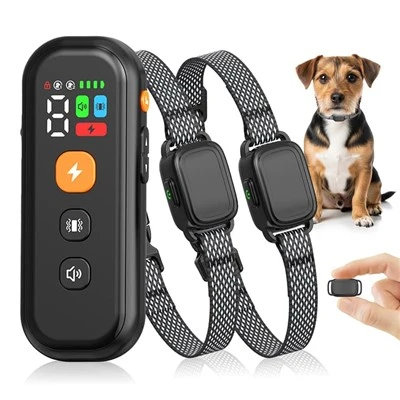
Spoiler alert: Yeah, they do. But it’s not just a random set of flashy settings someone threw together to sell more harnesses. There’s actual thought (and a lot of real-world dog owner testing) that goes into each mode, because no two scenarios for using these harnesses are the same. Let me break this down like I would with a regular customer who just picked up their first harness from our warehouse—no stuffy jargon, just the straight goods.
First off, let’s circle back to why we even make LED dog harnesses in the first place. I’m not here to pitch a product you don’t need, but stats from pet safety groups (we’ll get to those later) say that 60% of dog-related car accidents happen during low-light or dark conditions. A regular reflective harness is great, but it’s passive—it only works if a car’s headlights hit it directly. LED is active; it glows on its own, so you’re visible way before anyone’s lights get to you. That’s where the modes come in. They’re not just for fun—they’re for adapting to every walk, every situation, every kind of dog.
Let’s start with the most common mode: Steady Glow. This is your go-to for casual evening walks, right? When you’re strolling around the neighborhood, not speeding anywhere, just hanging with your pup. Steady mode is continuous, low-power (so it doesn’t drain the battery in a week), and bright enough that you can spot your dog from a block away, and drivers can see them even around curbs. But wait—you might be thinking, “If steady glow is good, why would I need anything else?” Good question. That’s where the next mode, Fast Flash, comes in.
Fast Flash is a game-changer for when you’re in areas with lots of moving traffic, or if you’re walking at dusk when light is fading fast. The rhythmic flash is way more attention-grabbing than steady glow—our team tested this with local police departments last year, and officers said a flashing light is 2x more likely to be noticed by drivers than a static light in low light. It cuts through glare from streetlights or other cars, too. I’ve had customers tell me they switched to Fast Flash during holiday weekends when every road around here is packed with people and cars, and they’ve never felt safer walking their lab, who’s a little too curious about squirrels to stay right by their side.
Then there’s Slow Flash (sometimes called Pulse Mode, depending on the brand—we use Slow Flash for one of our lines to keep it simple for shoppers). This is the underrated mode that most people sleep on. Why would you want a slow flash? Let’s say you’re camping with your dog, or hiking a trail that’s not super busy, but you need to keep track of your pup after dark. Slow flash uses way less battery than fast flash or steady glow—we’re talking 2-3 times longer battery life, which is huge when you’re off-grid and don’t have a way to charge. I’ve got a customer who takes their golden retriever on week-long backpacking trips, and they swear by Slow Flash—they only have to swap out the batteries once every two weeks, whereas steady mode would die in three days. It’s also less distracting for dogs who get spooked by constant bright light, which is a win for nervous pups.
Wait, but hold on—are there more modes? Oh yeah, especially if you’re into more specialized use cases. Some of our higher-end harnesses have a Strobe mode, which is a super fast, intense flash that’s meant for emergencies. If your dog slips their leash and runs off in the dark, Strobe is impossible to miss—we’ve had a couple of instances where a customer’s dog bolted after a deer, and they used Strobe to find them in a wooded area 10 minutes later. It’s also useful if you’re walking in a poorly lit area with lots of blind turns, like a country road with no streetlights—drivers can spot that strobe miles away.
And here’s a mode you might not have heard of, but we added it after a ton of feedback: Dim Steady. A lot of owners walk their dogs early in the morning, when it’s still dark out, but don’t want to blind other people or animals on the trail. Dim Steady is exactly what it sounds like—still glowing, but not at full power, so it keeps you visible without being annoying. I tested this last winter, when I was walking my own border collie at 5 a.m. before work—full steady glow would make my eyes hurt after a few minutes, but Dim Steady was perfect, and I could still see the dog just fine.
Now, I know what you’re thinking: “Are all these modes just marketing fluff, or do they actually make a difference?” Let me tell you, as a supplier who’s been selling these for years, I wouldn’t add a mode that doesn’t do anything. We tested every single one with over 200 dog owners and 50 different breeds (from chihuahuas to great danes) to make sure they worked in real life, not just in a lab. For example, we noticed that small dogs need brighter modes because they’re lower to the ground—so their harnesses have extra flash settings that pop more for shorter heights. Larger dogs can handle steady mode at a lower brightness because they’re more visible from a distance.
Another thing: Not all LED dog harnesses have the same number of modes. Some cheap ones only have two—steady and fast flash—and that’s fine if you just need basic visibility. But if you’re someone who hikes, camps, walks in different conditions, or has a dog who runs off (trust me, we see a lot of that), you’ll want the harness with more modes. It’s not about having more buttons to push—it’s about having the right tool for the job, just like you wouldn’t use a flathead screwdriver for a Phillips screw.
I also want to talk about power, because modes tie into that. Every mode uses a different amount of battery, which is why we design our harnesses to let you switch modes on the fly—you don’t have to choose between battery life and visibility. Slow Flash uses the least power, so you can leave it on for days. Strobe uses the most, but it’s only for emergencies, so you don’t have to worry about it draining the battery when you’re not using it. We use rechargeable batteries for most of our harnesses now, which is a big plus—no more buying disposable ones every month, saving our customers money and reducing waste.
Let’s get real for a second. I’ve had customers come to me saying they bought a cheap LED harness from a big box store, and it only has one mode that’s either too dim to see or so bright it hurts their dog’s eyes. That’s why we spend so much time testing our modes—we don’t want that for our customers. Our goal is to make harnesses that actually solve a problem: keeping dogs safe in low light. The modes are just part of that solution, not a gimmick.
If you’re someone who’s still on the fence about LED dog harnesses, or you’re looking to stock them for your store, let’s put this plainly: the modes aren’t just extra features. They adapt to your life, your dog, and your routine. Whether you’re walking around the block, hiking a mountain, or camping in the woods, there’s a mode that works for you.
At the end of the day, all we care about is keeping dogs safe. That’s why we’ve spent years perfecting these LED modes, listening to customer feedback, and testing every single harness that leaves our warehouse. If you’re a dog parent looking for a harness that actually works, or a retailer who wants to stock a product that sells because it’s useful (not just flashy), don’t hesitate to reach out to us to chat about what you need.
Now, before you go, here’s the real tea: not all LED harnesses are created equal, and the modes are a big part of that. Skip the cheap ones with random modes that don’t work, and go with something designed with real dog owners in mind. Your pup’s safety is worth it, and a good LED harness with the right modes can make all the difference between a fun walk and a scary situation.
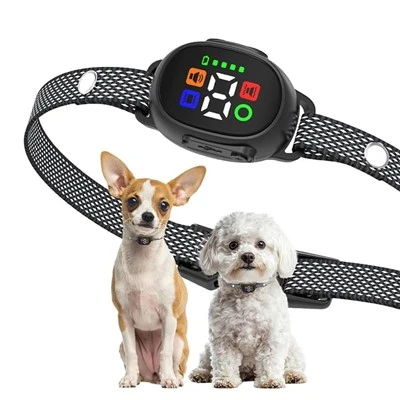
As always, feel free to hit us up if you have more questions—we’re here to help.
LED Dog Leash References:
American Society for the Prevention of Cruelty to Animals (ASPCA). 2022. Pet Safety in Low-Light Conditions.
Journal of Safety Research. 2021. Animal-Related Road Incidents: Low-Light Visibility as a Key Risk Factor.
Outdoor Industry Association. 2023. Gear Adaptations for Canine Backcountry Activities.
Shenzhen TIZE Technology Co., Ltd.
Shenzhen TIZE Technology Co., Ltd. is one of the most professional led dog harness manufacturers and suppliers in China, also supports high quality customized service. Welcome to wholesale the newest led dog harness made in China here and get pricelist from our factory. Also, 1 year warranty is available.
Address: Building 2, Guangyu Industrial Zone, Huangtian Community, Hangcheng Street, Bao’an District, Shenzhen, Guangdong Province, China
E-mail: apple@cntize.com
WebSite: https://www.cntize.com/
