If you’ve ever stood next to a fully operational steel plate induction heating production line—your equipment humming, the steel plates glinting as they pass through the coils, sensors ticking every millisecond to regulate temperature—you know how exhilarating it is to watch high-volume, precision manufacturing come to life. But as a supplier who’s installed these lines in mills across North America, Europe, and Southeast Asia over the past 12 years, I’ve also seen the cost of cutting corners on safety. A split-second misstep, a small unaddressed maintenance issue, or a forgotten protocol can lead to burns, equipment damage, or worse, bringing an entire production line to a halt and endangering the team that depends on it. That’s why, when clients ask me to walk them through the non-negotiable safety precautions for operating these lines, I don’t just list rules—I ground them in the real-world scenarios we’ve faced, the lessons we’ve learned, and the guardrails we build into every line we design. Steel Plate Induction Heating Production Line
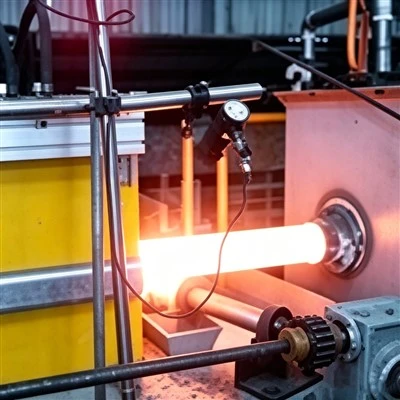
First, let’s ground why induction heating lines demand such specific safety protocols. Unlike a gas furnace, which heats steel through combustion and hot air transfer, induction heating uses high-frequency electromagnetic coils to induce eddy currents in the steel plate, generating heat directly in the material itself. That means the coils can reach temperatures upwards of 1,800°F, stray magnetic fields can interfere with tools and electronics, and hot, moving steel plates pose a trip, burn, and impact risk. Too often, new operators assume it’s just another heating process, but that’s a dangerous misconception—each component of the line, from the power supply to the exit conveyor, has unique hazards that need targeted safeguards.
The most foundational precaution is never skipping the pre-operation safety check. I can’t tell you how many times we’ve been called to a client site where an operator started up the line without verifying a critical interlock, because “we ran it yesterday and nothing went wrong.” That kind of complacency is a disaster waiting to happen. A proper pre-op check isn’t just a walkthrough—it’s a step-by-step audit that covers three core areas: electrical, mechanical, and thermal. For electrical, that means testing the emergency stop (E-stop) buttons at every single point along the line—from the control panel to the exit conveyor—because if one is faulty, the entire line can’t shut down in an instant. We build redundant E-stops into every line we supply, but we still train teams to test them every shift, not just when a new operator starts. Next, verify that the grounding systems for the induction coils are intact; stray voltage from a frayed ground wire can shock an operator or damage sensitive control modules. For mechanical checks, make sure all conveyor rollers, plate guides, and coil mounting brackets are secure—loose parts can shift when the line is running at full speed, causing a plate to jam and potentially fly off at high force. Thermal checks are equally important: use a non-contact infrared thermometer to scan the coil’s surface, ensure the water cooling system for the coils and power supply is flowing at the correct rate (low coolant flow can cause coils to overheat and melt, a repair that can take days), and confirm that the exhaust venting system for hot fumes (released as mill scale burns off the steel) is unobstructed. Last month, a client in Detroit skipped the coolant flow check and melted a $40,000 coil, costing them three days of production—and a lot of back pay for overtime to fix it. That’s the kind of cost that makes pre-op checks not just a safety rule, but a financial one too.
Once the line is running, operator training is the single most effective safety investment you can make. I’ve worked with operators who’ve been on induction lines for 20 years and still pick up new habits every quarter, because the technology evolves, and so do the risks. It’s not enough to give a new operator a 2-hour video and a tour—they need hands-on, supervised training with a senior operator for a minimum of 40 hours, covering every high-risk task. For example: when adjusting the gap between the induction coil and the steel plate, an operator can’t reach into the gap while the line is running, even if they’re wearing heat-resistant gloves. The gap is typically 0.5 to 2 inches, and a hot plate moving at 100 feet per minute can’t be stopped fast enough to prevent injury. We design our lines with remote gap adjustment controls for exactly this reason, but training still has to emphasize that manual adjustments are only allowed when the line is in a locked-out, power-off state. Lockout/tagout (LOTO) procedures are another non-negotiable here. LOTO isn’t just a OSHA buzzword—it’s the practice of locking the line’s power supply and powering it down completely during maintenance or adjustments, so no one can accidentally start the line while someone is working inside the coil area. I’ve seen too many incidents where a maintenance worker was reaching into the line to clear a jam, and a new operator assumed the line was on idle and pressed the start button. LOTO eliminates that risk entirely.
Personal protective equipment (PPE) is the last line of defense, but it’s not a one-size-fits-all solution. A pair of work boots and safety glasses aren’t enough for operating an induction heating line. Operators need full face shields, not just safety goggles, to protect against flying mill scale sparks and hot metal chips. We recommend heat-resistant, flame-retardant coveralls that are tight-fitting (no loose cuffs or pockets that can catch on moving parts) and insulated gloves rated for temperatures up to 2,000°F—regular welding gloves won’t cut it, because induction heat can conduct through thinner materials. For operators working near the power supply, where there are high-voltage components, we also require insulated work gloves and non-conductive safety boots. A common mistake I see is operators skipping PPE when they’re doing “quick checks” along the line—“I’m just going to look at the exit, it’s not that hot.” But that split second is all it takes for a hot chip to flick off a plate and burn an arm, or for a stray magnetic field to pull a metal watch off your wrist (I’ve seen that too—luckily, the operator just scraped his hand, no permanent injury). We post clear signage every 10 feet along the line reminding operators to put on full PPE before entering the production zone, and we conduct monthly PPE audits to make sure no one is cutting corners.
Another often-overlooked hazard with induction heating lines is magnetic field exposure. The high-frequency coils generate strong magnetic fields that can interfere with pacemakers, hearing aids, and even credit cards and metal tools. I always tell new clients: never let anyone with an implanted medical device work within 3 feet of an active induction coil. We build warning signs around the coil area with clear labels about magnetic field levels, and we recommend installing metal detectors at the entrance to the production zone to catch any loose tools or metal accessories that could be pulled into the coils, causing a short circuit. Last year, a client in South Korea had an operator with a pacemaker accidentally enter the coil area during a shift change; the strong magnetic field interfered with the device, sending him to the hospital for a checkup. That’s the kind of preventable incident that highlights why magnetic field safety isn’t just a technical detail—it’s a life-saving precaution.
Maintenance is where many safety incidents start, because small issues left unaddressed grow into big ones. We design every line we supply with remote monitoring sensors that track coil temperature, coolant flow, power supply voltage, and magnetic field levels in real time, so operators and maintenance teams can catch issues before they become hazards. But even with smart sensors, regular scheduled maintenance is non-negotiable. We recommend a weekly check of all electrical connections to make sure no wires are frayed or loose, a monthly cleaning of the coil to remove mill scale buildup (which can insulate the coil and cause it to overheat), and an annual full inspection of the cooling system, including hoses, pumps, and filters. I’ve had clients tell me they’ll skip a month of coil cleaning to keep production running, but mill scale buildup on a coil can cause hot spots that melt the coil’s winding, leading to a power outage that costs thousands in lost production. It’s a trade-off that never makes sense.
Finally, creating a culture of safety is the glue that holds all these precautions together. No amount of E-stops or PPE will prevent incidents if operators are afraid to speak up when they see a hazard. At every client site we work with, we help them set up a non-punitive safety reporting system, where operators can report near-misses or unsafe conditions without fear of being written up. For example, a few months ago, an operator at a steel mill noticed that an E-stop button was sticking every time it was pressed. Instead of ignoring it because “it still works,” he reported it through the safety system, and maintenance replaced it before a real emergency. That’s the kind of action that prevents accidents. We also recommend holding weekly 10-minute safety huddles, where operators can share what worked that week, what didn’t, and any hazards they noticed. Over the years, we’ve found that the best safety insights don’t come from engineers in an office—they come from the people working the line every day, who know its quirks and risks better than anyone.
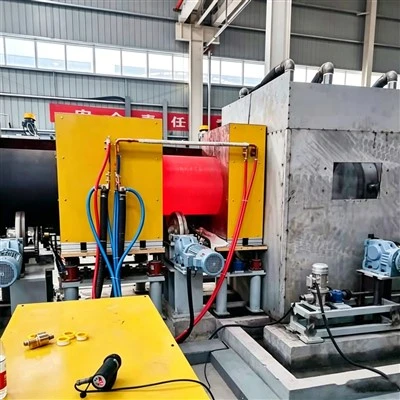
Operating a steel plate induction heating production line is a high-stakes job, but it’s also one of the most critical parts of manufacturing for industries from automotive to construction, where heated steel needs to be strong and precise. The safety precautions we’ve outlined aren’t just rules written in a manual—they’re lessons learned from 12 years of installing lines, troubleshooting issues, and working side-by-side with operators to keep their teams safe and their lines running. If you’re looking to install a new induction heating line, or upgrade an existing one to improve safety and efficiency, we’re here to walk you through every step, from design to on-site training, to make sure your line is not only productive but safe for everyone who works around it. Reach out to us to discuss your specific needs and get started on a solution tailored to your operation.
Induction Heating Power Supply References:
- Occupational Safety and Health Administration. (2022). Safety Standards for Industrial Heating Equipment. U.S. Department of Labor.
- Steel Manufacturers Association. (2021). Best Practices for Induction Heating Line Operation and Safety. SMA Technical Report.
- International Electrotechnical Commission. (2020). Safety of Induction Heating Apparatus for Industrial Use. IEC 61810:2020.
Hebei Yuantuo Electromechanical Equipment Manufacturing Co., Ltd.
As one of the most professional manufacturers and suppliers of steel plate induction heating production line in China, our products have good reputation in the market. Please rest assured to buy advanced equipment made in China here and get quotation from our factory. Customized orders are welcome.
Address: Yanshan Street West and Jialingjiang Road North, Economic and Technological Development Zone, Wuqiao County, Cangzhou City, Hebei Province, China
E-mail: yuantuotech01@gmail.com
WebSite: https://www.yuantuoem.com/
