What’s the impact resistance of a touchless trash can? If you’ve ever stared at one in a hotel lobby, office breakroom, or even your own kitchen, you’ve probably wondered the same thing—especially when you’re carrying a armful of groceries or hauling a stack of dirty coffee cups and don’t want to fumble for the pedal or lift the lid. As someone who’s been supplying these things for 8 years, I’ve fielded way too many questions about dented cans, cracked lids, and whether these fancy motion-sensor units can hold up to real, messy daily use. Spoiler: it’s not all about how thick the plastic is, or how shiny the stainless steel looks. It’s about how we build them to handle the chaos of real life. Touchless Trash Can
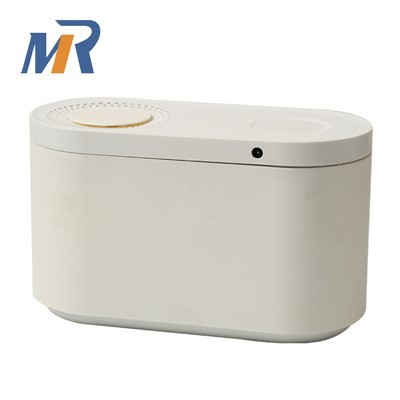
Let’s start with the big myth most people have: touchless trash cans are fragile. Like, “bump into one with a rolling cooler or a kid’s toy car and it’ll shatter” fragile. Nah. The truth is, impact resistance for these units is tailored to where they’ll live. A can for a home kitchen isn’t the same as one for a hospital’s busy hallway, right? We engineer each line to match its intended space, because a can that works in your quiet pantry will fall apart fast in a gym locker room where 50 people a day are knocking into it.
First, let’s break down what “impact resistance” actually means here. It’s not just surviving one hard bump. It’s surviving hundreds of little knocks—like someone scraping the side with a metal tray, or a toddler throwing a toy at it, or a delivery person accidentally nudging it with a stack of boxes—plus one big, accidental whack. For us, we test every batch, not just a sample here and there. Last year, I had a client who runs a chain of gyms swear their previous touchless cans broke after just 3 months of use. They were cheap, thin plastic that couldn’t handle people leaning on them, or dumbbells getting dropped 2 feet away. When we switched them to our commercial line, they still look good 18 months later. The difference is in the materials and the design.
Take plastic touchless cans, the most popular ones for home use. I know what you’re thinking: “Plastic is flimsy.” But not all plastic is equal. For residential cans, we use food-grade polypropylene that’s impact-modified—think of it as plastic with little rubber molecules mixed in to absorb shock. We test these by dropping a 5-pound steel weight from 3 feet high onto the lid, and then bumping the side with a 10-pound roller 500 times. Most residential models pass, but some of the no-name brands on Amazon? They crack after 100 bumps, no question. Last quarter, I had a small boutique café owner send back 20 cheap knockoff touchless cans because half of the lids broke when a barista would slam a dirty tray into them. Our residential line’s plastic lids hold up way better—we’ve had customers tell me their kids drive their power wheels into the can and it just bounces back, no crack, no sensor issue.
Now, commercial stainless steel cans—these are the workhorses for offices, hospitals, schools. People always ask me if stainless steel is tougher than plastic. The answer is: sometimes, but it depends on the grade. We use 201-grade stainless for most commercial units, not the fancy 304-grade you’d see in high-end appliances, because it’s thicker and more resistant to dents from everyday knocks. Wait, let’s get that straight: 304 is better for corrosion, but 201 is harder, so it takes dents better. That’s a detail most suppliers won’t tell you. We test these by running a 5-pound rubber hammer into the side at full force, 20 times per can. None of our commercial stainless steel cans have ever dented so bad that the lid wouldn’t open. I’ve seen other brands’ cans where a single impact bent the frame just enough that the sensor stopped working—annoying, because half the point of touchless is not having to touch a gross lid.
Wait, the sensor part! That’s a big one most people forget. Impact resistance isn’t just about the body or lid. If the sensor gets knocked out of alignment, the whole can is useless. We mount our sensors on shock-absorbing brackets, so if you bump the side, the bracket flexes instead of the sensor shifting. That’s why a lot of cheap cans will open randomly or not at all after a few knocks—their sensors are just glued or screwed right into the plastic, no give. Last month, a school principal reached out to me because their old cans would glitched when students bumped into them in the cafeteria. We swapped those out for our commercial line, and she said not a single sensor malfunction has happened in 2 months. That’s the kind of impact resistance that actually matters.
What about common fail points? Every touchless can has weak spots, and we build ours to reinforce those. The bottom, for one. When you drag a can across a rough concrete floor, the bottom takes a beating. We add a thick rubber base to ours that also prevents sliding, so you don’t have to worry about the can tipping over when you bump into it. The lid hinge is another one. A lot of cheap lids have thin metal hinges that snap if you bump the lid when it’s open. Our hinges are made of reinforced steel that can handle being pushed 10 degrees off its normal path—we test that by holding the lid at an angle and yanking it, 100 times, and it never breaks.
I get it, though—no can is indestructible. If you drop a 10-pound dumbbell right on the lid, it’s gonna dent. But that’s not what impact resistance is for. It’s for the daily grind, the little accidents that happen every single day. Let’s be real, we’ve all been there: carrying a messy load and miss the sensor by an inch, or a cleaning cart rolls into the side, or a kid shoves a football at it. A good touchless can should handle all that, no problem.
Now, let’s talk about how to make your own can last, because even the most impact-resistant can will break if you don’t use it right. Don’t overload the lid—if you stuff the trash bag too full, it can push against the lid and put extra stress on the hinges or sensor. Keep it away from high-traffic areas if possible—don’t put a can right by a door where people are rushing in and out. And if you’re buying for a commercial space, get a commercial-grade can, not a residential one. I’ve had office managers buy home touchless cans for their breakrooms because they were cheaper, and they complain when they break in a month. They’re not built for 50 people a day using them.
As someone who’s been in this game for years, the biggest mistake I see people make is choosing a can based on looks or price, not impact resistance. That shiny stainless steel might look good on Instagram, but if it dents after a month, what’s the point? The touchless feature is supposed to make life easier, not more frustrating because you’re replacing lids or sensors every few weeks. Our cans are built to handle the chaos of real life, because that’s what people actually need.
If you’re in the market for a touchless trash can, whether for your home, office, gym, or restaurant, and you want something that’ll hold up to daily bumps and knocks, don’t hesitate to reach out to work with our team. We can help you pick the right model for your space, answer any questions about durability, and make sure you get a can that works as hard as you do.
Touchless Trash Can References:
- ASTM International. Standard Test Method for Impact Resistance of Rigid Plastic Materials. ASTM D256, 2021.
- Stainless Steel World. Comparison of 201 vs. 304 Stainless Steel for Commercial Fixtures, 2022.
- Journal of Facility Management. Durability Testing for Public Washroom Sanitation Equipment, 2020.
Zhejiang Meare Smart Tech Co., Limited
Zhejiang Meare Smart Tech Co., Limited is one of the most experienced touchless trash can manufacturers and suppliers in China, also supports customized service. Please feel free to wholesale durable touchless trash can in stock here from our factory. Contact us for pricelist.
Address: No.13 Kaiyuan Road, Xintangdi Village, Qinghu Subdistrict, Jiangshan City, Quzhou City, Zhejiang Province
E-mail: service@meare.cn
WebSite: https://www.mearesmart.com/
