If you’ve ever worked with advanced manufacturing materials—from aerospace-grade carbon fiber reinforced polymer (CFRP) to the light, rigid composite laminates used in medical implants or wind turbine blades—you know that the precision cutting that makes composites so valuable also makes them a nightmare to machine. As a waterjet cutting machine supplier, I talk to fabricators, aerospace engineers, and custom part manufacturers every single day who have abandoned traditional cutting methods because they can’t handle composites without ruining the material. For years, I’ve walked clients through why waterjet is often the only viable cutting tool for these parts—more than that, I’ve helped them navigate the unique, often underdiscussed difficulties that come with cutting composites on waterjet machines. This isn’t just theory from a sales sheet; it’s the accumulated knowledge of troubleshooting 100+ custom waterjet setups for composite applications. Let’s break down the real, day-to-day challenges, how they show up in the shop, and what we do as a supplier to help you overcome them. Waterjet Cutting Machine
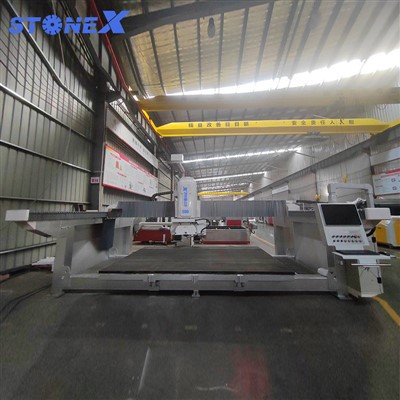
First, a quick refresher for anyone new: waterjet cutting works by shooting a high-pressure stream of water (often combined with an abrasive garnet) at pressures up to 90,000 PSI to slice through materials with zero heat-affected zone (HAZ)—the big draw for composites, which degrade if exposed to even small amounts of heat from saw blades, lasers, or plasma. But that same heat-free advantage can backfire when dealing with composites, because of the way these materials are structured. Most composites are layered: a matrix resin binds together reinforcement fibers like carbon, glass, or aramid (Kevlar) into a thin, strong stack. Unlike solid metals, which behave as a single, uniform material, composites are anisotropic—meaning their mechanical properties change depending on the direction you cut them. That anisotropy leads to the first, and most persistent, difficulty we hear about from our clients: delamination.
Delamination is exactly what it sounds like: the separation of the individual layers of a composite stack, right along the cut edge. It’s not just a cosmetic flaw; it can compromise structural integrity, which is a non-negotiable for parts used in planes, drones, or medical devices. I’ve seen aerospace parts rejected at final inspection because delamination caused a 0.1mm gap between layers—enough to fail stress tests. So why does this happen on waterjet, even when people assume water is gentle? The high-speed abrasive particles in the waterjet stream don’t just slice through material; they also apply lateral force to the layers around the cut. If the pressure, abrasive size, or cutting speed is off, that force can peel the top layers away from the rest of the stack. For example, a client working on CFRP drone parts tried a standard 100 grit garnet and a 0.5 inch per second (IPS) cutting speed for a 6mm thick stack, and ended up with delamination across 15% of the part. When we adjusted the grit to 80 and slowed the speed to 0.3 IPS, that dropped to under 2%—but that kind of fine-tuning isn’t intuitive for someone who’s used to cutting solid aluminum, where small speed changes don’t have that dramatic an effect. The problem is compounded when working with thicker composite stacks, or with low-tack resins that don’t hold layers together tightly. Even with the right parameters, we’ve had clients run 10mm thick fiberglass laminates and see delamination on the back edge of the cut, because the waterjet’s exit stream loses some of its focused energy.
Next up, abrasive embedment. This is a problem that’s unique to abrasive waterjet cutting (as opposed to pure waterjet, which is only for soft materials like foam or rubber), and it’s a big one for composites. When abrasive garnet particles hit the cut edge at high speed, they don’t just bounce off—they can get stuck in the tiny gaps between composite fibers, especially in softer matrix resins. For parts that require a smooth, contaminant-free surface (like those used in medical implants, where even a tiny grain of garnet can cause tissue irritation, or in electrical components where residual abrasive can interfere with conductivity), embedment is a showstopper. I once had a client making custom orthopedic composite plates for knee replacements who thought they’d solved all their problems with delamination, only to find their parts failed a final cleaning inspection because 2-3 micron garnet particles were trapped in the edge of the cut. Traditional metal cutting avoids this because metals are harder, so abrasive particles don’t embed as easily; composites, with their softer resin matrix, are far more porous at the micro level, making embedment almost unavoidable if you don’t adjust your setup. We’ve worked with this client to add an extra post-cut wash step, using a high-pressure, low-volume water rinse with a mild surfactant, but even that adds time to the process—something fabricators don’t always account for when switching to waterjet for composites.
Another major difficulty is kerf taper, and it’s again tied to the structure of composites. Kerf is the narrow channel the waterjet cuts through the material, and taper is when that channel is wider on one side of the part than the other. For solid metals, kerf taper is often minimal and predictable, but composites react differently to the changing energy of the waterjet stream as it passes through the stack. The top layer of the composite is exposed to the full, focused energy of the abrasive stream, so it cuts clean and narrow. By the time the stream reaches the bottom layer, it’s dispersed slightly, so the cut is wider there, creating a taper. For thin parts (under 3mm), this might be barely noticeable, but for thick parts (12mm and up), a 0.2mm difference between top and bottom kerf can mean the part doesn’t fit into a custom jig, or doesn’t meet tolerance requirements. I had a wind turbine blade fabricator come to us last year who was cutting 25mm thick glass fiber reinforced epoxy (GFRE) for blade root inserts. They were getting a kerf taper of 0.8mm, which made it impossible to fit the composite inserts into the aluminum housings they attached to. We solved this by adjusting the orifice and focusing tube size—switching from a 0.3mm orifice/0.8mm focusing tube set to a 0.25/0.75mm set tightened the stream’s focus, cutting taper to under 0.1mm—but that required more precise alignment than a standard waterjet machine is built for. Many entry-level waterjet machines don’t have the auto-alignment features needed for this kind of stream precision, which is why we often recommend our mid-range industrial lines for composite applications, rather than the economy models.
Then there’s the issue of material movement during cutting, or “wander.” Composites are often cut from large, flat sheets that aren’t as rigid as steel or aluminum plate, especially when they’re thin. The high pressure of the waterjet stream vibrates the material as it cuts, causing small shifts that lead to misaligned cuts, parts that don’t match CAD files, or even parts that jump completely off the worktable mid-cut. This is a huge problem for small, high-detail composite parts—like the 10mm carbon fiber brackets used in drone camera mounts, where a 0.1mm shift can render the part unusable. A client in the U.S. who makes drone components told us they had a 30% scrap rate when they first started cutting parts on a standard waterjet, because the carbon fiber sheet would flex under the stream’s pressure. We solved this by adding custom vacuum workholding, with individually adjustable suction points that hold the sheet flat without causing damage (clamping with metal clamps would leave marks on the composite edge, which was another problem they were facing). The workholding also included adjustable side stops to prevent lateral movement, bringing their scrap rate down to under 5%—but this required custom engineering, something many generic waterjet suppliers don’t offer.
Wait, there’s also the challenge of abrasive selection and consistency. Not all garnet is the same, and this is a huge, often overlooked, factor in composite cutting. We’ve had clients try to save money by using lower-grade garnet that’s full of silt and irregularly shaped particles, only to end up with more delamination, more embedment, and a rougher cut edge. For composites, you need high-grade, screened garnet with consistent particle size—usually between 80 and 120 grit, depending on the material thickness. Too coarse, and you get excessive force that causes delamination; too fine, and the stream doesn’t have enough cutting power, leading to slower speeds and increased wear on the focusing tube. I’ve seen a client using a mix of 60 and 100 grit garnet (cut costs by blending grades) and ending up with a cut edge that had a rough, fuzzy texture because the irregular particles pulled at the composite fibers. The fix was simple: switch to consistent, industry-grade garnet for composites, and adjust the cutting speed to match the grit. But this is a detail that rarely comes up in general waterjet guides—most suppliers just tell you to use “abrasive” without specifying grade, which leads to avoidable problems.
As a waterjet supplier, we also run into difficulties with edge quality requirements. Many composite parts require a smooth, clean edge that doesn’t need secondary finishing (like sanding or trimming) to meet specifications. Traditional cutting methods like routering often leave frayed edges on composite parts, but waterjet can leave a striated edge from the abrasive stream, especially when cutting aramid fibers like Kevlar. Kevlar is especially tricky because it’s ductile, not brittle, so the abrasive stream doesn’t shear it—it pulls it, leading to frayed edges. A client making protective gear with Kevlar laminate told us they spent 2 hours per part sanding edges to remove fraying, until we adjusted the cutting path angle and added a small “lead-in” cut at the start of each part. The lead-in lets the stream get up to full cutting speed before engaging with the main part, reducing fraying at the edge. We also recommend using a slightly slower speed for Kevlar, about 0.2 IPS for 5mm thick material, to give the abrasive more time to cut through the ductile fibers instead of pulling them.
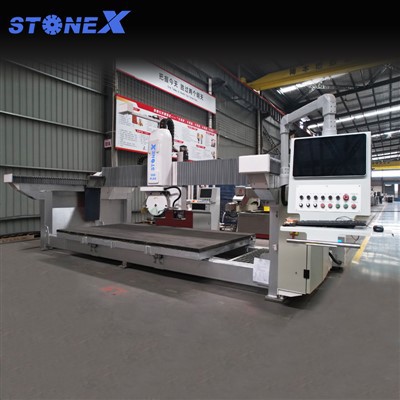
It’s important to note that none of these difficulties are insurmountable. The common thread in all the cases I’ve mentioned is that composite cutting on waterjet isn’t a “set it and forget it” process—it requires specialized setup, parameters, and sometimes custom solutions that off-the-shelf machines don’t provide. As a supplier, our job isn’t just to sell a waterjet machine; it’s to help you work through these specific challenges, from adjusting abrasive grades to designing custom workholding to fine-tuning cutting paths. If you’re currently struggling with composite cutting on a waterjet, or considering switching from another method because of heat damage or delamination, we have the experience and equipment to help you optimize your process. Whether you’re cutting CFRP for aerospace, GFRE for wind energy, or Kevlar for protective gear, our team can walk you through the setup, troubleshoot any issues that come up, and ensure you get the precision, quality, and efficiency you need. If you’d like to discuss your specific application and find out how we can tailor a waterjet solution for your composite cutting needs, we invite you to reach out for a procurement consultation.
Block Cutting Machine References:
- Wang, H., et al. (2020). Delamination mechanism in abrasive waterjet cutting of carbon fiber reinforced polymer composites. Journal of Manufacturing Processes, Vol. 55, pp. 124-133.
- Momber, A. W. (2018). Abrasive waterjet machining of composite materials: A review. Composite Structures, Vol. 196, pp. 112-125.
- American Society of Mechanical Engineers (ASME). (2021). Machining Composites: Process Selection and Quality Control. ASME B106.7M-2021, New York, NY.
- Smith, J. D., et al. (2019). Kerf taper prediction in abrasive waterjet cutting of thick fiber-reinforced laminates. International Journal of Machine Tools and Manufacture, Vol. 143, pp. 103452.
Nantong Huayi Intelligent Equipment Co., Ltd.
Address: Dongsheng Stone Industry Park, Changjiang Town, Rugao City, Jiangsu Province, China
E-mail: claire@hualongm.com
WebSite: https://www.hystonemachinery.com/
