If you’ve ever stood in a manufacturing plant watching fluid flow through miles of pipes, or worked in a wastewater treatment facility where every valve has to hold up against harsh chemicals and extreme conditions, you know butterfly valves are the unsung heroes of process control. As a butterfly valve supplier, I get asked this question more times than I can count: “What’s the temperature range a butterfly valve can handle?” It’s not a one-size-fits-all answer, and that’s exactly why I wanted to break it down for anyone who’s ever had to spec these valves for a job—whether you’re a plant engineer, a maintenance manager, or just someone curious about how these workhorse valves perform under pressure. Butterfly Valve
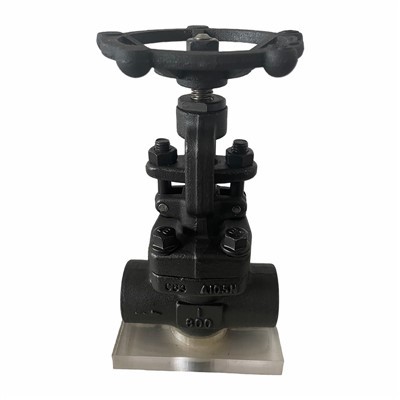
Let’s start with the basics. A butterfly valve’s core is a thin, round disc that pivots on a shaft inside the valve body, rotating 90 degrees to open or close. The temperature range isn’t set by the valve itself—it’s determined by the materials that make up its key components: the body, the disc, the seat, and the stem. Change any of those materials, and the temperature range shifts dramatically. That’s the first thing I tell every customer who comes to me asking about temperature limits: “It depends on what the valve is made of.”
Let’s go through the most common material combinations and their temperature ranges, because that’s where the real numbers live.
First, the seats. The seat is the part that seals against the disc to stop flow—if the seat fails, the valve leaks, no matter how good the body is. For low-temperature, general-purpose applications, EPDM seats are the go-to. EPDM (ethylene propylene diene monomer) is a synthetic rubber that’s cheap, flexible, and resistant to water, mild acids, and many common fluids. EPDM seats work best between -40°F and 250°F (-40°C to 121°C). If you push it above 250°F, EPDM starts to break down—its rubber properties soften, it loses elasticity, and the seal won’t hold. Below -40°F, EPDM becomes brittle, so it can crack when the disc pivots, leading to leaks. That’s why EPDM is great for things like municipal water systems, HVAC, and mild chemical lines, but not for high-heat processes.
Next up is Buna-N (nitrile rubber) seats. Buna-N is more resistant to oil and fuel than EPDM, so it’s the seat of choice for applications involving petroleum products, hydraulic fluids, and some solvents. Its temperature range is a bit narrower than EPDM, though: typically between -20°F and 225°F (-29°C to 107°C). It can handle slightly lower temperatures than that, but below -20°F it gets stiff, and above 225°F it starts to degrade and swell, which ruins the seal. For fuel delivery lines or industrial hydraulic systems, Buna-N is a solid pick, but don’t expect it to hold up in a steam line.
Now, if you’re dealing with higher temperatures, you need a different seat material. Viton (fluoroelastomer) seats are designed for extreme heat and harsh chemicals. Viton can handle temperatures from as low as -15°F up to 450°F (-26°C to 232°C). That makes it perfect for steam systems, hot chemical processing, and applications where EPDM or Buna-N would melt or break down. I sold a lot of Viton-seated butterfly valves last year to a food and beverage plant that uses hot water and cleaning-in-place (CIP) solutions to sanitize their lines—those systems hit 220°F during cleaning, and Viton seats held up flawlessly. The tradeoff? Viton is more expensive than EPDM or Buna-N, and it’s not compatible with certain solvents, like ketones, which can eat through it over time.
For even higher temperatures, though—think above 450°F—you can’t use rubber seats at all. They’ll just melt or burn. That’s when we move to metal-seated butterfly valves. Metal seats are made of alloys like 316 stainless steel, duplex stainless steel, or even higher-grade alloys like Hastelloy, depending on the application. Metal-seated butterfly valves have temperature ranges that go way beyond rubber-seated ones. The lower limit for metal seats is usually around -325°F (-198°C) for cryogenic applications—think liquid natural gas (LNG) or liquid nitrogen lines, where temperatures drop way below freezing. The upper limit can go up to 1,000°F (538°C) or even higher for specialized alloys, depending on the body material. For example, a 316 stainless steel body and disc with a metal seat can handle up to 800°F, while a carbon steel body might top out around 750°F. I once supplied metal-seated butterfly valves to a power plant that handles hot flue gas at 900°F—they’ve been running those valves for three years without any issues, as long as we specified the right alloy for the seat to resist corrosion from the flue gas.
Wait, but what about the body and disc materials? I can’t talk about temperature range without mentioning those, because they have their own limits. For general-purpose valves, cast iron bodies are common, but cast iron starts to become brittle below 0°F (-18°C), so it’s not good for cryogenic applications, and it can rust at high temperatures if it’s exposed to moisture. Carbon steel bodies are better for higher temperatures—they work up to around 750°F, and they’re stronger than cast iron for high-pressure applications. Stainless steel bodies, especially 304 or 316, are more corrosion-resistant, and they handle cryogenic temperatures well down to -325°F. For ultra-high temperatures above 1,000°F, we use alloy bodies like Inconel or Monel, which are designed to withstand extreme heat without warping or corroding.
Now, it’s not just about the materials—there are other factors that affect a butterfly valve’s temperature range, and these are the things that separate a good valve from one that will fail on you. One big one is pressure. Temperature and pressure work together, right? A valve that works at 100 psi at 200°F might not work at 50 psi at 400°F, because high temperatures can weaken the valve components, making them more prone to failure under pressure. That’s called pressure-temperature (P-T) rating, and every valve has a specific P-T curve. For example, a 6-inch butterfly valve with an EPDM seat might be rated for 150 psi at 100°F, but at 250°F, that same valve’s pressure rating drops to maybe 100 psi—because the EPDM seat softens at higher temperatures, so it can’t hold as much pressure. That’s a critical detail I always pass on to customers—you can’t just look at temperature in a vacuum; you have to consider how temperature and pressure interact for their specific application.
Another factor is the operating cycle. If a valve is opening and closing hundreds of times a day, that’s different from a valve that only operates a few times a year. At extreme temperatures, cyclic operation can cause materials to fatigue faster. For example, a metal-seated valve that’s cycled between 500°F and room temperature every day might develop thermal fatigue cracks over time, so you have to spec a valve that’s designed for cyclic service, not just static service. I had a customer a couple years ago who ordered a standard metal-seated valve for a steam line that cycles daily—within six months, the seat had cracked from thermal stress, because it wasn’t designed for frequent temperature changes. Now I always ask customers how often the valve will operate, and what the temperature fluctuations are, to make sure we spec the right valve.
Also, media compatibility matters. The fluid or gas flowing through the pipe doesn’t just have a temperature—it might be corrosive, abrasive, or reactive. A valve that works at 400°F with pure water might fail at 400°F with a sulfuric acid solution, because the acid attacks the seat or body material. I once had a customer ask for a butterfly valve to handle hot brine at 200°F—EPDM wouldn’t work because brine is a mild salt solution that breaks down EPDM over time, so we switched to a Viton seat, which held up perfectly. That’s why I never just answer “it depends” without asking about the media too—temperature is half the story, the fluid is the other half.
Let’s put this all together with real-world examples of temperature ranges so you can see how it works in practice. For a residential or light commercial HVAC system: that’s usually chilled water or hot water for heating, temperatures between 40°F and 180°F. An EPDM-seated cast iron or 304 stainless steel butterfly valve works perfectly here—way within its temperature range, and it’s corrosion-resistant enough for water. For a municipal water treatment plant that handles wastewater at up to 120°F: same EPDM seat, maybe a more corrosion-resistant body like 316 stainless steel to handle the mild sewage, still well within the range.
For a food processing plant with CIP systems that hit 220°F: Viton-seated 316 stainless steel valve—Viton’s max is 450°F, so 220 is no problem, and 316 stainless is resistant to the CIP chemicals like caustic soda. For a petrochemical plant handling hot oil at 350°F: Viton seat with a carbon steel body—carbon steel works up to 750°F, so 350 is fine, Viton handles oil and 350°F. For a cryogenic LNG facility that handles liquid at -300°F: metal-seated 316 stainless steel valve—316 can handle down to -325°F, so that’s perfect, no rubber seat would work here because it would become brittle. For a power plant handling hot flue gas at 900°F: metal-seated Inconel alloy valve, which can handle up to 1,200°F, so 900 is well within range, and Inconel resists the corrosion from flue gas.
Now, common mistakes people make when spec-ing butterfly valves for temperature. One I see all the time is trying to use a rubber-seated valve for high-temperature steam. Steam is usually at 212°F at atmospheric pressure, but in industrial lines, steam is pressurized, so it’s even hotter—250°F or more. EPDM tops out at 250°F, but if it’s pressurized, the temperature can go higher, and the seat will fail. Another mistake is ignoring temperature fluctuations. If a valve is going from room temperature to 500°F every day, a standard seat will crack from thermal expansion and contraction—you need a valve designed for thermal cycling. And don’t forget about low temperatures below freezing—many people assume a rubber valve will work for cold water, but if it’s exposed to temperatures below -40°F, EPDM becomes brittle and can crack when the disc pivots, leading to leaks that can freeze and cause pipe damage.
As a butterfly valve supplier, my job isn’t just to sell a valve—it’s to make sure it works for the customer’s specific needs. I’ve had customers come to me with a specification they got from someone else that said “butterfly valve for steam at 300°F” and I have to ask, “Wait, is that saturated steam, or superheated? What pressure is it at?” Because 300°F saturated steam at 50 psi is different from 300°F superheated steam at 200 psi, and the valve needs to match that. I once had a customer who installed a cheap EPDM-seated valve for their high-temperature steam line, and within a month, the seat had blown out. They came to me frustrated, and we swapped it for a Viton-seated metal valve that’s now been working for five years. That’s the value of working with a supplier who knows their stuff—we don’t just send you a valve off the shelf, we make sure it’s the right one for your temperature, pressure, and application.
Another thing to note: if you need a butterfly valve that works at extreme temperatures, there are custom options. For temperatures above 1,000°F, we can build valves with ceramic seats or special alloy bodies that can handle up to 1,500°F. For cryogenic temperatures below -325°F, we use specially treated stainless steel that doesn’t become brittle at ultra-low temps. These custom valves cost more, but they’re necessary for applications that standard valves can’t handle.
At the end of the day, the temperature range of a butterfly valve isn’t a fixed number—it’s a range that depends on materials, pressure, media, and operating conditions. As someone who’s been in the valve business for 12 years, I can tell you that the worst mistakes happen when people cut corners on materials or ignore the details of their application. That’s why I always take the time to ask questions: what fluid are you moving? What’s its temperature? What’s the pressure? How often does the valve operate? Are there any corrosive or abrasive components?
If you’re working on a project and need to spec a butterfly valve, or you have a valve that’s failing because it can’t handle the temperature, don’t guess—reach out. We can help you figure out the right combination of materials to get the exact temperature range you need, so your valves work reliably for years, no matter how extreme the conditions.

When you need to source a butterfly valve that fits your specific temperature and application requirements, our team is ready to help you find the perfect solution. Contact us to discuss your project details and connect with our experts for procurement guidance.
Globe Valve References
- Miller, J. L. (2019). Butterfly Valve Materials and Application Guidelines. Valve Technology Journal, 42(3), 18-25.
- American Water Works Association. (2021). Standard for Butterfly Valves for Water and Wastewater Services (AWWA C504).
- Fluid Controls Institute. (2020). Pressure-Temperature Rating Standards for Valves, 5th Edition.
- Smith, R. T. (2018). Extreme Temperature Butterfly Valves: Design and Performance. Industrial Valve Engineering Magazine, 17(2), 45-52.
Xiongxiang Valve Group Co., Ltd.
As one of the most professional butterfly valve manufacturers and suppliers in China, we’re featured by quality products and good price. Please rest assured to wholesale cheap butterfly valve for sale here from our factory. Contact us for more details.
Address: Building 1, No.306, 12th Binhai Road, Jinkai District, Wenzhou City, Zhejiang Province, China
E-mail: info@xiongxiangvalve.com.cn
WebSite: https://www.steelvalvegroup.com/
